
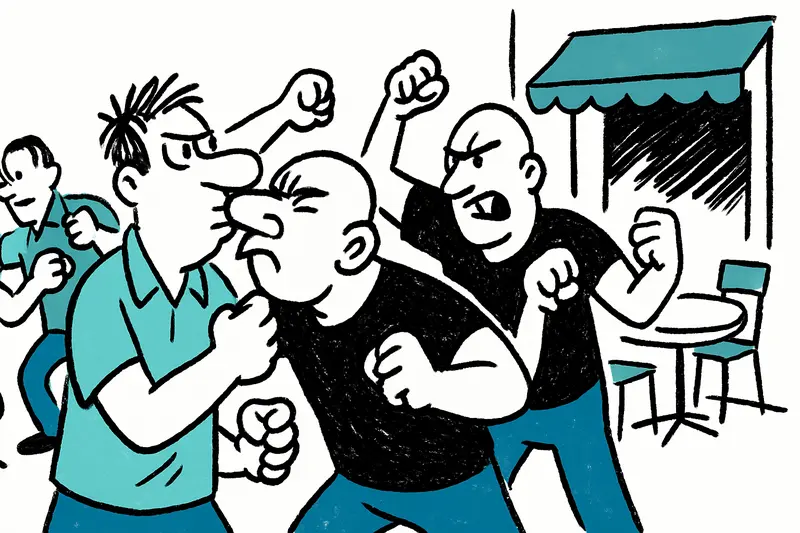
Magaluf Twice in the Morning: When Bar Staff Fight in the Streets
Magaluf Twice in the Morning: When Bar Staff Fight in the Streets
In Magaluf, employees of two venues clashed twice in a single morning. Four men were arrested. Why does violence escalate where tourists and schoolchildren are out during the day?
Magaluf Twice in the Morning: When Bar Staff Fight in the Streets
It was supposed to be a routine morning: espresso, lemon squeezer, the clatter of plates on Avenida de S'Olivera. Instead there were two full-blown fights — first on a crowded terrace, later in front of the Santa Ponsa health center. In the end officers arrested four men: three Italians and one Eastern European. The charges: bodily harm, threats and coercion. Similar early-morning escalations have occurred elsewhere, notably Brawl at Playa de Palma: Why a verbal exchange could have ended fatally.
Key question
Why do employees of bars and nightclubs in Magaluf so quickly resort to open violence, and what needs to change so that early shifts and school routes are no longer danger zones?
Critical analysis
The escalation in this tourist strip highlights several problem areas at once. Night and daytime operations meet in a very small space: guests, morning-shift workers, pedestrians and residents. The first confrontation around 7 a.m. turned violent; the situation flared up again half an hour later, this time within sight of children and school routes. Local municipal police and the Guardia Civil intervened; during the second clash the Guardia Civil used pepper spray because some participants were physically dominant. That the same people could encounter each other again just minutes after the first incident is a practical problem of organizational and police response chains, a pattern also documented in Magaluf: Escalation at the Bus Stop — What the Incident Reveals About Safety and Civil Courage.
What is missing from public discourse
The discussion often stays on the surface: "too much drinking, too much partying." But the issue runs deeper. Working conditions in night hospitality (long shifts, stress, competition between venues), inadequate mediation mechanisms and missing agreements for end-of-shift procedures all play a role. The close proximity of tourist hotspots to schools and health centers is rarely discussed. And finally: how are incidents handled when participants refuse transport to a health center? This concern mirrors reporting on an unconscious beach victim in Magaluf after the beach discovery: When partying becomes a danger zone. These gaps allow conflicts to reignite.
Everyday scene from Mallorca
Picture Avenida de S'Olivera in the morning: the sun on yellow-painted facades, seagulls crying above the waves, waiters in shirts and bouncers in black T-shirts still showing the night's fatigue. Tourists are already seated on the terrace, delivery vans add noise to the clatter of coffee cups. Later, a narrow sidewalk near the Santa Ponsa health center, children with schoolbags, parents with dogs — and between them people who had been behind the bar hours earlier and now come to blows. Scenes like this have become unpleasantly familiar.
Concrete solutions
The situation requires combined measures, not just appeals. Practical proposals that can be implemented locally:
1. Regulate night-shift handovers: Clear procedures for the end of shifts, meeting points and separate routes for rival teams to minimize accidental encounters.
2. De-escalation training: Mandatory courses for bouncers, service staff and managers — practical workshops that teach early detection of conflicts and non-escalatory responses.
3. Cooperation between authorities and hospitality: A local committee made up of municipal police, Guardia Civil, the health center and venue representatives for quick case review and behavioral rules.
4. Presence at the right time: Flexible patrols in the early morning hours where night operations transition into daytime; visible presence can prevent repeat encounters or intervene early.
5. Preventive communication: Information sheets for employees about rights, reporting channels and the consequences of violence; operators must cooperate after incidents instead of looking away.
Conclusion
A punch in Magaluf hits not only those involved but entire streets: tourists, residents, children on their way to school. What is needed are fewer moral lectures and more pragmatic rules, coordinated procedures and presence where night meets day. Otherwise the party strip will remain a place where the morning brings not just coffee but also trouble.
Note: This account is based on known case details: two confrontations in Magaluf, four arrests, intervention by the Guardia Civil and participants' refusal of ambulance transport.
Frequently asked questions
Is Magaluf safe in the morning after a night out?
Why do conflicts sometimes happen in Magaluf after the bars close?
What should I do if I see a fight in Magaluf?
Is it common for Magaluf nightlife staff to have morning handovers in public streets?
Why is the area near Santa Ponsa health center mentioned in connection with the Magaluf incident?
How do police usually respond to fights in Magaluf?
Is Magaluf still suitable for families in the morning?
What changes could reduce street violence in Magaluf?
Similar News
Injured captain, big plans: Germania Mallorca before the away match in Consell
The newly founded FC Germania Mallorca travels to Consell on Saturday. Captain Bastian Müller is out injured, but coach ...
Palma, Palma de Mallorca, Palma‑Mallorca: What is it really about?
The debate over the city's name is more than grammar: it concerns identity, law and branding policy. A sober reality che...
Warning to Bathers: Nipping Fish in Cala Major and Other Coves — a Reality Check
In Cala Major and several beaches around Mallorca, bathers report painful “nips”. Who are the animals, why are they gett...
Rental Car Theft in El Arenal: What This Incident Reveals About Our Gaps
A teenager steals a running rental car in El Arenal, flees on foot, climbs over walls and is caught by the Guardia Civil...
Red Rope in Palma's Library: What Helps Against Selfie Tourism — and What's Missing
Palma's city library cordoned off an area with a red rope to keep selfie tourism away from reading and working activitie...
More to explore
Discover more interesting content

Can Cap de Bou

Townhouse Lleo 72
