
Brutal attack at Playa de Palma: two Germans arrested – what now?
Brutal attack at Playa de Palma: two Germans arrested – what now?
Two German holidaymakers (19 and 20) are accused of seriously injuring a compatriot at Playa de Palma. The National Police arrested the suspects; an officer was attacked during the arrest. An analysis of what is missing in the debate and how such incidents could be prevented.
Brutal attack at Playa de Palma: two Germans arrested – what now?
Leading question: Why does a night at Playa de Palma escalate so far that a young man ends up unconscious with severe facial injuries in hospital and the alleged perpetrators are taken into custody by the National Police shortly afterwards?
The facts, short and clear
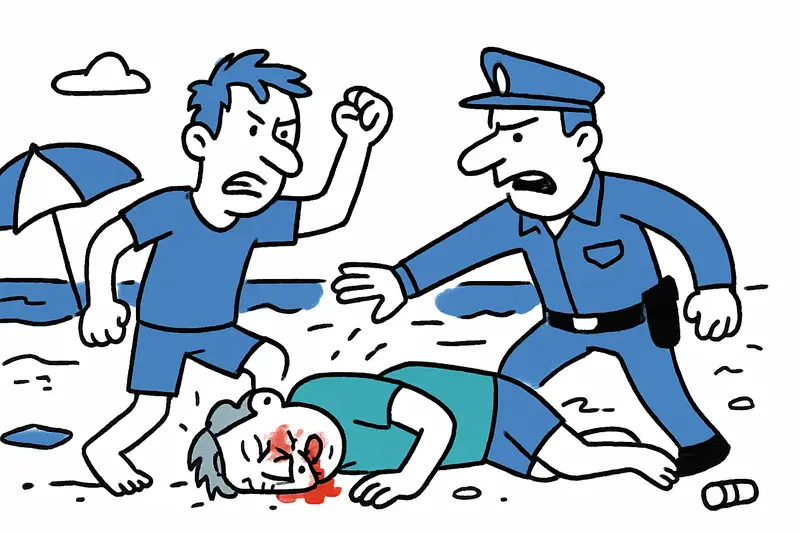
In the early hours of a Monday, a Brawl at Playa de Palma: Why a verbal exchange could have ended fatally occurred at Playa de Palma, near Balneario 5. Two German holidaymakers aged 19 and 20 are said to have attacked another German without any apparent reason. The victim lost consciousness and suffered massive facial injuries – heavy bleeding from the mouth, several knocked-out teeth and fractures to the cheekbone and nasal bone – and was taken to hospital by ambulance. The attackers fled towards El Arenal but were able to be located by National Police officers near the scene. During the arrest it escalated again: one of the suspects is said to have struck a police officer on the shoulder. Both were brought before an investigating judge and released on bail of €5,000 each.
Critical analysis: Where does the system fail?
The incident is more than the sum of individual actions. It reveals weaknesses on several levels: prevention during nighttime hours, rapid medical assistance on site, the question of triggers for such violent outbursts and the interaction between tourism, alcohol consumption and public security forces. The fact that the perpetrators were quickly apprehended but released on bail leaves many questions open – especially for victims and residents who ask: How safe is my street, my beach, my night?
What is missing so far in the public discourse
Reporting understandably focuses on the act and the Arrests after threats at the city beach: Why an evening stroll must become safer again. But it rarely goes further: into the reasons why young groups of tourists turn violent, the role of alcohol and drugs, the training and further education of night staff in bars and clubs, and the accessibility of immediate help for victims in foreign languages. Hardly discussed is also how bail is handled in cases of serious bodily harm and what signals this sends to perpetrators and society.
An everyday scene, in the middle of Mallorca
Imagine: It is early morning, the sun already hangs lower over the bay, the sunbeds are mostly empty. At Balneario 5 there are still empty plastic cups among towels, a few speakers are playing a last schlager, and seagulls are screeching over the remnants of an all-night party. Then sirens, blue lights reflecting on wet footpaths, residents looking out of open doors. The mood quickly tips from celebration to alarm – and what remains is an injured person, whose friends stand shell-shocked at the edge. This is the reality many residents and visitors experience when carefree nights turn violent.
Concrete approaches to solutions
1) Preventive presence: More coordinated night patrols by police and municipal stewards at known hotspots such as bathing establishments and promenades, with targeted operations at peak times, as seen in Nighttime escalation at Playa de Palma: When a mobile phone leads to a home takeover.
2) Early warning system: Training for bar and beach staff to recognize conflicts early and intervene de-escalatingly; clear contact persons in hotels so that intoxicated guests are not left unattended in problematic situations.
3) Support network for victims: Low-threshold, multilingual hotlines, rapid medical first aid on the beach and transport protocols so that the injured are treated quickly and documented.
4) Data, but responsibly: Systematic recording of violent incidents in tourist areas to identify hotspots – without stigmatizing entire places or groups.
5) Legal-political debate: Review of bail regulations and judicial options in cases of serious bodily harm so that public safety and victims' interests can be better balanced.
6) Education and information: Prevention campaigns in several languages that clearly show young travelers the consequences aggressive behavior can have – legally, financially and health-wise.
What could happen immediately
In the short term, visible police presence and coordinated controls on problem nights could be increased. Hotels and bar operators could post emergency contacts visibly and release staff for intervention training. Local authorities could also consider mobile first-aid stations for weekend nights so that the injured are cared for more quickly.
Conclusion – a clear appeal
The attack at Playa de Palma is a warning sign: festivity must not turn into criminality — similar concerns have followed other cases such as After multiple assaults in Palma: Two suspects held in custody. We need more than outrage on social media. We need concrete prevention, better victim support and a factual debate about legal responses to serious violence by groups of tourists. For the people who live and work here and for the guests who value Mallorca as a holiday destination, security is not a luxury; it is a prerequisite for preserving the island's character.
Frequently asked questions
When is the best time to visit Mallorca for good weather and manageable crowds?
What should I pack for a trip to Mallorca?
Are Mallorca’s beaches suitable for swimming and families?
How can I get around Mallorca without renting a car?
What should I see in Palma de Mallorca in a day?
Is Cap de Formentor worth visiting and how do I reach it?
Can I take a train from Palma to Sóller and what’s the experience?
Is Alcúdia a convenient base for exploring northern Mallorca?
Similar News
Palma, Palma de Mallorca, Palma‑Mallorca: What is it really about?
The debate over the city's name is more than grammar: it concerns identity, law and branding policy. A sober reality che...
Warning to Bathers: Nipping Fish in Cala Major and Other Coves — a Reality Check
In Cala Major and several beaches around Mallorca, bathers report painful “nips”. Who are the animals, why are they gett...
Rental Car Theft in El Arenal: What This Incident Reveals About Our Gaps
A teenager steals a running rental car in El Arenal, flees on foot, climbs over walls and is caught by the Guardia Civil...
Red Rope in Palma's Library: What Helps Against Selfie Tourism — and What's Missing
Palma's city library cordoned off an area with a red rope to keep selfie tourism away from reading and working activitie...
Fort San Carlos: Museum, Harbor Dispute — and a Conflict That Demands Answers
The military museum at Fort San Carlos sits right on Palma's harbor, with unexpectedly quiet rooms filled with cannons a...
More to explore
Discover more interesting content

Can Cap de Bou

Townhouse Lleo 72
