
Terraces under Stress: Why Palma Must Now Discuss Water Misters
Terraces under Stress: Why Palma Must Now Discuss Water Misters
Heat-dispelling spray systems have effectively been banned in Palma since 2018. Restaurateurs warn of revenue losses and call for an adjustment of the rules. What's missing in the debate — and what could a practical compromise look like?
Terraces under Stress: Why Palma Must Now Discuss Water Misters
Key question: Should the city change the rules for use of public space so that targeted spraying of water on terraces is allowed?
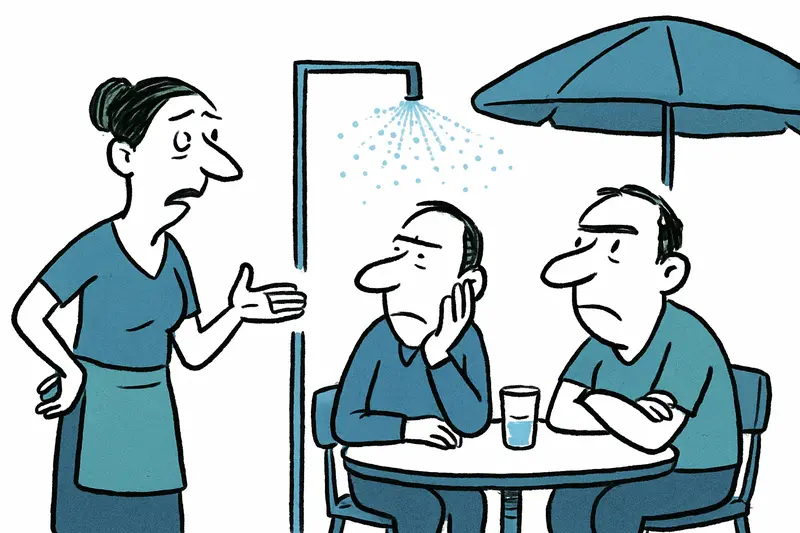
On a hot July midday, when the sun beats down on the Passeig del Born and even the cathedral offers little shade, the waitress moves the last tables from outside to inside. Guests don't want to sweat outdoors, regulars complain, and the kitchen juggles between two service rushes. This is the everyday reality that restaurateurs and staff describe more and more often these days.
The background to the debate is a municipal regulation that has governed the use of public space since 2018 and currently excludes the use of misting systems on terraces. Restaurateurs say that, as a result, guests increasingly choose the air-conditioned indoor areas and outdoor seats remain empty. On the other hand, there are questions about drinking-water consumption, maintenance, hygiene, slipping hazards and legal liability that the city administration cannot simply ignore.
Critical analysis: The demand is legitimate, but not easy to adopt outright. Misting systems cool locally and can improve the guest experience, but they also create problems: evaporative cooling is only really effective at low humidity; on very humid nights it provides little comfort. Poor maintenance can encourage mineral deposits or bacteria. And white lime stains on awnings or wet floors mean more work for staff and a greater risk of slips.
At the same time, it cannot be denied that summers in Mallorca look different than they did ten years ago. AEMET data reflect higher temperature records and more frequent heat waves; this summer there were several intense heat spells and Palma recorded its hottest night to date. When 40°C is forecast for the coming weekend, the mismatch between the existing regulation and everyday realities becomes tangible.
What is missing in the public discourse: you mostly hear the loud argument "allow" or "ban." Three groups are underrepresented: residents, who might complain about nighttime misting systems; employees, who must be protected from heat for health reasons; and the water and environmental authorities, who should provide data on consumption and water quality, as highlighted in Palma's water at the limit: reservoirs almost empty — how should we react now?. Financial aspects — who pays for installation, maintenance, potential damages? — are also discussed too infrequently.
An everyday scene from Palma illustrates the issue: on the Plaça Major an elderly couple hastily folds up the parasols because a café's mister suddenly starts dripping; the waitress wipes with a towel and mutters something about "no money for constant cleaning," and the outdoor reservation is cancelled. Costs and frustration arise on all sides.
Concrete solutions the city should consider look like this: permit experimental pilot projects in selected streets and at limited times, coupled with clear technical minimum requirements (water filters, UV disinfection, certified piping). Permits with conditions — maximum operating hours per day, compliance with slip-prevention standards, compulsory liability insurance — would limit risks. Additionally, subsidies or low-interest loans should be offered for more permanent, less water-intensive measures, such as fixed awnings, more trees in planters, green pergolas and sunshades with integrated photovoltaic-powered fans; similar calls have been made for tourist accommodation in Water scarcity in Mallorca: Why hotels must now take responsibility.
Water savings are central: systems with recovery or connection to non-potable sources should be preferred. This is consistent with broader analyses of groundwater stress in When the Tap Runs Scarcer: Mallorca Between a Tourism Boom and a Dwindling Water Source. The city can also require mandatory training for operators: how to disinfect lines, how to avoid lime deposits, how to respond to neighborhood complaints. A practical guide would bring administrative departments and business owners to the same table.
Politically the issue is granular and will take time without pressure. The decision does not lie solely with the mayor's office; it requires majorities in the council, coordination with the water authority and networking with environmental agencies. For restaurateurs this is not an abstract demand but an economic question: maintaining readiness for both indoor and outdoor service means higher staffing costs, higher energy bills and less flexibility in table management.
My proposal: issue short-term pilot permits, prescribe binding hygiene standards and maximum operating times, invest mid-term in urban-ecological measures, and develop a long-term heat action program that brings together hospitality, urban planning and water management. That way it can be tested whether misters really deliver the promised benefits without causing unnecessary side effects.
Punchy conclusion: It would be wrong to reflexively ban misting systems or to allow them without control. Palma faces a task that must be solved practically, politically and technically — before the next summer again drives people to cooler indoor spaces and leaves terraces deserted. Cities like Málaga or Seville have gathered first experiences; elsewhere municipalities have already tightened rules, as shown in When the Tap Becomes a Luxury: Seven Municipalities Tighten Water Rules in Mallorca, and Palma should now start its own transparent trials so the decision is based on facts rather than emotions.
Frequently asked questions
What is Mallorca's weather like throughout the year?
Is swimming possible year-round in Mallorca?
What should I pack for a trip to Mallorca?
When is the best time to visit Mallorca for outdoor activities?
What makes Palma de Mallorca worth a visit?
Are there family-friendly beaches near Alcúdia?
What can you do in Sóller and the surrounding valley?
Is Cala Millor good for a family beach holiday?
Similar News

Rental Car Theft in El Arenal: What This Incident Reveals About Our Gaps
A teenager steals a running rental car in El Arenal, flees on foot, climbs over walls and is caught by the Guardia Civil...

Red Rope in Palma's Library: What Helps Against Selfie Tourism — and What's Missing
Palma's city library cordoned off an area with a red rope to keep selfie tourism away from reading and working activitie...

Fort San Carlos: Museum, Harbor Dispute — and a Conflict That Demands Answers
The military museum at Fort San Carlos sits right on Palma's harbor, with unexpectedly quiet rooms filled with cannons a...
Old Town Under Pressure: When a Doorway Becomes a Sleeping and Shower Place
For months a woman has been living with a parasol, a clothes rack and personal belongings next to the social welfare off...

When Shopping Weighs Heavier: Mallorca Demands a Tax Pause on Food and Fuel
Rising prices are putting pressure on households and agriculture. The Balearic Islands are calling for temporary tax rel...
More to explore
Discover more interesting content

Can Cap de Bou

Townhouse Lleo 72
