
Mallorca at the Limit: When Aid Packages Are No Longer Enough
Mallorca at the Limit: When Aid Packages Are No Longer Enough
More than 21,000 people in the Balearic Islands rely on assistance for food. Why aid increasingly only manages symptoms instead of solving the problem.
Mallorca at the Limit: When Aid Packages Are No Longer Enough
Leading question: How is an island supposed to function where people work and still have to stretch every euro twice over to pay rent and buy food?
The raw numbers are on the table: Over 21,000 people in the Balearic Islands currently rely on assistance to obtain basic foodstuffs and hygiene products. For a family of an average 2.6 people, food costs add up to around €6,000 per year. According to a report, about 70 percent of income on Mallorca goes to rent. This is no longer a temporary problem; these are everyday hurdles that many households can no longer overcome.
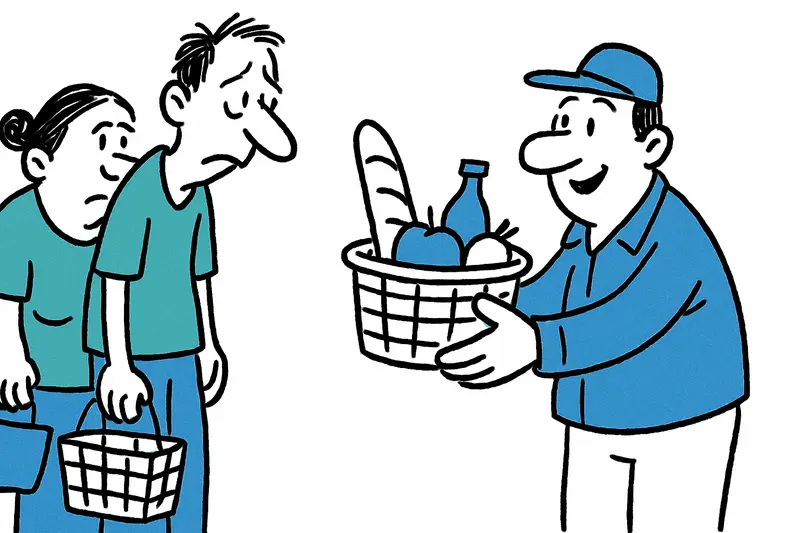
On the ground it looks like this: Monday morning at the Mercat de l'Olivar. Trucks unload crates of fruit, market traders haggle over prices, and in one corner a small queue of people with shopping baskets is waiting — not for the market, but for the nearby distribution point of a relief organization. The sky is grey, a cold breeze blows from the harbor, somewhere on Passeig Mallorca a bus honks. Such scenes are repeated in Palma and in smaller towns: families, single parents, pensioners, some working, who ask for help.
The network of aid work is dense: Caritas runs several distribution points, food banks cooperate with NGOs, and the Red Cross distributes not only food but also so-called cash cards. The concepts differ. In some centers recipients choose the goods themselves, accompanied by volunteers. Others receive monthly credits with which they can shop in supermarkets. Both approaches have advantages and disadvantages.
Critical analysis: Cash cards give choice and avoid the stigma of food distribution, and they are administratively attractive. Yet they shift the cost burden onto recipients: those who go to a regular supermarket with a limited credit pay market prices instead of benefiting from surplus donations. Moreover, the switch to cash-like aid reduces the availability of free fresh goods because fewer surplus items from chains end up at food banks.
The distribution of donated food has its own problem: fresh products are hard to plan for, logistics and the cold chain cost money, and volunteer structures are exhausted. And when state or European funding falls away, supply shrinks even though demand does not lessen, as seen When Beaches Become Emergency Wards: Balearic Islands Call on the EU for Help in the Migration Crisis.
Two points are often missing in public discourse: first, a clear debate about housing costs as a cause of food insecurity; second, an honest sharing of responsibility with retail and the hotel industry. It is not enough to set up aid initiatives if rents continue to rise and wages remain static; this is discussed in Sky-high prices, tents, empty promises: Why Mallorca's housing crisis is no longer a marginal issue. Nor does well-meaning publicity from the sector suffice if too few local shops and social housing units are created at the municipal level, and questions about who benefits from rental subsidies persist (Rental aid in the Balearic Islands: €9.3 million from November – who benefits, who is left out?).
Concrete proposals that could work in practice: first, binding measures against excessive short-term rentals (see Mallorca's Streets Are Growing Longer: Why More Than 800 People Are Homeless and Nothing Solves It) in favor of affordable long-term housing; second, a regional fund that permanently finances the cash cards and ties them to means-tested criteria; third, contracts with supermarket chains that require them to permanently allocate a share of fresh surpluses and to cover part of the logistics costs; fourth, expansion of municipal cold storage and distribution centers near urban centers like Palma so fresh goods are not lost; fifth, low-threshold employment programs linked to meal vouchers and skills training so incomes rise in the long term.
Another instrument would be to review the cash amounts on the aid cards. At Caritas the standard amount is around €100 per month; that provides relief but is often not enough. An adjustment to regional price levels and family sizes would be sensible. Psychological support and social counseling, which are already part of the aid services, should be offered permanently and comprehensively, not as time-limited projects.
Everyday image: In Son Gotleu, in the old town or at the Plaça Major you meet people who have to buy a bag of small pastries at the bakery because they have no refrigerator. In many kitchens simple dishes are cooked because expensive ingredients are impossible. Children sometimes bring leftovers to school because money is tight at home. These scenes are quiet, but they are becoming more frequent.
The situation is not only humanitarian; it has economic consequences: people in precarious conditions cannot participate in local consumption, their health deteriorates, and educational opportunities decline. In the long run these are costs for society as a whole.
Conclusion: Aid organizations do enormous work, but the help manages symptoms. Binding political decisions are needed at the island and regional level, clear agreements with retailers and a substantial expansion of social infrastructure. Anyone who views the problem as a purely charitable task overlooks the structural causes. Mallorca cannot afford a normalization of hunger and existential insecurity.
Frequently asked questions
Why do so many people in Mallorca need food aid?
How much of a household budget goes to rent in Mallorca?
What is the difference between food aid and cash cards in Mallorca?
Are cash cards enough to cover food costs in Mallorca?
Where do people go for food support in Palma?
Why is food insecurity growing in Mallorca even when people are working?
Can Mallorca’s aid system keep up with demand?
What solutions are being suggested for food insecurity in Mallorca?
Similar News
Near-miss on Lanzarote: Landing Ryanair Jet and Iberia Takeoff — what really went wrong
On Lanzarote there was a dangerous incident: A Ryanair flight (FR5910) from Dublin landed on runway 03 while an Iberia E...

Eurowings introduces new Premium Business seats on Mallorca routes
From December 1, selected Eurowings flights to Palma and other destinations will feature eight particularly generous sea...

Car on MA-13 near Inca in flames – a safety check for the island
A vehicle caught fire on the MA-13 towards Alcúdia on Tuesday afternoon. The driver was uninjured, the car was destroyed...

Real Estate in Mallorca: Fewer Buyers, Higher Prices — What's Behind It?
Sales on Mallorca are falling, yet prices continue to climb. Why fewer transactions do not equal relief — and what shoul...
Just Bought — Already Trouble: Water Damage in the Heiters' Villa and What Owners in Mallorca Should Know Now
A newly purchased sea-view property — and within days a water damage. What risks lurk in new properties in Mallorca, and...
More to explore
Discover more interesting content

Can Cap de Bou

Townhouse Lleo 72
