
Mallorca at Your Feet: New Handicraft Route Brings Island Pieces to Germany
Mallorca at Your Feet: New Handicraft Route Brings Island Pieces to Germany
Leather shoes, woven baskets and jewelry with a seal of origin: at the ITB the Island Council presented a route that links craft and tourism. What this means for Mallorca.
Mallorca at Your Feet: New Handicraft Route Brings Island Pieces to Germany
An initiative by the Island Council focuses on handmade products as a tourist signal
When a small replica of a Mallorcan market was set up last week in Berlin at the travel fair, familiar sounds suddenly echoed: the scraping of leather soles, the rustle of straw bags, quiet conversation in Catalan. The presentation of the new handicraft route was staged almost as a sensory experience—with the clear aim of making the island visible not only as a travel destination but also as a place of origin for products.
The initiative runs under the label “Ruta de la Moda Artesana” and brings together the work of local manufactories. Five product groups are at the center: textiles and ready-to-wear, jewelry and decorative items, goods made from plant fibers, leather goods and footwear. The whole is accompanied by a quality seal intended to confirm origin, quality and handcrafted authenticity.
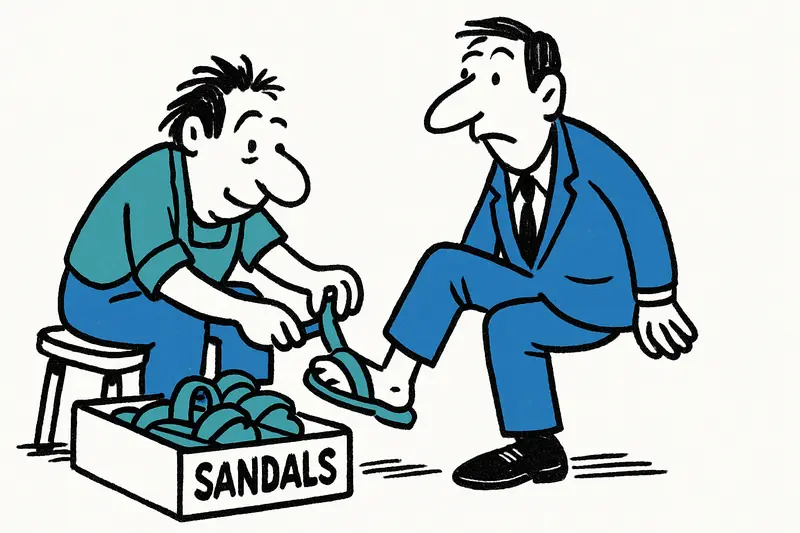
Representatives of the Island Council were present at the stand, as was well-known presenter Carolina Cerezuela in her role as brand ambassador. This was not about showroom fashion but about objects that often originate behind shop doors or in small workshops: stitched blankets, hand-braided baskets, leather sandals, delicate jewelry. These producers should become easier to find for visitors and retailers via the route.
Why is this important for Mallorca? There are still many people on the island who pass on traditional techniques—mother to daughter, neighbor to neighbor. Such skills are increasingly missing in globalized supply chains. A recognizable brand can help stabilize this work economically, because travelers then search specifically for authentic items instead of mass-produced goods.
If you stroll across the Mercat de l'Olivar in Palma on a Saturday, you immediately see the opportunity: between olive stalls and vegetable crates are traditional shops on the Balearic Islands with leather goods and hand-woven scarves. If visitors see a seal when buying, it increases the likelihood that the money stays in the island economy—going to the person who stitched the pair of shoes, not into an anonymous production chain.
The route is also an offer to travelers who want to connect consciously with a place. Instead of collecting mere souvenirs, Mallorca can be "taken home" in the form of objects that tell a story: someone carrying a Mallorcan straw bag holds a handle shaped by a local hand. That is a different kind of memory.
Practically speaking, workshops, small studios and selected retailers will soon be listed on maps and digital platforms. The seal “Moda Artesana de Mallorca” serves as a guide. For buyers this means: ask, inquire, check the origin. For craftsmen and craftswomen, visibility can lead to more stable orders.
One should not expect everything to change overnight. Craftsmanship needs time, material and space. But the decision to specifically target German markets at the ITB is no accident: Germany is an important source market for Mallorca and many travelers value quality and proof of origin. This could extend the demand for authentic products beyond the high season — a trend also noted in Mallorca on a Cultural Course: Short Trips Bring Fresh Energy to the Island.
A small everyday tip: when you are in Palma, follow the sound of leather soles—often they reveal how close a workshop is. Ask whether there is a quality seal or if the product was made locally. That is not only polite but helps the businesses here.
The route is therefore more than a marketing project. It is an attempt to connect economic value creation with cultural identity. If it succeeds, workshops in small towns will benefit as much as boutiques in the capital. And for travelers, what remains is a piece of Mallorca that not only looks nice but has a story.
On the streets of Palma some days you can smell freshly baked ensaïmada and the wax of leather bags. Those who look more closely discover the hands that worked on them. The new handicraft route wants to make these hands more visible—and thus preserve a piece of everyday island life.
Outlook: In the coming months, cooperation partners and participating addresses will be announced. Anyone interested in finding locally produced pieces or connecting with craftsmen should look out for the seal and not only browse local markets but ask questions. That way a pair of sandals becomes more than a souvenir: it becomes a small piece of Mallorca to take home.
Frequently asked questions
What is the new handicraft route in Mallorca?
How can I tell if a Mallorcan product is really handmade?
Why is Mallorca promoting handmade products to German visitors?
Where can I find traditional crafts in Palma de Mallorca?
What kinds of handmade products are typical in Mallorca?
Is it better to buy Mallorcan souvenirs from workshops instead of mass-produced shops?
Will the Mallorca craft route be available online?
What should I ask before buying handmade goods in Mallorca?
Similar News

Released with Conditions: The Plus Ultra Suspicion and a Mallorcan Finca as Residence
A Dutch entrepreneur, sought in connection with the Plus Ultra case, was extradited to Spain after his arrest in Germany...

Haute Nuit in Puerto Portals: Fashion, Art and Indulgence by the Water
On October 2 the Lobster Club in Puerto Portals will be transformed into a stage for curated fashion, art and culinary e...
Magaluf: Watchtower Alarm – Lifeguards Pull Unconscious Beachgoer from the Water
After a drama in the late afternoon, two lifeguards at Magaluf beach rescued an unconscious 44-year-old man. He was stab...
Turquoise in the City: How dangerous is the color play of the Sa Riera?
The Sa Riera in Palma suddenly turned turquoise — a pretty motif, but behind the effect lies a discharge of saline waste...

Jeckliner at Sunnesching: Cologne spirit sets sail from Palma
In September 2027 the Mein Schiff 2 briefly becomes a floating carnival stage: four days with Cologne bands, comedy and ...
More to explore
Discover more interesting content

Can Cap de Bou

Townhouse Lleo 72
