
Missing for hours in s'Albufera: What really went wrong and how we can prevent it in the future
Missing for hours in s'Albufera: What really went wrong and how we can prevent it in the future
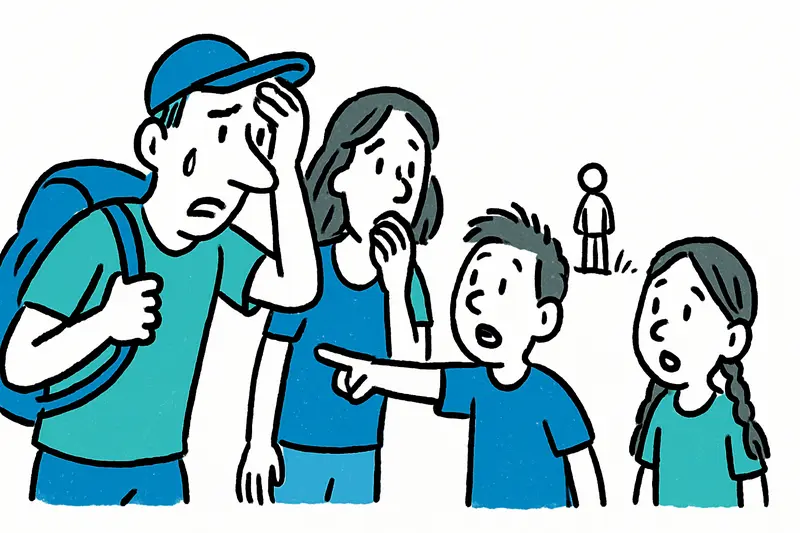
Two German children (14 and 7) and their father became separated during a bike ride in the s'Albufera nature park. Authorities searched for six hours before the children were found safe. Why this could happen — and what we should learn from it.
Missing for hours in s'Albufera: What really went wrong and how we can prevent it in the future
A critical look after the six-hour search operation
Thursday afternoon, heat like in many late summers on Mallorca, cicadas in the reed belts and the usual day-trippers at the s'Albufera car park: yet a family bike ride ended in panic. Two German children, a 14-year-old boy and a seven-year-old girl, became separated from their father when a puncture stopped the group. The father went to get help — and then could not find his way back. Only after an approximately six-hour search, coordinated through the emergency call center 112 and carried out by Alcúdia local police, Guardia Civil, units from neighboring municipalities and staff from the nature park, were the children found safe outside the protected area near the road between Alcúdia and Palma.
Key question: How is it possible that a simple puncture and separation can so quickly turn into a multi-hour missing-person incident? And what would have to be different so that parents and children do not have to hope and worry for hours?
Critical analysis: The case reveals several weaknesses, without anyone having intentionally failed. First, the hiking and cycling path infrastructure: s'Albufera is a popular destination, but not every path is clearly marked, and mobile reception is often poor in wetlands. Added to this is the routine of many tourist groups — spontaneously splitting up, lack of local knowledge and a trust that a few minutes apart is no problem. A puncture is not an emergency until disorientation and lack of communication skills make it one. The coordinated search ran professionally; nevertheless the family remained without contact for hours.
What is missing from public discussion: We often talk about rescue operations and the safe recovery — the debate about the practical measures is missing. Hardly anyone speaks about simple prevention measures, about obligations of bike rental companies, about visible meeting points in the park or standardized notices in several languages at park entrances. And it is rarely addressed how easily a harmless incident can escalate when batteries are dead, a map is missing or the father loses his bearings in unfamiliar terrain — cases like Riddle in Coll d'en Rebassa: Six-Year-Old Girl Found Ten Kilometers Away illustrate how quickly separation can worsen.
An everyday scene: At the s'Albufera car park I often see families unpacking bikes, an older couple with bread on a bench, youngsters with air mattresses on the luggage rack. Some tie the map to the handlebars, others scroll desperately on a half-charged phone. This is exactly where the gap between trust and preparation opens — three to four quick actions would prevent many hours of worry; recent short-duration incidents such as Baby disappears from bar – happy ending, but many questions for Mallorca underscore how little time it takes for panic to set in.
Concrete solution approaches, practical and immediately implementable:
Clear, multilingual orientation points at park entrances: 'Meeting point A / Punto de encuentro A' with a QR code to an offline map and emergency instructions.
Mandatory information at bike rentals: a short notice or checklist with phone numbers, a simple map of the main paths and behavior in case of puncture/separation — a measure connected to debates prompted by incidents like Mother arrested in Palma – Three children left alone: How could this happen, and what needs to change?.
Standardized marking of main hiking and cycling routes (color coding) and emergency coordinates at key points — no long searching for landmarks.
Awareness campaigns in tourist centers: short tips on equipment (spare pump, power bank) and avoiding moving alone with small children.
Park staff and regular patrols at peak times, combined with quick checklists for emergencies.
Many of the proposed measures cost little but buy time when minutes decide about finding someone. For parents: Do not let yourself be lulled into a false sense of security just because the car park is full or because 'everyone else is also riding off'. Short agreements, visible meeting points and a quick check of phone battery levels — that is often enough.
Concise conclusion: Good that the children were healthy and that the emergency services responded quickly. Nevertheless we should not dismiss the incident as a curious anecdote. Between puncture and missing-person report there is a practical gap that we can close with clear signage, short information obligations for rental companies and simple behavioral training for visitors. Mallorca is not just a holiday picture — it is a living environment where a few sensible rules can prevent a lot of harm.
Frequently asked questions
What safety tips should families follow when cycling at S'Albufera on Mallorca?
How can multilingual orientation points and offline maps help visitors in Mallorca's nature parks?
What information should bike rental companies provide to improve safety in Mallorca?
Why are standardized route markings and emergency coordinates important on Mallorca hiking and cycling trails?
What should I know about Mallorca's late-summer climate and staying comfortable outdoors?
What should I pack for a family day out in Mallorca's nature areas?
What steps should I take if a child or companion goes missing in Mallorca's parks?
What practical measures can help prevent long searches in Mallorca’s nature parks?
Similar News
When Paradise Becomes Unaffordable
Hotel rooms, paella and the weekly grocery shop: Mallorca is becoming more expensive for many. Who pays the bill — guest...
End at Ballermann: What Is Lost with the Dino Mini Golf at Playa de Palma
On October 25 the dinosaur mini-golf course at Playa de Palma will close after more than 30 years. Why the city is recla...
Expensive Address Calvià: What Does First Place Mean for Mallorca?
The National Institute of Statistics (INE) ranks Calvià as Spain’s most expensive municipality for property purchases. W...
Emergency over Spain: Ryanair Dublin–Tenerife flight diverted to Santiago after medical emergency
A Ryanair flight from Dublin to Tenerife was diverted to Santiago de Compostela due to a passenger's acute health proble...
Ten Years in a Tent: A Couple in Son Verí and the Gaps in the Housing Market
A British couple has lived for around ten years in a makeshift shelter near Son Verí. Their story is not an isolated cas...
More to explore
Discover more interesting content

Can Cap de Bou

Townhouse Lleo 72
