
Motorway Retaliation at Son Sant Joan: Two Years' Imprisonment Demanded — What's Missing in the Debate?
Motorway Retaliation at Son Sant Joan: Two Years' Imprisonment Demanded — What's Missing in the Debate?
During an altercation on the MA-19 near Son Oms a rental car driver was repeatedly rammed and chased. The public prosecutor seeks two years' imprisonment and a five-year driving ban. A reality check on causes, gaps in the discourse and practical solutions for Mallorca.
Motorway Retaliation at Son Sant Joan: Two Years' Imprisonment Demanded — What's Missing in the Debate?
Key question: Are threats of punishment alone enough to stop aggression on the roads around the airport?
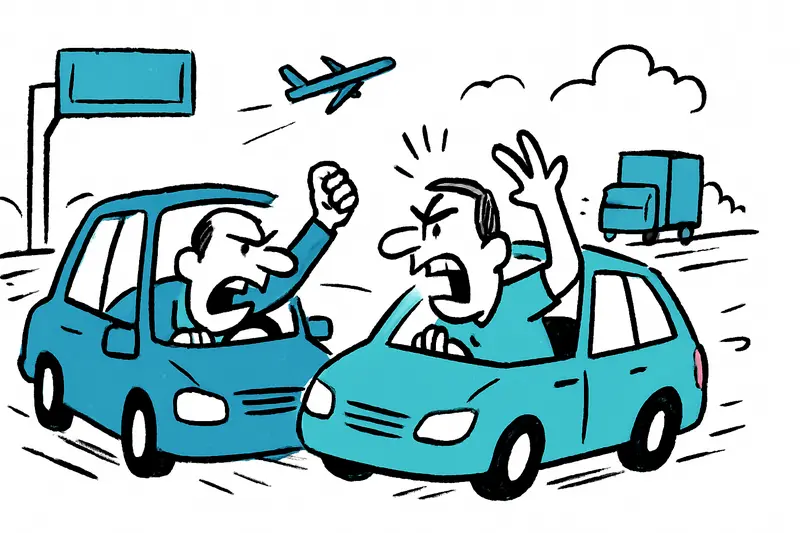
On 19 April 2024, shortly after 6:30 pm, a dispute between two drivers escalated on the MA-19 at the exit for the Son Oms industrial area. According to the indictment, a British holidaymaker who allegedly occupied the lane unlawfully was repeatedly obstructed after a series of risky maneuvers: being braked aggressively, then rammed while merging, and finally chased, which ended in another collision. The scene was recorded both by cameras of the General Directorate for Traffic and by the victim, and the footage spread online.
The public prosecutor is seeking a custodial sentence of two years and a five-year driving ban against the accused. The vehicle's owner, a car rental company, waived civil claims because the damage was covered by insurance. The Guardia Civil opened an investigation and filed charges; the hearing is scheduled at the Magistrates' Court Vía Alemania in Palma.
Critical analysis: The facts are stark, yet much remains unexamined. Legally the debate revolves around individual guilt, endangerment and compensation. That is important, but it does not explain why events escalated that night. Missing is a framing within a broader pattern: stress from increased traffic, confusing merge lanes, a lack of everyday de-escalation tools and the role of rental cars as temporary factors in human misbehavior, as discussed in the Arrest in Capdepera: After shots at a checkpoint — what does it reveal about security and rental-car crime?.
Public discussion is dominated by outrage and calls for punishment. Understandable. But that shifts the problem onto the individual and away from the conditions that make such escalations more likely. Those who focus only on prison or license suspension overlook prevention, infrastructure and the responsibilities of rental companies and authorities.
What's missing from the discourse: First, data on the frequency of similar incidents on the MA-19 or near the airport. Second, information on measures taken by the traffic authority: Are there additional cameras, 175 km/h on the Ma-13: Speeding as a Criminal Offense — What the Case Really Shows or changed lane layouts since the incident? Third, the perspective of rental companies: How do they inform customers about traffic rules, fines and safe driving? Fourth, the role of dashcams and video recordings as prevention and evidence — and the consequences for data protection and court proceedings, illustrated by the Dangerous braking maneuver on the Ma-20: When will authorities finally act effectively?.
An everyday scene from the island: It is an early summer evening, the air above the MA-19 is warm, planes are heading for Son Sant Joan, trucks hum by, and on the approach to the Son Oms industrial estate taxis, delivery vans and holiday rental cars mix. Honking, a distant engine drone, workers in orange vests working at a construction site. In moments like these a small slip, a misunderstood signal to overtake, is enough for the mood to turn — especially when someone is rushing to the airport or has a delivery deadline.
Concrete solutions: 1) Expand visible traffic monitoring (not only for punishment but as a deterrent) at critical points such as merge lanes onto the MA-19. 2) Clearer signage and longer deceleration/acceleration lanes at exits near the airport and industrial areas. 3) Mandatory information by rental companies: a brief code of conduct at handover, including notes on local traffic rules and fines; possibly a short video during the pickup process. 4) Awareness-raising for tourists: cooperation between authorities and the tourism sector to provide easy-to-understand safety information at airports and rental desks. 5) Promote conflict de-escalation training for police and public campaigns to prevent follow-up-chases, as highlighted by the Police pursuit in Llucmajor: Repeat-offender car thief stopped — but what remains unresolved?. 6) Technical measures: more telemetry in rental cars (with data protection safeguards) and a low-threshold reporting app for dangerous driving maneuvers.
Practical first steps can be taken by Palma city council together with the traffic authority: an inventory of accident hotspots along the MA-19, temporary targeted traffic controls and an information campaign for rental companies. The Guardia Civil and the public prosecutor must, in parallel, consistently enforce criminal and regulatory measures — but as a complement to prevention, not instead of it.
Punchy conclusion: Punishment is a necessary part of the response, but it is not sufficient on its own, as the Palmanova verdict: Two years in prison — and what Mallorca must learn now underlines. On Mallorca, the mix of locals, commuters, tourists and rental cars brings together different expectations and frustrations. If we seriously want fewer accidents and targeted aggression, politics, authorities and the industry must cooperate: better infrastructure, clear rental rules and visible enforcement. Only then can we prevent a moment of anger on the MA-19 from becoming a life-changing decision for one of those involved.
Frequently asked questions
What factors contribute to road aggression near Mallorca's airport, and how can they be addressed?
What concrete steps are being proposed to improve traffic safety around the MA-19 and Son Sant Joan?
What happened on the MA-19 at the exit for the Son Oms industrial area?
What role can rental car companies play in preventing unsafe driving around Mallorca?
How do dashcams influence prevention and evidence in Mallorca road incidents, and what about data protection?
What data is still missing to understand incidents on the MA-19 near the airport?
What is Mallorca's summer weather like and how should visitors dress for driving near the airport?
When is it wise to time travel to Mallorca to avoid airport-area traffic?
Similar News
Failed before the first flight: How Fischer Air's plans for Palma were ground down
Announced routes, repeated postponements and now apparent insolvency: Why the Fischer Air project for Mallorca is not me...
Seconds in the Water: 19-year-old Fights Her Way Out of Flooded Car in Palma
A 19-year-old managed to rescue herself from her half-submerged car after sliding under the Verge de Lluc underpass. Res...

Between Dream and Reality: Thorsten Legat and the Challenges of FC Germania Mallorca
The former Bundesliga pro has assembled a colorful squad in a short time. But how realistic is the grand plan for promot...
Arrest warrant at check-in: Why two travelers at Cologne/Bonn Airport suddenly had to pay
At Cologne/Bonn Airport, federal police in mid-September found two German passengers subject to enforcement measures. Bo...

Balearic Islands as a New Route: A Reality Check on Rising Boat Migration
For the first time the Balearic Islands are ahead of the Canary Islands in boat arrivals. What do the numbers really say...
More to explore
Discover more interesting content

Can Cap de Bou

Townhouse Lleo 72
