
Near Ballermann: Quad rider struck by car – what now?
Near Ballermann: Quad rider struck by car – what now?
In an accident in El Arenal a young French woman riding a quad was seriously injured. Police are investigating; there are conflicting statements and open questions about securing tourist routes.
Near Ballermann: Quad rider struck by car – what now?
Key question: Does our infrastructure sufficiently protect holidaymakers and residents when leisure vehicles and fast cars meet?
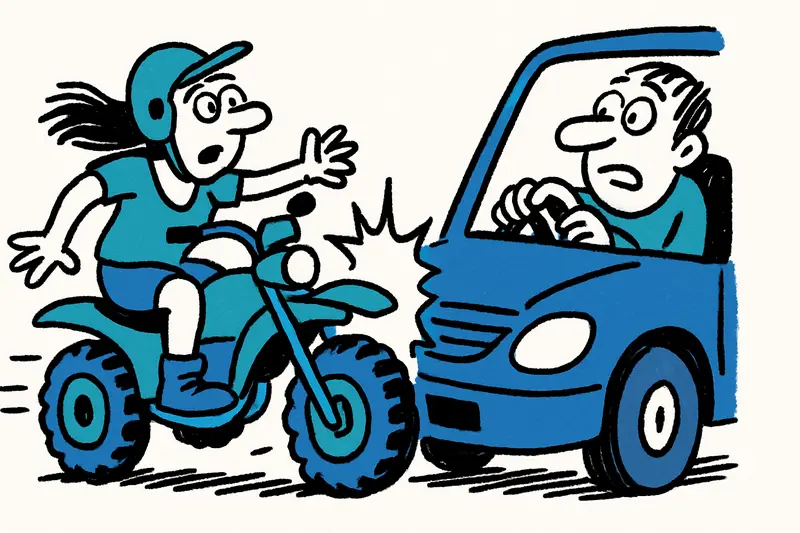
On Friday afternoon, around 4:30 pm, a quad rider in El Arenal was involved in a dangerous collision. The young woman, part of a tourist group, was struck by a car that witnesses say was travelling at high speed. Emergency services stabilised her on site; she was diagnosed with a broken leg and then taken to hospital.
In short: a shock for everyone involved and the question of why the accident could happen at a junction near the seafront promenade. The local police in Llucmajor have opened an investigation. According to initial information there were contradictory statements from the three occupants of the car; at first it was reported that the driver had fled the scene, later one man admitted—he says out of fear of the consequences—that he had been driving. A breath test was negative.
What is important from a journalistic perspective, without spreading speculation? First: the authorities are currently checking whether the quad group ignored a stop sign. Second: the driver apparently lost control; the vehicle crashed into the facade of an unfinished building and then pushed the quad into a construction area. These are the core facts; everything else belongs in the investigation file.
But it is not enough just to list the sequence of events. In El Arenal a dense, changeable flow of traffic between beach bars, rental stations for leisure vehicles and construction sites is normal. On a sunny afternoon you hear market stalls, engine noise, buses, and between them tourists on rental bicycles and quads. It is precisely this everyday mix that increases the likelihood of accidents, as other incidents show, for example Quad accident in Andratx: A conflict between tourism and everyday life.
What is often missing in the public debate is the perspective of infrastructure: where are safe access routes for tourist groups? How clearly are right-of-way rules signposted? And: what responsibilities do quad and buggy rental companies have to prepare their customers for such junctions? The debate too often focuses on assigning blame with phrases like "he was too fast" or "she missed a sign" – both may be true, but that does not eliminate the structural risk; these questions mirror the issues examined in Quad Accident in Cala Pi: Who Bears the Responsibility?.
Concrete short-term measures that could help are not complicated: better, weatherproof and highly visible signage at junctions leading to the promenades; structural protective measures at construction sites so that vehicles cannot be pushed into building structures; separate entrance and exit routes for guided leisure tours that do not cross the main road; regular checks by the local police during peak times; mandatory safety briefings for quad renters with clear documentation; and where possible, speed reductions in sensitive sections.
Mid-term measures should also include tougher rules: stricter requirements for rental companies (insurance, instruction, approved routes), visible speed controls and more pedestrian crossings or roundabouts at dangerous junctions. Nighttime safety concerns and missing measures have been highlighted elsewhere, notably in Seriously injured on Palma's Paseo Marítimo: An accident, many questions. All of this costs money and administration, but it prevents cuts, fractures and possibly lives.
A small everyday image: a few metres from the accident scene a woman sits on a concrete wall with her shopping bags at her side, watching the barrier tape, the flashing lights and the parked emergency vehicles. Gulls circle in the sky, the sea is only a stone's throw away. Such scenes should not make us complacent – they indicate that tourist daily life and traffic safety need to be better coordinated.
Conclusion: The specific accident leaves many open questions that the police must clarify. For the island, however, it is a reminder: we need pragmatic rules and controlled procedures for leisure traffic. Otherwise the tragedy will simply repeat itself in another alley in front of another unfinished building, as previous high-profile cases have shown, for example Fatal Accident on the Paseo Marítimo: Trial Raises Questions About Safety and Control.
Frequently asked questions
What happened in the quad accident near Ballermann in Mallorca?
Are quad rides in Mallorca safe around busy tourist areas like El Arenal?
What should I do if I see an accident in Mallorca while on holiday?
Who investigates road accidents in El Arenal and Llucmajor?
Do quad rental companies in Mallorca need to brief customers on safety?
Is alcohol always involved in quad and car accidents in Mallorca?
Why do accidents happen so often near the seafront in Mallorca resort towns?
What road safety improvements are being suggested for Mallorca after the El Arenal crash?
Similar News
Bendinat as a meeting place: Padel Cup brings together nearly 120 players
Three days of padel at the Bendinat Urban Country Club: organized by El Económico and Borbalán, with around 120 particip...
Large-scale Anti-Tourism Graffiti at Cala Mendia: Protest or Vandalism?
On the morning walkers discovered an approximately 50-meter-long slogan against tourism on the wall above Cala Mendia. W...
Bomb threat before Jet2 flight in Tenerife: A reality check for security protocols
A passenger reported a bomb in luggage shortly before departure in Tenerife. Evacuation, baggage checks, delays — and ma...
Who is stripping Mallorca's coast bare? Why entire slopes are being removed for villas
On Mallorca steep slopes are again being removed to make way for luxury construction sites. Who bears the responsibility...
Robber Falls While Fleeing in Sant Agustí: Who Takes Responsibility?
During a purse-snatching in Sant Agustí, a non-commissioned officer chased the suspect; the man jumped from a bridge and...
More to explore
Discover more interesting content

Can Cap de Bou

Townhouse Lleo 72
