
Nearly Drowned at Playa de Palma: How Safe Are Hotel Pools Really?
Nearly Drowned at Playa de Palma: How Safe Are Hotel Pools Really?
A tourist lost consciousness in a hotel pool at Playa de Palma in the early evening. Thanks to the lifeguard, five local police officers and the emergency services, he survived — after about 20 minutes of resuscitation. A reflective assessment.
Nearly Drowned at Playa de Palma: How Safe Are Hotel Pools Really?
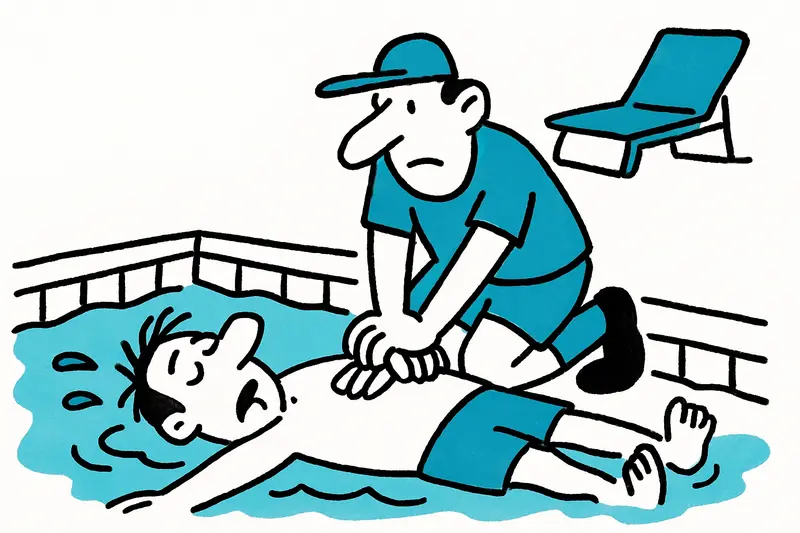
On Tuesday at around 19:05 a holidaymaker was pulled from a hotel pool at Playa de Palma, unconscious and not breathing independently. A lifeguard from the facility reacted within seconds, pulled the man to the pool edge and began resuscitation. Shortly thereafter five officers from the local police arrived and took turns with the pool attendant performing chest compressions until the emergency service (061) took over care. After about 20 minutes of combined effort, they succeeded in reviving the man; he was then taken to a hospital in Palma.
Key question
How good are the equipment and training of hotel staff in Mallorca really — and which gaps are bridged by the luck and commitment of individual employees?
Critical analysis
The sequence shows two things at once: first, how important quick first aid is. Second, how much we rely on the improvisational skills of individuals. A lifeguard acted correctly and quickly. That five police officers ultimately helped is commendable — but it also shows that the chain of professional help in this case was composed of different authorities and actors, and it echoes questions raised in Dead Tourist at Playa de Palma: An Accident Raises Many Questions. A consistent, standardized scenario would be better: easily accessible automated external defibrillators (AEDs) at the pool, regularly trained teams and clear procedures from the hotel reception to the emergency call.
The 20 minutes of resuscitation time is a double-edged detail: it speaks to the endurance and skill of those involved; but it also makes clear how long a person is practically at the mercy of oxygen deprivation. Every minute counts. If an AED had been used earlier, rhythm analysis and a shock might have sped up the outcome.
What is missing in the public discourse
In conversations on the beach you often hear guests assume that a hotel automatically provides life-saving equipment and sufficiently trained staff. Concrete information is lacking, however, as Ballermann in Focus: How safe is Playa de Palma really? discusses: How many hotels have a functioning AED directly at the pool? How often are internal emergency drills held? Who verifies the qualifications of the "lifeguards" — are they certified professionals or temporary helpers with short training? Such numbers and checks are rarely discussed publicly, even though they would greatly influence the sense of safety.
An everyday scene from Mallorca
Imagine the Playa de Palma on a mild summer evening: cash registers beeping at beach bars, a wind making parasols flap, voices in German, Spanish, English. Suddenly the sirring of motorcycle police, the clatter of flip-flops on hotel walkways, the hurried but orderly footsteps on pool tiles. It was here that, on that day, an evening ended that could have gone very differently, as other incidents such as Fall at Ballermann: Why a Morning on Playa de Palma Can Turn into an Accident show.
Concrete solutions
1) AED requirement at hotel pools: Every larger hotel should have at least one operational automated external defibrillator in the pool area. A clearly visible sign and a short briefing for staff are mandatory.
2) Standardized first aid certificates: Lifeguards in tourist areas must be regularly tested according to a binding curriculum that covers heart attacks, respiratory arrest and drowning incidents.
3) Emergency drills with authorities: At least once a year hotels should conduct joint exercises with the local police and emergency services to practice handover processes and secure access points for emergency vehicles.
4) Transparent information for guests: At check-in it should be clearly communicated whether AEDs are available and where the nearest medical help is located. Small information leaflets raise awareness.
Practical immediate measures for guests
When you go into the water: do not swim alone, ask at check-in about evacuation routes and AEDs, pay attention to the presence of lifeguards and note the location of the reception. In an emergency: immediately call 112, clearly say "Problem in hotel pool, Playa de Palma", state the location and condition of the affected person.
Pointed conclusion
The case ended well — because people acted quickly and persistently. That must not be our standard: we should not rely on the luck of individuals. It is about simple, verifiable measures: defibrillators, mandatory training, rehearsed procedures. Such rules would make everyday life at Playa de Palma safer — and allow us all to look at the sea with greater peace of mind.
Frequently asked questions
Is Mallorca still warm in autumn?
When is the best time to swim in Mallorca?
What should I pack for Mallorca outside summer?
Is Mallorca good for a short break in the shoulder season?
What is Palma like in mild weather?
Is the Tramuntana Mountains area worth visiting in cooler months?
Can you still do outdoor activities in Mallorca when it is not hot?
Do I need a jacket in Mallorca in the evening?
Similar News
Nine-year-old rescued after cliff fall at Cala Murada — How safe are Mallorca's coastal paths?
A boy fell roughly five meters down the rocks near Cala Murada. The dusk rescue was elaborate; a helper also had to be r...
How safe are tourists in the luxury marinas? After arrests: a reality check
The Guardia Civil arrested two men in Calvià who are suspected of stealing luxury watches in Port d'Andratx and Puerto P...
Palma Chases Wealthy US Tourists — The Key Question: Who Should the City Actually Serve?
The city is investing more than €200,000 to attract high-paying visitors in several US cities. A good idea — but what is...
Enough swimming: Why Port de Pollenca is louder than the sea
More than 200 people formed a human chain in Port de Pollenca — not only as a protest but as a wake-up call. Guiding que...
Mysterious disappearance in Alcúdia: Where is 24-year-old Lisa B.?
Since August 3 there has been no trace of 24-year-old German Lisa B. The family has traveled to Mallorca and urgently re...
More to explore
Discover more interesting content

Boat Tour with BBQ along Es Trenc Beach

Private transfer from Mallorca Airport (PMI) to Pollensa
