
No Identification Documents on the Steep Slope: Body near Tolleric Raises Questions
No Identification Documents on the Steep Slope: Body near Tolleric Raises Questions
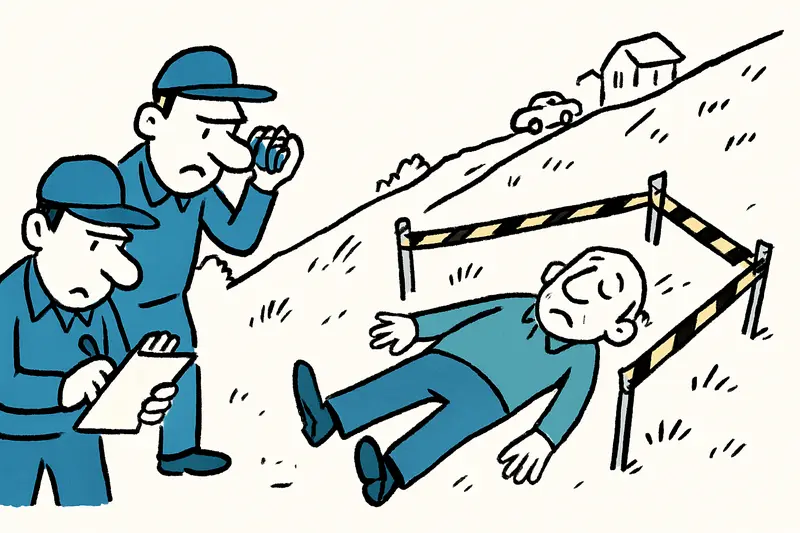
The body of an elderly man was found over the weekend in a wooded area near the cliffs of Tolleric. He had no identification, showed signs of sun exposure and apparently lay undiscovered for several days.
No Identification Documents on the Steep Slope: Body near Tolleric Raises Questions
Who was the man — and how can a person remain unnoticed so close to houses?
On Saturday a walker discovered the body of an elderly man in a dense pine wood near the cliff of Tolleric (municipality of Llucmajor). The Guardia Civil took over the investigation on site. The victim had no identification documents; initial on-site examinations suggested skin reddening that could indicate the man had been exposed to the sun for several days. The body was recovered and taken to the Institute of Forensic Medicine for further examination, where DNA samples were taken to clarify the identity.
Key question: Why does a person remain forgotten for so long in an area with inhabited houses? That question remains after emergency services cordoned off the scene and forensic technicians worked quietly on the slope.
Critical analysis: Two facts stand out immediately. First: no identification documents. Second: death occurred several days earlier. Their combination exposes a vulnerability: if someone is travelling without papers or loses them, the chances of quickly contacting relatives drop immediately. And if the location is neither frequently visited nor easily visible — even if it is "near" a settlement — days can pass before someone comes by. The expertise of the Guardia Civil is required, but some structural questions cannot be solved by police work alone; similar difficult discoveries have been reported in the area, for example Mystery at the finca near Llucmajor: blood traces — but no clear motive.
What is missing from the public debate: we rarely talk concretely about the interfaces where people "disappear" — not in the sense of crime, but through isolation, illness or disorientation. There are hardly any reliable figures on how many older or solitary people on Mallorca occasionally travel without documents, or how fast DNA comparisons run in the island context. Also missing is a public discussion about simple preventive measures for walkers in hard-to-see coastal areas; similar local incidents can be seen in coverage such as Fatal Discovery in Son Macià: A Case Raising Questions about Protecting Older People.
An everyday scene from Mallorca: you walk down the sandy field track, the smell of pine resin is in the air, the sea hits the rocks in the distance, and a car dozes on the road above the slope. Walkers with dogs rarely use the same overgrown path twice in one day; many tourists do not remember routes. This creates terrain where a person can easily remain unnoticed — especially in oppressive late-summer heat, when short heat waves increase fatigue and disorientation; the hinterland has seen unsettling finds reported before, such as Body on a finca near S'Aranjassa: How safe is the hinterland anymore?.
Concrete, quickly implementable solutions: first, better signposts and simple markings on paths combined with emergency QR codes that send location data to rescue services. Second, stronger cross-checks between local social services, care providers and the Guardia Civil so missing persons can be found more quickly in regional systems. Third, awareness campaigns: people should be encouraged to carry at least an emergency card with contacts in waterproof pockets and to inform neighbors about regular routines. Fourth, volunteer groups and neighborhood initiatives could organize targeted patrols on hard-to-see paths; this costs little and noticeably increases the chances of discovery.
Technical options: an accelerated procedure for DNA comparisons of unidentified deceased persons should be considered, as well as better use of existing national databases in coordination with the Guardia Civil. At the same time, this must not become an automatism that replaces personal responsibility: local prevention remains central.
For relatives and neighborhood members, uncertainty is the worst part. Authorities await the results of the DNA analyses, which should clarify identity and possibly point to family contacts. Until then, the scene on the slope remains a reminder: small shortcuts, confusing paths and summer lethargy can decide between life and death.
Pointed conclusion: the find in Tolleric is not purely a police matter but a silent indicator of gaps in the interplay of infrastructure, social care and neighborhood vigilance. Those who take the issue seriously do not start with legislative changes, but with signposts, neighborhood contact lists and the simple request: carry a contact card, tell someone where you are going today, and report unusual things to the Guardia Civil immediately — a small step that can save lives.
Frequently asked questions
How can Mallorca's coastal trails be safely explored in summer heat?
What practical safety measures could help if someone goes missing near Mallorca's coast?
Why might someone traveling in Mallorca be difficult to contact or identify?
What happened near Tolleric on Mallorca recently?
How can local communities in Mallorca reduce the risk of people getting lost on hard-to-see paths?
How is DNA used to identify unidentified bodies in Mallorca, and what are the concerns?
What can individuals do to help authorities when planning hikes in Mallorca’s rural areas?
What broader lessons does the Tolleric case suggest about Mallorca’s public safety and infrastructure?
Similar News
Palma under the microscope: 87 arrests over forged passports – what now?
The National Police stopped 87 people at Palma airport this year with allegedly forged documents. Why are controls alone...
When a Taxi Fare Dispute in Magaluf Turned Bloody: How Safe Are Passengers and Drivers?
In Magaluf a dispute over the fare escalated: a tourist, now 18, is accused of having seriously injured a taxi driver in...
Why Mallorca Has Become So Terribly Expensive — A Reality Check
Rents are exploding, staple food prices are rising, wages are lagging behind. A look at the causes, what is missing from...
When Paradise Becomes Unaffordable
Hotel rooms, paella and the weekly grocery shop: Mallorca is becoming more expensive for many. Who pays the bill — guest...
End at Ballermann: What Is Lost with the Dino Mini Golf at Playa de Palma
On October 25 the dinosaur mini-golf course at Playa de Palma will close after more than 30 years. Why the city is recla...
More to explore
Discover more interesting content

Can Cap de Bou

Townhouse Lleo 72
