
When a Taxi Fare Dispute in Magaluf Turned Bloody: How Safe Are Passengers and Drivers?
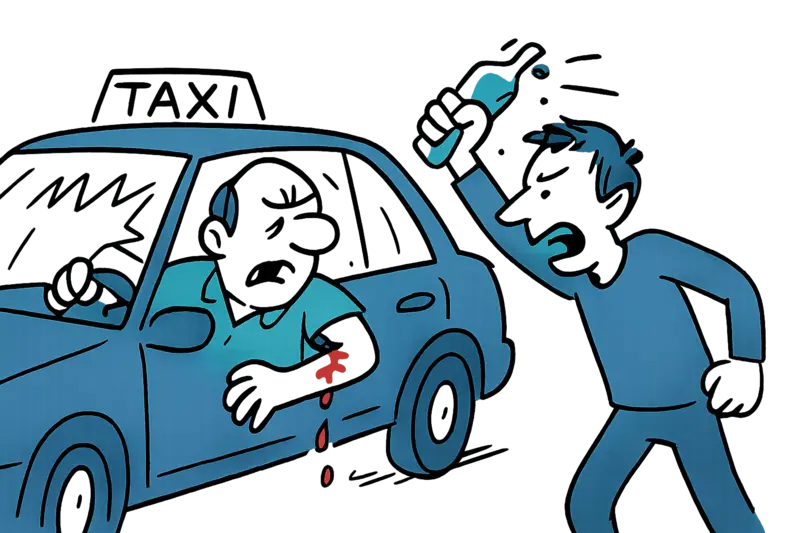
In Magaluf a dispute over the fare escalated: a tourist, now 18, is accused of having seriously injured a taxi driver in 2023 with a broken bottle. The public prosecutor demands seven years in prison.
When a Taxi Fare Dispute in Magaluf Turned Bloody: How Safe Are Passengers and Drivers?
Key question: Why can an argument over a few euros at night so quickly turn into life-threatening violence?
In the early hours of 8 April 2023, around two a.m., a trip to the Hotel Barbados in Magaluf turned into a nightmare for a taxi driver. According to the indictment, a then-minor got out of the car, kicked the window, the glass shattered and caused damage to the vehicle amounting to €1,649. Shortly afterwards, the young Brit is said to have grabbed a broken bottle and inflicted an approximately 15-centimeter cut wound to the driver's abdomen. Additional injuries to the left arm and skin abrasions document the driver's resistance, who apparently tried to defend himself. The wounds healed within about 30 days.
Officers of the Guardia Civil from Calvià intervened and arrested the suspect; he remained in pre-trial detention until 23 May 2023. The public prosecutor's office assumes the attacker acted with intent to kill and is demanding a prison sentence of seven years before the regional court in Palma, as well as €1,500 in compensation for pain and suffering and reimbursement of the repair costs of €1,649. The trial begins next Monday.
These are the documented facts. They are enough to see the severity of the allegations, but they leave many questions unanswered: How did the dispute over the fare arise? What role did alcohol, group dynamics or language misunderstandings play? And how well protected are taxi companies and drivers against such sudden, violent escalation, as seen in Magaluf: Escalation at the Bus Stop — What the Incident Reveals About Safety and Civil Courage?
The everyday scene in Magaluf is familiar: avenues with quieter music after 1 a.m., the last buses, a row of taxis waiting in front of the hotels. You hear the clinking of glasses, announcements from bars, rarely police sirens — and sometimes heated arguments at taxi ranks when passengers argue about prices, detours or luggage, as in Brawl at Playa de Palma: Why a verbal exchange could have ended fatally. The atmosphere can become charged quickly; a wrong word, a shove at a narrow door, a broken bottle — and the night can tip over.
Critical analysis: This case highlights two levels of the problem. First: the physical vulnerability of professions that work outside at night. Taxi drivers are often isolated, have little backup, and at the moment of escalation no safe escape route. Second: legal questions surrounding the age of the suspect, the motivation and the classification of the crime. The indictment claims intent to kill; that significantly affects the sentencing range and public perception.
What is rarely discussed in the public debate: prevention and accompanying measures. Victims need psychosocial support, drivers need better protection — not only through retrofitted protective screens, but through clear, practicable protocols for night shifts. There is also often a lack of reliable, easily accessible information for tourists about fares and local rules, so that small disputes do not immediately become the main cause of an escalation; incidents like Magaluf after the beach discovery: When partying becomes a danger zone underline this risk.
Concrete proposals that could help in Magaluf:
1. Visible fare information: At taxi ranks and on online platforms, prices, surcharges and typical routes must be clearly displayed in multiple languages.
2. Protective measures for drivers: Mobile panic buttons, functioning interior cameras with clear data protection rules and regular de-escalation training can reduce the risk.
3. Night patrols and presence: More frequent police checks in hotel hotspots, cooperation between hoteliers, taxi dispatch centers and the Guardia Civil, especially in the early morning hours, as called for after disturbances such as Riot in Magaluf: TV out the Window, Room Like After a Storm — What Now?.
4. Prevention for guests: Information signs in hotels and leaflets about conduct on the streets and how to act in conflicts — short tips often prevent lengthy and dangerous confrontations.
A simple, pragmatic start would also be a round table in Calvià: representatives of taxi companies, hoteliers, police and municipalities could agree on binding procedures for conflicts — from the immediate call to the dispatch center to waiting safely for assistance.
Punchy conclusion: The act itself is hard to defend, and the prosecutor's demands are clear. But our focus must not rest solely on prosecution. If we want to prevent a broken bottle or a dispute over a few euros from causing life-threatening injuries, we need practical protective measures, clear information for guests and a stronger presence in nightly hotspots. Magaluf is not a lawless place; but here, where nightlife and tourism meet, every opportunity should be used to prevent such escalations — before a court rules, before headlines follow, before a person is permanently harmed.
Frequently asked questions
Are taxi rides safe in Magaluf at night?
How can a small taxi fare dispute in Mallorca turn violent?
What protections exist for taxi drivers in Mallorca to prevent violent escalations?
What should I do if I’m involved in a taxi fare dispute in Mallorca to stay safe?
How can hotels and taxi services in Magaluf prevent conflicts in the early morning hours?
Where should tourists look for clear taxi fare information in Mallorca?
What practical tips can travelers with nightlife plans in Mallorca follow to reduce risk?
What are the potential legal consequences for violence during a taxi fare dispute in Mallorca?
Similar News
Why Mallorca Has Become So Terribly Expensive — A Reality Check
Rents are exploding, staple food prices are rising, wages are lagging behind. A look at the causes, what is missing from...
When Paradise Becomes Unaffordable
Hotel rooms, paella and the weekly grocery shop: Mallorca is becoming more expensive for many. Who pays the bill — guest...
End at Ballermann: What Is Lost with the Dino Mini Golf at Playa de Palma
On October 25 the dinosaur mini-golf course at Playa de Palma will close after more than 30 years. Why the city is recla...
Expensive Address Calvià: What Does First Place Mean for Mallorca?
The National Institute of Statistics (INE) ranks Calvià as Spain’s most expensive municipality for property purchases. W...
Emergency over Spain: Ryanair Dublin–Tenerife flight diverted to Santiago after medical emergency
A Ryanair flight from Dublin to Tenerife was diverted to Santiago de Compostela due to a passenger's acute health proble...
More to explore
Discover more interesting content

Can Cap de Bou

Townhouse Lleo 72
