
Orphaned Keys: Increasing Number of Apartments in Mallorca Without Known Heirs
Orphaned Keys: Increasing Number of Apartments in Mallorca Without Known Heirs
On Mallorca, more and more apartments are accumulating whose owners have died without reachable heirs. This leads to unpaid community fees, neglected flats and a risk of squatting. What is missing in public debate — and what practical steps can be taken?
Orphaned Keys: Increasing Number of Apartments in Mallorca Without Known Heirs
Guiding question: How do municipalities, neighbours and administrations deal with properties whose owners have died but left no reachable heirs?
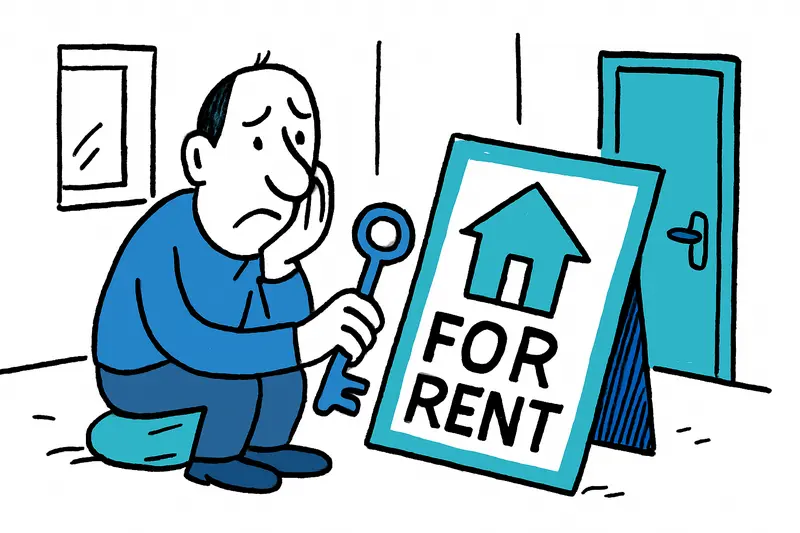
On a Tuesday morning, street sweepers blow dust off the paving of Carrer de Sant Miquel in Palma, a dog barks high up on a roof terrace — and in front of a squatted block there is a pile of unpaid community bills. This is what the consequences look like when apartments can no longer be assigned to anyone: owners are dead, relatives cannot be found, and the keys are effectively orphaned.
The observable reality on the island: there are increasingly many cases where properties stand empty because after the owner’s death no heir is known or reachable. A law firm specialising in inheritance law now pays a reward for tips that lead to the discovery of entitled heirs (Real Estate and Inheritances in Mallorca: Act Smart Now Before Rules Change). Those affected are often people without regular family contact and especially foreign owners who only owned a holiday property here or who have been absent for a long time.
In the short term this appears to be a bureaucratic problem; in the long term it is social and economic: rent increases, unpaid community fees and empty apartments that slowly fall into disrepair or become targets for squatting, as discussed in Why long-term rentals in Mallorca are dwindling — and what could help.
Critical analysis: the system has gaps. The land registries document ownership, but not always personal contacts or digital estates. Consulates, notaries and local administrations play different roles in cases of need — but their cooperation is often reactive rather than preventive. There is a lack of a practical, low-threshold mechanism to systematically reach absent or foreign owners or to arrange for their estates in advance.
What is often neglected in public debate: the perspective of homeowners' associations and neighbours. For an owners' association, a small neighbourhood in S’Arenal or a multi-family building in Santa Catalina, a single unpaid contribution means additional burden for dozens. This links to broader housing pressures discussed in When Living Rooms Become Bedrooms: How Mallorca Suffers from a Housing Shortage. Also little visible are the small, everyday costs — main water meters, caretaker hours, waste collection fees — that continue even though no one takes responsibility.
A practical everyday image: the cleaner from a neighbourhood near the Passeig Marítim complains that she repeatedly stands before locked doors while mailboxes overflow with reminders. The lanterns at some portals flicker because the electricity meter is registered to the deceased and nobody pays — until the municipality intervenes.
Concrete approaches that make immediate sense and require comparatively little bureaucracy:
1) Strengthen local reporting culture: Municipal portals could provide a simple contact point where property managers can report cases anonymously. Such reports would trigger a deadline within which notaries and social services are informed.
2) Preventive advice at purchase and rental: Notaries should more strongly advise buyers and landlords about the importance of testamentary arrangements; for foreign buyers, information sheets could be provided in several languages.
3) Cooperation with consulates: Consular lists often contain contact details for absent residents. A coordinated exchange between municipalities, the land registry and consulates could make locating heirs easier — of course respecting data protection rules.
4) Transitional solutions for homeowners' associations: Bylaws could provide for emergency funds that temporarily cover outstanding contributions until legal clarification is achieved. This prevents the neighbourhood from bearing the cost alone.
5) Securing vacant apartments: Property managers should offer a standard package for short-term securing and inspection: electricity and water notifications, condition reports, a local contact person on site.
What does not work: ignoring the problem and hoping an heir will eventually come forward. Vacancy attracts crime and neglect — this is an experience neighbourhoods have already had. Equally unhelpful is trying to impose blanket national solutions without taking local realities into account.
Public information is still lacking: a simple, comprehensible message for property owners — "If you are not always reachable, register a contact here." A small step would be a mandatory field for an emergency contact person in the land registry entry, combined with a data protection declaration and an obligation to update it every few years.
Pointed conclusion: the increase in apartments without known heirs is not an abstract legal problem — it shows how vulnerable an island society can be when ownership often crosses borders. Practical solutions are obvious: better coordination between authorities, simple preventive obligations when buying property and a solidaristic buffer for community costs. Anyone who thinks this only affects "distant" cases should look at the windowsills on their street: orphaned keys could mean the bill in your mailbox tomorrow.
Frequently asked questions
What happens in Mallorca when a property owner dies and no heir can be found?
Why are empty apartments with no known heirs becoming more common in Mallorca?
Can unpaid community fees build up in a Mallorca apartment if nobody inherits it?
What can neighbours and property managers do about an abandoned apartment in Mallorca?
How can foreign owners of Mallorca property make sure someone can be contacted if they die?
Do Mallorca municipalities have a role in cases where no heirs are known?
Can a squatted apartment in Mallorca be linked to an inheritance problem?
What should Mallorca buyers ask about inheritance and emergency contacts before purchasing property?
Similar News
When the Wallet Becomes a Danger: Attack in Peguera and Lessons for Mallorca
In Peguera, two women are said to have stolen the wallet from a 75-year-old German couple. When the victim intervened, t...
Plata stays Plata: Young people take over, Llonguets remain
A small bar on Carrer de l'Argenteria will continue: Tolo Serra hands the place over to young Mallorcans at the end of t...
Unnoticed in the Luggage Compartment: How a Boy Traveled More Than 100 Kilometers in a Team Bus
A minor traveled in the undercarriage of a team bus for more than 100 kilometers until his cries for help were heard. A ...

Cap Vermell Grand: Second Michelin Key – a Gift for the East
The Cap Vermell Grand in Capdepera has been awarded its second Michelin key. For the region this elevates the luxury off...
Eurowings lets four aircraft carry names – a friendly idea that also reaches Mallorca
Eurowings is launching a campaign: four Airbus A320s are to carry the first names of people who help others in everyday ...
More to explore
Discover more interesting content

Can Cap de Bou

Townhouse Lleo 72
