
The Painter Who Lived Mallorca: Franz Taussig and His Century-Old Secret
The Painter Who Lived Mallorca: Franz Taussig and His Century-Old Secret
A hundred years ago a young Viennese arrived in El Terreno, sketched the island and called himself Francis Caron. Today we know: it was Franz Heinrich Taussig — a discovery that enriches Mallorca's cultural heritage.
The Painter Who Lived Mallorca: Franz Taussig and His Century-Old Secret
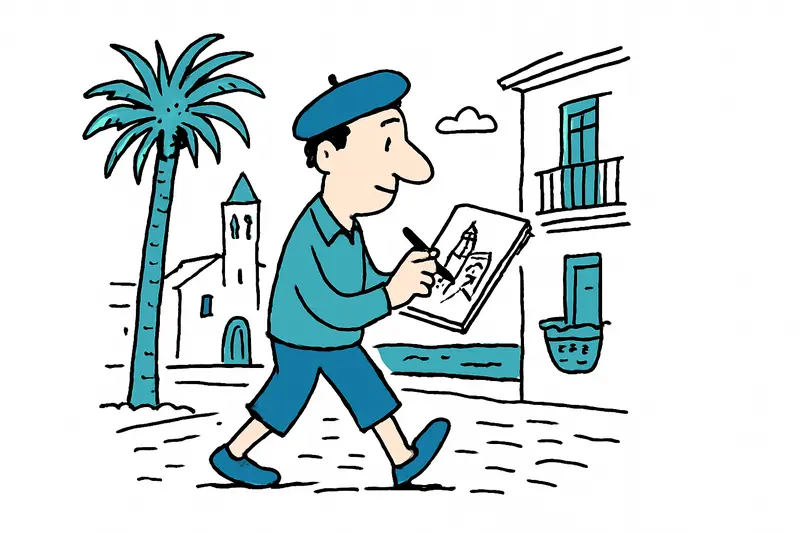
The Passeig Mallorca smells of sea and coffee; the work of a bakery on Calle Alfonso XIII makes fresh ensaimadas dance in the air. This is how I imagine those summer evenings when a 19‑year‑old from Vienna arrived in El Terreno, rented a room with a view of Porto Pi and began to capture the island in lines and notes. His diary and his drawings remained for a long time a charming puzzle — until now, when the author's identity was revealed.
Thirty—no, a hundred years ago Mallorca felt different: fewer hotel lobbies, more neighborhood; more baskets lowered from balconies than suitcases rattling on conveyor belts. In the middle of this small, dimly lit world the young artist drew people in everyday life, street scenes, Palma Cathedral, views of the Bellver wood. His pictures breathe a closeness to the island, not merely tourist distance.
The book that many knew under the English title Majorca. The Diary of a Painter (London, 1939) gave the name Francis Caron. But the story behind the pseudonym remained unclear. After long investigative work it turns out: Caron and Franz Heinrich Taussig were one and the same person. Taussig, born in 1906 in the Prague region, went to Vienna, studied graphics and etching and found in 1926 on Mallorca a working and living environment that clearly did him good.
This finding is not a dry justification of a name. It puts pictures, works and archival pieces back where they belong — into the biography of an artist who moved between Vienna, Berlin, Barcelona, Havana and New York and whose œuvre is now easier to read. His early Mallorca sheets link to etchings from a 1929 collection, and an American naturalization document from 1941 brings both names together for the first time.
On the street I often hear older people still tell stories of Mallorca's pre‑tourism days. Taussig's diary is one of those voices: not a monument, but a lively account. He noted prices, smells, habits, Mallorcan turns of phrase and small mishaps — all of which make the pages a source that museums and schools can use when they want to explain the island's social life before the big wave of mass tourism, and it can also prompt debates about authenticity and market safety, as discussed in When Pictures Lie: Why Mallorca's Art Market Must Rethink Now.
And it is also a piece of everyday life that does us good today. The clarification of identity shows: Mallorca has always been open to strangers, a place of encounter that sometimes changed lives. Taussig learned Mallorquín, traded his suit for espadrilles and worked his way into the neighborhood. Not an exotic spectacle, but a becoming‑woven — and that still resonates.
What does this mean concretely for us on the island? First: an offer to cultural venues. Publishers, libraries and museums could plan exhibitions, offer walks along the places in El Terreno and Plaza Gomila and hang Taussig's drawings next to contemporary photos. Schools could use the diary as a starting point for projects on everyday history. And artists get an example of how closely observation and belonging can be entwined, as with Joan Aguiló: Portraits, Walls and the Real Mallorca.
The man's story is also a reminder of the ruptures of the 20th century: flight, name changes, new beginnings. Taussig, later also known as Octavio José Álvarez, continued his life in the USA — no longer primarily as a painter, but as an inventor and tinkerer. That does not make the biography any smaller, but richer: a life with several chapters, each worth reading.
I find it pleasing that we now know more precisely who that young draftsman was whose strokes show Mallorca so directly. It is an invitation to see the island again with open eyes: not as a backdrop, but as a community, as material for stories. And for those of us locally it means: look into our own archives, take books off the shelf, make connections, as happened when a 1447 nautical chart returned to the Museu de Mallorca, reported in Back to the Island: A Nautical Chart from 1447 Returns to the Museu de Mallorca. A small gain for Mallorca's cultural memory — and a reminder of how much still lies dormant in the corners.
Outlook: A walk through El Terreno with Taussig's sketches in your pocket, an exhibition in a small gallery or a school project about life between the world wars — these are concrete steps. The unmasking of a pseudonym can thus become an invitation to retell one's own history.
Frequently asked questions
Who was Franz Taussig and what is his link to Mallorca?
What does Taussig’s Mallorca work reveal about life on the island before mass tourism?
How was Francis Caron identified as Taussig?
Can Taussig’s diary be used for school projects about life in Mallorca between the world wars?
Which Mallorca places are connected to Taussig's life and art?
What happened to Taussig after his Mallorca years?
How can cultural venues present Taussig’s Mallorca story today?
What does the unmasking of the pseudonym say about Mallorca’s cultural memory today?
Similar News
Airport dispute: Bridge, forecasts and the question of responsibility
A video by the Spanish transport minister has ignited the dispute over DORA figures, capacities and local governance pow...

The Painter Who Invented Himself: How a Young Viennese Drew Mallorca
A hundred years ago a 19-year-old draftsman arrived in El Terreno. His diary and sheets, long known under the pseudonym ...
Released with Conditions: The Plus Ultra Suspicion and a Mallorcan Finca as Residence
A Dutch entrepreneur, sought in connection with the Plus Ultra case, was extradited to Spain after his arrest in Germany...

Haute Nuit in Puerto Portals: Fashion, Art and Indulgence by the Water
On October 2 the Lobster Club in Puerto Portals will be transformed into a stage for curated fashion, art and culinary e...
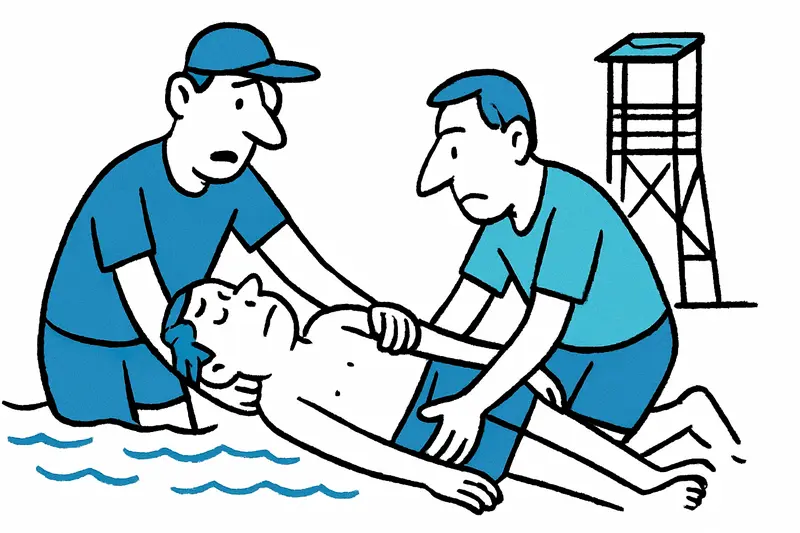
Magaluf: Watchtower Alarm – Lifeguards Pull Unconscious Beachgoer from the Water
After a drama in the late afternoon, two lifeguards at Magaluf beach rescued an unconscious 44-year-old man. He was stab...
More to explore
Discover more interesting content

Can Cap de Bou

Townhouse Lleo 72
