
Work on Palma's City Wall: Why Did It Take So Long — and What's Next?
Work on Palma's City Wall: Why Did It Take So Long — and What's Next?
The restoration of the Baluard del Príncep on the Avenidas is resuming after the 2021 halt left many questions unanswered. A reality check: funding, transparency and everyday life on the Avinguda.
Work on Palma's City Wall: Why Did It Take So Long — and What's Next?
A reality check on the resumption of restoration at the Baluard del Príncep
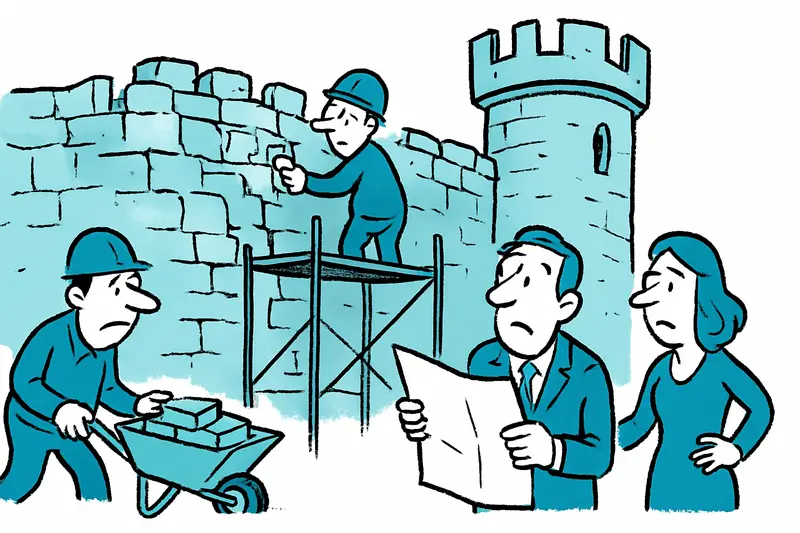
This week the barriers around Palma's Baluard del Príncep are once again the scene of lively activity. Scaffolding rises along the Avenidas, a small crane sways, and workers carry bags of building materials past. For many residents this is a moment of relief: the fortress wall has stood behind fences for years because work stopped abruptly in 2021 after the original construction company went bankrupt.
Key question: Why did a listed-project, which should have been completed back in March 2023, take so long — and what needs to happen now to ensure it is finished smoothly this time?
Briefly the facts, as they stand: the restoration was suspended after the works stopped. Palma's town hall has now re-tendered the work, and the Spanish central government allocated around €1.6 million in October to complete the measures, as reported in Baluard del Príncep: Final Sprint at the City Gate – Is the Financial Boost Enough?. Those are clear steps — but not the whole story.
A critical look reveals several issues beyond scaffolding and mortar. First: responsibilities are blurred in the public perception. Who is liable for the delays and the additional costs after the insolvency? Second: there is a lack of transparency. For residents, shopkeepers on the Avenidas and visitors it is unclear which works will be carried out in which order and how long closures will last.
Third is expertise and monument conservation. A historic wall is not an ordinary structure — weathering, earlier repairs and the original materials require specific specialist knowledge. How much conservation expertise is included in the new plans? This question remains underexposed in the available information; see Collapse at Palma's City Wall: What Needs to Happen Now for reporting on a related incident.
What is missing from public discussion can be summed up in two points: comprehensible timelines and transparent cost breakdowns. People on site want to know if and when full access will be possible again, whether planned excavations could lead to further surprises, and who is liable for damage.
A small everyday scene illustrates the problem: in the early morning café tables on the Avinguda are still half empty. A parcel delivery driver navigates carefully past the construction barrier, bikes are parked on improvised posts, and passersby stop to peer through the fence. Children point at the construction-site stickers, which are more technocratic than informative. Moments like these show: the construction site is part of daily urban life — and should be treated as such.
Concrete approaches that could have quick effects:
1. Transparency requirement for schedule and costs: The town hall should publish a clear milestone plan: which trades, which weeks, which restrictions. A cost breakdown including funds already spent builds trust.
2. Independent technical review: A short report by an independent monument conservation body reduces the risk of later defects and ensures traditional techniques and materials are used correctly.
3. Involvement of the neighborhood: Information evenings or a digital construction tracker with a webcam would reduce residents' uncertainty and nip rumours in the bud.
4. Contract design with safeguards: For follow-up contracts payments should be more strongly tied to verified milestones and guarantees against insolvencies should be required. Public funds need solid protections.
5. Use local value creation: Where possible, Balearic craft businesses should be involved — this promotes local know-how and strengthens acceptance.
All of these are practicable measures. They take time and sometimes some money — but they avoid more expensive corrections later. The release of around €1.6 million was a necessary impulse. Whether it is sufficient and used responsibly is now the question.
Conclusion: the resumption of work at the Baluard del Príncep is a chance to restore lost trust. What the city administration needs now is less symbolism and more solid communication, transparent contracts and technical care. Then the wall will not only be restored — it can also become an example of how Palma handles its historic heritage in times of limited resources.
If you walk along the Avenidas you can now hear the clatter of tools and see movement behind the fences again. That is good. It would be even better if citizens knew exactly how long they will have to endure the noise and what to really expect in the end.
Frequently asked questions
When is the best time to visit Mallorca for good weather and comfortable temperatures?
Can you swim in Mallorca outside the summer months?
What should I pack for a trip to Mallorca in spring or autumn?
Is Mallorca still worth visiting if the weather is not ideal for the beach?
What is Port de Sóller like for a short visit in Mallorca?
Is Cala Ratjada a good place to stay in Mallorca?
What is the weather usually like in Mallorca in early spring?
Which parts of Mallorca are better for a quieter holiday?
Similar News
More water than last year: Mallorca's reservoirs breathe easier
September rain refilled the Tramuntana's reserves: overall fill around 35 percent, Cúber at 40.42 percent, Gorg Blau at ...
Three Luxury Hotels in Banyalbufar: Lots of Money, Many Questions
A Danish investor plans three exclusive accommodations in Banyalbufar — including the historic Son Valentí. The announce...
2.1 tonnes of cocaine on sailing yacht off Spain's coast – a reality check for the coastguard
A 14-metre yacht was seized with 2.1 tonnes of cocaine. Who monitors the ports, how does the international hunt succeed ...

Heat Bonus in Mallorca: 100 Euros Extra for Outdoor Staff at MarSenses
MarSenses pays employees who worked outdoors in August an extra €100 as recognition. Lighter uniforms, reduced hours for...
Renovating in Mallorca: What You Really Can Do Without Neighbour Consent
Many think they can do whatever they want in their apartment. That's partly true — but only as long as structural elemen...
More to explore
Discover more interesting content

Can Cap de Bou

Townhouse Lleo 72
