
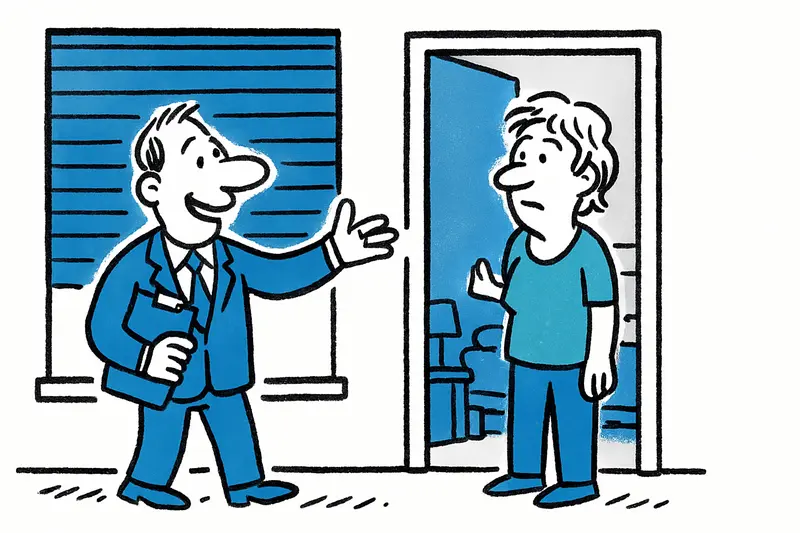
When Offices Go to Sleep: Palma's Plan to Revive the Old Town
Palma allows the conversion of vacant offices and shops into apartments. A bold step against deserted streets — but it raises questions: who will bear the costs, how can diversity be maintained, and what technical hurdles lie within the old walls?
When Offices Go to Sleep: Palma's Council Says Yes — and the Old Town Is Listening
On October 1, Palma passed a decision that is already creating discussion in the narrow lanes of the old town: vacant ground-floor spaces, previously used as offices or small commercial units, may be converted into apartments, as reported in Palma permite la conversión de oficinas y locales vacíos en viviendas. Anyone who walks across Plaza Santa Eulàlia in the morning or strolls down Calle Olmos knows the places: closed shutters, deserted display windows, often only a phone number left as a last greeting to better times.
The central question: Will this enliven the city — or empty another form of life?
At first glance it sounds logical: turn vacant commercial space into housing instead of building anew on greenfield sites, a debate that also appears in discussions around large new projects Palma plans 3,500 apartments: Opportunity for Son Güells — or too much speed, too little planning?. More people in the neighborhood mean the smell of coffee from real kitchens in the morning, not just cafés, and perhaps fewer damaged facades. A retired woman from the area laughs while walking her dog in Parc de ses Estacions: "Finally voices in the shops again."
But the conversion raises difficult questions. Who pays the often high renovation costs — fire protection, structural work, soundproofing? Many shops and offices are in 19th-century buildings; historic ceilings, narrow staircases and small courtyard entrances make technical solutions expensive. Owners are often scattered: a mix of private owners, heir communities and investment funds, a dynamic explored in Who Owns Palma? When Luxury Quietly Repaints the Working-Class Neighborhoods. Coordinating the financing is no small matter.
What is rarely discussed publicly
There are several aspects that receive little space in the ongoing debate. First: infrastructure. More apartments require more water, waste disposal and electricity — and in the network of the narrow old town, delivery vans often have to contend with parking bans and church festivals. Second: traffic load. Families have different mobility needs than night bars or small workshops. Third: social mixing. If only the financially profitable owners convert, there is a risk of displacing businesses that make up the neighborhood's character.
Technical hurdles are often reduced to "building defects." But it's also about predictability: how are craftsmen supposed to work live in an occupied neighborhood without paralyzing it? How do we prevent good intentions from getting stuck in endless approval procedures?
Concrete opportunities — and how Palma could use them
The city has not only recognized the problem but also announced rules: minimum standards for light, ventilation and fire protection as well as priority lists (social housing, subsidized rents). That's a start, and it comes alongside other regulatory moves such as Palma pulls the emergency brake: Short-term rentals, party boats and hostels to disappear. The following measures could help in a more concrete way:
1. Conversion support package: Tax relief, low-interest loans and grants for sound and fire protection would make many projects possible in the first place.
2. Standardized conversion kits: Technical modules for bathrooms, building services and fire protection tailored to narrow old-town layouts could reduce costs and approval times.
3. Obligation to mixed use: Neighborhood agreements that secure a minimum quota of commercial and craft spaces would prevent a one-sided conversion favoring pure residential use.
4. Neighborhood participation and timetables: Transparent renovation plans and noise windows reduce conflicts. A municipal advisory office for owners could coordinate technology, funding and schedules.
5. Pilot projects: Three to five selected conversions as model examples — in different building types — would make problems visible and provide practical solutions.
Between pragmatism and the feeling of an island
Palma's initiative is pragmatic: making existing space usable again instead of sealing new land. But the implementation will decide whether the old town becomes more lively or merely differently empty. It's not just about square meters. It's about suppliers, hairdressers, small studios — the clatter of a cargo bike in the morning, the clinking of cups in a bakery, the voices on the stairwell.
The city administration expects quick applications and first renovations before next spring. Whether this becomes affordable housing for residents or another step toward social separation depends on politics, owners and neighborhoods. The crucial point is that it is now not only permitted but actively shaped.
What remains: A bold but unfamiliar attempt to rethink Palma. The details — and the craftsmen on Saturday morning — will show whether the old town can truly breathe again.
Frequently asked questions
Can vacant offices in Palma's old town be turned into apartments?
Why does Palma want to convert empty commercial spaces into housing?
What problems can come with converting old-town offices in Palma into homes?
Will more apartments in Palma's old town affect traffic and services?
What rules did Palma set for turning offices into apartments?
Which areas in Palma's old town are seeing empty shops and offices?
Could converting offices into homes change the character of Palma's old town?
When could the first apartment conversions start in Palma?
Similar News
Release after bloody attack in Palma: Why the court's decision raises questions
An 18-year-old who allegedly inflicted a serious neck injury on a man at Plaza Gomila using a wristwatch wrapped around ...
Kidnappings in Inca: Three young men forced into car trunks and abused in the forest – a reality check
In Inca, three 18-year-old men were forced into car trunks by masked assailants at the Plaça des Bestiar, taken to a for...
Spreading Massification: The Brake That Still Has Much Work to Do
Marga Prohens announces limits on volume tourism. The measures sound harsh — but are they enough to save everyday life, ...

Through the Keyhole onto the Party Yacht: How Daniela Katzenberger Is Planning Her 40th on Mallorca
Daniela Katzenberger turns 40 and wants to celebrate it on the island — likely with a boat, cake and her mother. A relax...
By Boat Instead of the Road: Palma's Water Bus — a Reality Check
The 'Bus Nàutic' launches in two stages — but questions remain over interim operations, fares and environmental requirem...
More to explore
Discover more interesting content

Can Cap de Bou

Townhouse Lleo 72
