
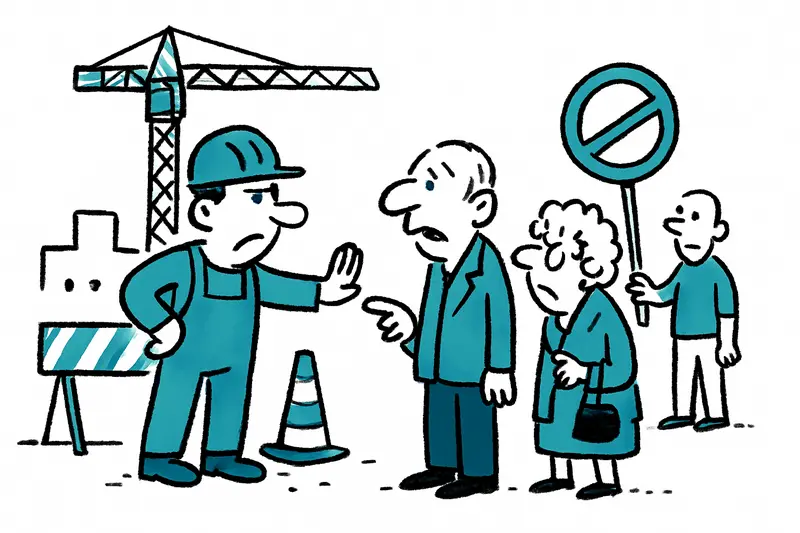
Plaça Mercat: 20 Months of Construction — Renovation Under Scrutiny
The Plaça Mercat in Palma will become a major construction site for around 20 months. Besides new drainage and lighting, questions about maintenance, kiosk culture and logistics remain. Will the renovation deliver more than it costs?
A central question: Will the renovation deliver more than it costs?
In the early morning at the Plaça Mercat, the scent of strong coffees, freshly peeled oranges and the rattling of newspapers mix — for now. Soon this morning scene could disappear behind construction fences and barriers: around 20 months of construction, a budget of about €4.4 million and work across roughly 11,600 square meters (Plaça Mercat, Calle Unió, Plaza Weyler, a section of Calle Riera). The city administration has approved the renovation, and Emaya will carry out the drainage works. The key question remains: Will the neighbourhood ultimately gain more value than what is being invested now? More information in the article Renovation of the Plaza del Mercat: Between Refurbishment and Fear for Survival.
Good technical planning — but who will take care of everyday maintenance afterwards?
On paper many things make sense: separate stormwater and sewage drains, tactile elements, ramps for accessibility and more modern lighting. But an often overlooked point becomes immediately apparent when speaking in the evening with a café owner on Calle Unió: Who will pay for regular maintenance? Who is liable for damage from later interventions? A modern drainage system, attractive lamps and new paving are of little use if after two years they are clogged, outdated or damaged. Without binding maintenance contracts and budget lines for the coming years, the investment risks becoming a short-term cosmetic treatment. Information about possible costs for residents and market traders is available in another article.
Kiosks as social infrastructure — more than just sales space
The small icon of the square, the "Alaska" kiosk, is to be preserved — a good sign. Other stalls, however, stand empty: the newspaper kiosk is closed and the operator is insolvent. This is not only about square meters, but about meeting places, information points and neighbourhood culture. An empty display case is a small cultural loss. A little-discussed option would be to temporarily release the spaces for pop-up kiosks or non-profit initiatives: local producers, cultural projects or neighbourhood initiatives could thus take on the function of the place during the construction period and prevent it from becoming exclusively tourist offerings afterwards.
Logistics, deliveries and everyday life: Who is allowed when?
The inner traffic lane will be closed to through traffic; residents are to retain access. That sounds good, but practice becomes more complicated: delivery traffic for cafés, waste collection, patient transports or people with limited mobility need precise time windows. Without coordinated logistics there is a risk of congestion, missed deliveries and revenue losses for small businesses. A pragmatic proposal is a digital reservation system for delivery times, linked to clearly marked temporary loading zones, plus a fixed contact person in the construction management who communicates daily with those affected — this would help defuse many conflicts early on.
Design, participation and the Comissió del Centre Històric
The new street lighting still has to be approved by the Comissió del Centre Històric. An earlier lighting proposal will not be implemented — this raises questions among residents and business owners: According to what criteria will it be decided which fixtures are chosen, how loud are the operating costs and how do different lighting atmospheres affect heritage buildings? More transparency and genuine participation would help. A public workshop with evening lighting samples, material samples and a clear cost–benefit presentation would be the smallest step to strengthen trust.
Opportunities that must be seized now
Twenty months of construction are a burden — everyone who passes through here in the morning knows that. At the same time the period offers the chance to make the square climate-resilient: infiltration areas, permeable surfaces, rainwater retention and trees that mitigate heat. It is important that these measures are not only planned but also sustainably financed and maintained. Binding maintenance contracts, temporary uses for businesses, a coordinator for delivery and resident concerns and a transparent online platform with daily information on construction phases and detours would be concrete steps. The Plaça Mercat: 20 Months of Construction — Renovation Under Review could also serve as an example here.
A pragmatic conclusion
Yesterday a café owner on Calle Unió said with typical Mallorcan pragmatism: “We’ll manage, as long as the kiosk stays and people can continue to come together.” That should be the guiding principle: not just new stones and lampposts, but a Plaça that will still be the neighbourhood’s meeting place tomorrow — and not just a pretty postcard for visitors. If the administration and citizens now agree on binding rules, maintenance plans and practical solutions, the long construction period can become a genuine improvement. Will Palma seize this opportunity? That remains the question to be answered in the coming weeks.
Frequently asked questions
Why is Plaça Mercat in Palma being renovated for so long?
Will businesses around Plaça Mercat in Mallorca stay open during the works?
What improvements are planned for Plaça Mercat in Palma?
How much does the Plaça Mercat renovation in Mallorca cost?
What happens to the Alaska kiosk at Plaça Mercat in Palma?
How will access and deliveries work around Plaça Mercat during construction?
What role does the Comissió del Centre Històric play in the Plaça Mercat renovation?
When will Plaça Mercat in Palma feel like a normal meeting place again?
Similar News
The End of the Cheap Ride? Why Mallorca Is Hit Harder by the Fuel-Price Shock
Gasoline and diesel average close to two euros per liter. What this means for commuters, supply chains and renters in Ma...
Relaxed liquid rules in Munich: What Mallorca travelers will notice
At Munich Airport the 100-milliliter rule will be lifted at all checkpoint lanes — thanks to new CT scanners passengers ...
For 45 Years on Mallorca — and Then This: How a Market Visit in Santa Ponsa Became a Lesson
A woman who has lived on the island for decades lost money and important documents at the Mercat Setmanal in Santa Ponsa...
10 percent surcharge on the beach: How legal and transparent is the extra charge at Playa de Muro?
A German part-time resident noticed days after a restaurant visit in Playa de Muro that the bill included a flat ten per...
Body near the Llevant Market: What this death says about our city
A man was found dead on Sunday afternoon near the Llevant Market. Police say the death appears natural. The scene raises...
More to explore
Discover more interesting content

Can Cap de Bou

Townhouse Lleo 72
