
Ten days alone: Dog found its dead owner in Palma — and no one noticed earlier
Ten days alone: Dog found its dead owner in Palma — and no one noticed earlier
On Calle Joan Crespí neighbors discovered a 55-year-old man who had apparently been dead in his apartment for about ten days — beside him his Belgian Shepherd. A case that raises questions for neighbors, authorities and animal welfare.
Ten days alone: Dog found its dead owner in Palma — and no one noticed earlier
In an apartment on Calle Joan Crespí a man was discovered, beside him his living dog. The discovery raises questions about isolation, support structures and responsibility.
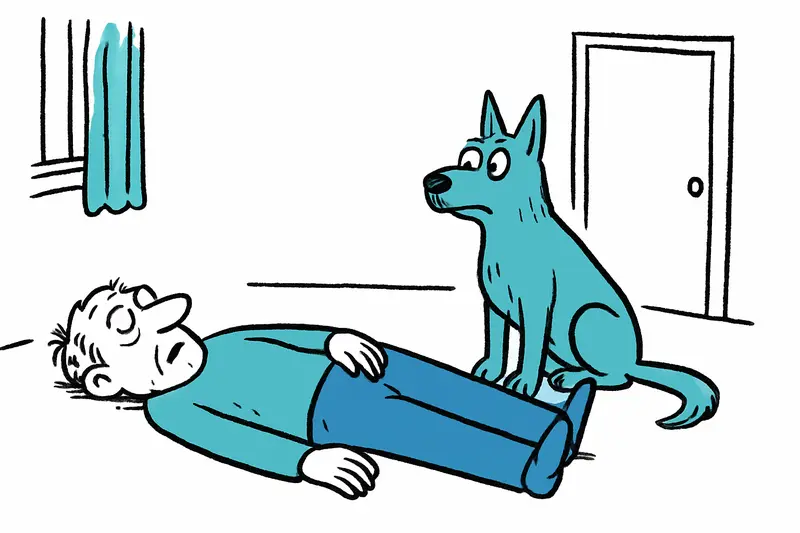
On Sunday afternoon the quiet stretch of Calle Joan Crespí was broken by sirens. Neighbors had noticed a strong smell and finally called emergency number 112. Firefighters accessed the second-floor apartment via a balcony and found the body of a man. A Belgian Shepherd sat beside him — alive, but apparently weakened.
The facts are sparse: the deceased was about 55 years old, lived alone and, according to people close to him, had problems with drugs. The National Police have taken over the investigation; there are no obvious signs of third-party involvement. The body was taken to the Institute of Legal Medicine in Palma for a forensic examination to determine the cause of death.
Key question: How can a person die unnoticed for days in a city like Palma — while his dog survives and loyally remains by his side?
Everyone who lives here knows the small rituals: the neighbor with the shopping, the pensioner on the bench, the children on the way to school. And yet there are people who sink away in the middle of the city. Isolation is not an abstract word; it is a condition visible in closed shutters, unanswered doorbells and the silence behind locked doors. In this case substance dependency added to the mix, reducing social contacts and distorting the affected person's sense of time.
The scene on Calle Joan Crespí — the flutter of a curtain, glances that quicken as people pass by, voices that lower in the stairwell — shows how neighborhoods can function: sometimes attentive, sometimes looking away. That neighbors finally reacted was right; earlier attention might have helped. Past local cases such as Santa Catalina: Man reportedly lived with his dead mother – questions for the city have raised similar concerns.
Critical analysis: Public debate often focuses on sensational cases. Quiet emergencies remain overlooked: people with drug problems, without close family, without a fixed daily structure. They especially need access points that work before an emergency occurs. Often there is a lack of clear responsibilities — who checks if the mail carrier doesn't ring for a while? Who carries out regular home visits? And who ensures that pets don't become an additional burden for people in precarious situations? Similar extreme finds have been reported elsewhere, for example Valencia find: When a person remains unnoticed for 15 years — Lessons for Mallorca.
Fire and police acted routinely in this case. But the question remains: are preventive measures sufficiently anchored? How do the social services of the Palma city council, health centers and neighborhood initiatives network to intervene preventively? And how do mobile teams reach people who have deliberately withdrawn from view?
What is missing in public discourse: Responsibility for pets in crises is rarely discussed. A dog that remains faithful to its owner until the end is not a marginal detail; it is a sign of attachment and vulnerability at the same time. Animal welfare organizations, municipal social services and police units need coordinated protocols: who cares for the animal, who covers the costs, how is the animal's health checked? Incidents like 27 Hunting Dogs Dead in Palma: How Could It Have Come to This? illustrate the stakes involved in animal welfare coordination.
Everyday scene from Palma: Imagine Calle Joan Crespí on a late afternoon: a neighbor watering plants on her balcony, a child laughing at the other end, workers hammering in the building. A small thing, one thinks, and yet behind a door there can be a major emergency. A neighbor who rings more often, a small WhatsApp group for the building, an attentive janitor — all of this can help prevent someone dropping out of the social net.
Concrete solutions: First: promote regular, local social contacts — phone calls, home visits by social workers and neighborhood networks. Second: develop intervention protocols for people with pets so that animals are cared for in an emergency. Third: provide training for fire and police units on social emergencies and animal handling. Fourth: support local initiatives and NGOs that build bridges to people with dependencies. And fifth: review digital and analogue alarm chains in apartment buildings — if there were clearer contacts in the building, action would be taken faster.
The bitter image of a dog beside its dead owner not only moves people, it calls for action. It demands practical solutions, not empty moralizing. We live in neighborhoods, not in a row of silos. A little more attention, clearer procedures and the connection of animal welfare and social work could prevent similar cases from becoming routine.
The National Police are conducting the investigation, the forensic clarification is underway. For the immediate neighborhood the question remains: Who will look earlier next time?
Frequently asked questions
How can you spot signs of isolation in a Mallorca home before something goes wrong?
What can neighbors in Palma do to prevent emergencies for people living alone?
What should I do if I notice a strong smell or unusual activity in a Palma apartment?
How do Palma's social services coordinate with police and health centers to prevent crises?
What happens to pets during emergencies in Mallorca, and who takes responsibility?
What practical steps can Mallorca residents take to keep in touch with vulnerable neighbors?
What happens when a death occurs inside a Palma apartment with a dog present?
What preventive measures could help avoid quiet emergencies in Mallorca neighborhoods?
Similar News
Rats in Llucmajor: How Uncollected Garbage Became a Health Problem
In Llucmajor, uncollected trash bags, overflowing containers and rain are leading to increased rat sightings. An assessm...
Sly Distraction Scam at Ballermann: How Tourists Became Targets — and What Must Be Done Now
Five suspected pickpockets were arrested. Their method: distract, secure the loot, return the wallet — without the cash....
Eviction in El Arenal: Who protects neighbors — and who protects the homeless?
A vacant hotel on Carrer Girona was cleared and secured. The neighborhood breathes a sigh of relief. But the action trea...
'La Tapita' loses its home: Who will protect Palma's last affordable meeting places?
The bar 'La Tapita' on Simó-Ballester Street will close at the end of December. For neighbors, police officers and small...

Million Heist at Bulgari: Who Is Responsible for Palma's Security Gaps?
Three men stole jewelry worth around one million euros – the crime series began at the end of September and was likely c...
More to explore
Discover more interesting content

Can Cap de Bou

Townhouse Lleo 72
