
Police crack down: Illegal parking attendants at Palma's city beach under pressure
Police crack down: Illegal parking attendants at Palma's city beach under pressure
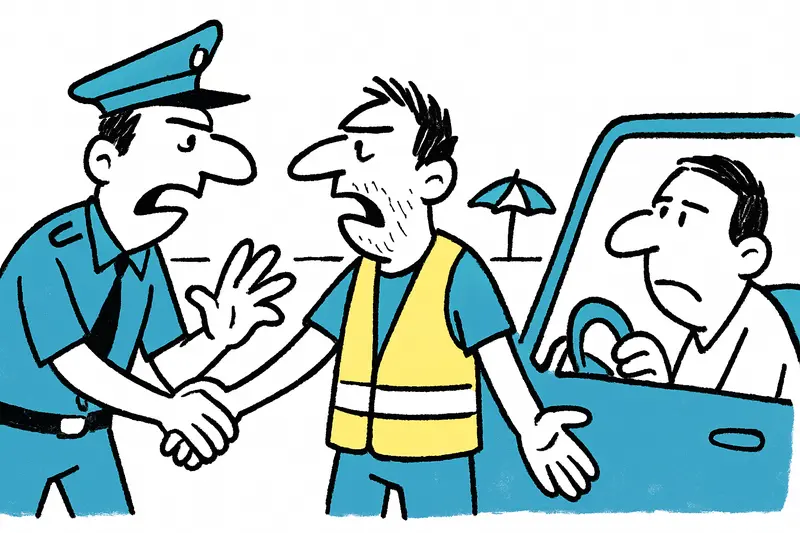
Trouble again at Playa de Palma: men in yellow vests point drivers to free spots — but often demand a tip and yesterday blocked passengers from accessing cars. The local police stepped in. A reality check: who protects drivers, and what solutions are missing?
Police crack down: Illegal parking attendants at Palma's city beach under pressure
Who protects drivers — and why is a raid not enough?
On January 27, 2026, residents and drivers once again called the local police to Palma's city beach. Men in yellow safety vests indicated free spaces in the public parking strip, frequently demanding a tip — and according to eyewitnesses, sometimes refused entry to cars whose drivers had not paid. The police intervened. The scene is not a new phenomenon; there have been complaints before, including Police clear parking chaos in Palma industrial areas — checks, towing, open questions.
If you drive along the waterfront in the late afternoon, you hear the seagulls above the Paseo, the distant clatter of boat lines and the occasional horn when a gap is found. Alongside that, the quiet, uneasy exchange: "How much?" "Ten euros." Many who want to park here pay out of fear of scratches to their paintwork or out of consideration — and because the situation on site can seem threatening when several men approach at once.
Key question
Who guarantees access to public parking in Palma and protects drivers from extortion and intimidation?
Critical analysis
The police intervention was necessary — this follows clearly from the incidents described. But a single operation changes little about the structural situation: there is a grey area between informal service and extortionate behaviour. The causes are manifold. Official parking spaces at attractive coastal stretches are scarce, signage is often confusing, and the presence of municipal enforcement varies by time of day. In this gap informal operators can establish themselves. When residents report that people prefer to pay rather than argue, it shows: trust in protection and enforcement is lacking.
What is missing from the public debate
The discussion often focuses on individual interventions and headlines. What is missing are three levels: first, an honest debate about responsibilities — city administration, parking managers, police; second, concrete figures: how often does this happen, how many reports are filed, how many penalties follow? Third, a perspective for structural prevention: fewer ad-hoc police actions, more reliable regulations. Without these points the problem remains episodic and residents stay unsettled, as highlighted in coverage questioning Who pays when the police direct drivers into a residents-only zone? A Mallorca farce with consequences.
Everyday scene from Palma
On a windy morning at the Passeig, the air smelling of sea and freshly ground coffee, a tourist couple in a silver station wagon stops. A man in a yellow vest taps on the window, points to a free spot and asks for small notes. The woman looks around, wants to call the local police — but the man waves her off: "No problem, just ten." She puts the money away, parks and walks toward the beach with a pale smile. Such situations repeat, observed by shopkeepers and cleaning staff. They are the ones who ultimately document the weariness: complaints that pile up instead of being processed systematically, as reported in Tumults at Playa de Palma: When Controls Threaten the Beach Scene.
Concrete solution approaches
1) Visible presence and continuity: regular patrols, especially on weekends and in the evening hours, plus documented operations so citizens know something is being done. 2) Clear signage and payment machines: if drivers know in advance where and how to pay, the space for informal operators shrinks. 3) Physical measures: barriers at access points, regulated entrances with automatic gates or gatekeeper solutions at particularly busy parking areas. 4) Surveillance and evidence collection: targeted use of CCTV in problem zones combined with clear data protection rules so incidents can be tracked more easily. 5) Low-threshold reporting channels: a hotline and a simple reporting function in the city app so residents and tourists can quickly document incidents. 6) Communication measures: information campaigns in Spanish, Catalan and English explaining that parking is regulated publicly and that paying informal attendants is not necessary. 7) Sanctions and traceability: fines against aggressive solicitation and for repeated blocking of access points, combined with a transparent procedure for complaints.
Why this matters
It's not just about ten euros here and there. It's about the sense of security on streets like the Paseo Marítimo, the functioning of public spaces and trust in authorities. When residents whisper while passing by, "them again", that's an indicator: the routine of everyday life is disrupted.
Punchy conclusion
A police operation is a beginning, not an end. Those who want lasting order in Palma must address the problem on multiple levels at once: clear rules, reliable presence, technical aids and above all comprehensible procedures for those affected. Otherwise the quiet conviction of people on the beach remains: paying is easier than protesting — and that is a situation the city should not accept.
Frequently asked questions
Are the parking attendants at Palma city beach allowed to ask for money?
What should I do if someone at Palma beach parking pressures me to pay?
Why does illegal parking around Palma's waterfront keep happening?
Is it safe to park at Palma city beach in the evening?
How can Mallorca authorities prevent illegal parking extortion in Palma?
What is the best time to find official parking near Palma's city beach?
Where in Palma do parking problems with informal attendants happen most often?
Do I need to pay cash to park at Palma beach?
Similar News
Magaluf: Watchtower Alarm – Lifeguards Pull Unconscious Beachgoer from the Water
After a drama in the late afternoon, two lifeguards at Magaluf beach rescued an unconscious 44-year-old man. He was stab...
Turquoise in the City: How dangerous is the color play of the Sa Riera?
The Sa Riera in Palma suddenly turned turquoise — a pretty motif, but behind the effect lies a discharge of saline waste...

Jeckliner at Sunnesching: Cologne spirit sets sail from Palma
In September 2027 the Mein Schiff 2 briefly becomes a floating carnival stage: four days with Cologne bands, comedy and ...
Finally Home: Mike and Leyla Heiter Buy Villa with Sea View in Mallorca
The reality TV couple Mike and Leyla Heiter have bought a house in Mallorca with a roof terrace and sea view. An Instagr...
Arrest after series in Palma: Who protects apartments from repeat offenders?
The National Police arrested a man in Palma who investigators say may have broken into several apartments. In one incide...
More to explore
Discover more interesting content

Can Cap de Bou

Townhouse Lleo 72
