
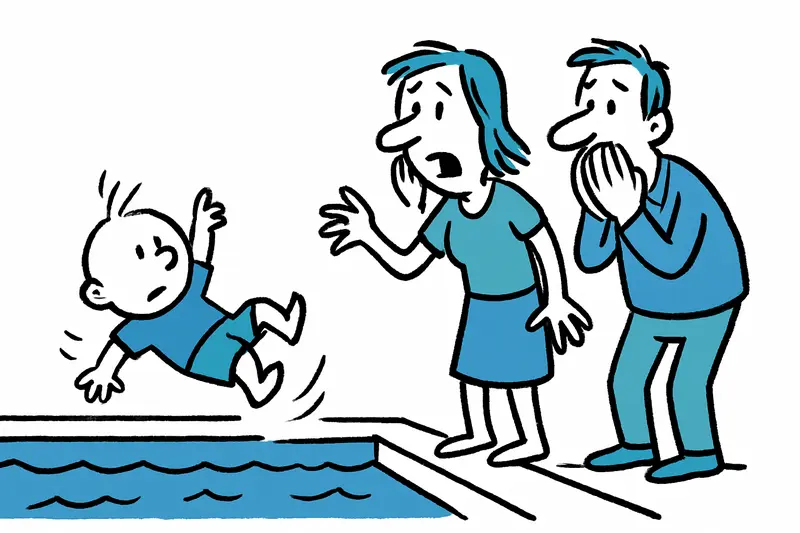
Pool drama in Pollenca: What happens when a child is unattended at the pool edge?
Pool drama in Pollenca: What happens when a child is unattended at the pool edge?
A three-year-old girl was resuscitated for hours after a near-drowning at a holiday rental in Pollenca and is now in the pediatric intensive care unit at Son Espases. An analysis of what was missing — and what we can do immediately.
Pool drama in Pollenca: What happens when a child is unattended at the pool edge?
Key question: How can a toddler fall into a pool unnoticed for so long in a holiday rental — and which simple, concrete steps would prevent scenes like this in the future?
On Wednesday evening around 20:20, a serious accident occurred at a holiday rental in the municipality of Pollenca: A three-year-old girl apparently fell into the swimming pool without being noticed while the family was having dinner. Only when the child was discovered in the water was the emergency number 112 called. Rescue teams from the Servei d’Atenció Mèdica Urgent (SAMU 061), including a mobile intensive care unit and a vehicle for advanced life support, a vehicle from PAC Pollença, as well as the Guardia Civil and the Policía Local rushed to the scene. The responders performed resuscitation measures for about two hours until a pulse could be restored. Similar rapid interventions have been necessary in other incidents, such as when a family rescued a two-year-old from a pool in Llucmajor.
These facts are harsh but clear: Help arrived quickly — yet the time until the incident was discovered was long enough for the child to be in life-threatening danger. This is the core of the problem: a gap between presence, prevention, and practice.
Critical analysis: Where does prevention fail?
The situation points to several weaknesses. First, private pools in holiday rentals are often not secured for children. Fence? Self-closing gate? Pool cover? Not necessarily present. Second, distraction: a family dinner, voices, the clatter of plates — such banal moments are enough for a child to find an unattended minute. Third, lack of alarm and warning systems: pool alarms or motion detectors are missing in many private facilities. Fourth, first aid competence: not all hosts or guests know how to respond immediately and correctly, and cases of successful resuscitation, for example a tourist collapse in Peguera requiring resuscitation, underline the importance of training. Finally: public debate on safety often focuses on beaches, as in the near-drowning incident in Cala Vinyes, or traffic rules — private pools rarely receive enough attention.
On Mallorca in summer you often hear the chirping of crickets over the Plaça Major late in the evening, the clatter of dishes in holiday apartments, and the distant engine of a delivery van. That sounds harmless — and precisely this everyday calm must not obscure how quickly dangers can arise. In Pollenca, between narrow alleys and villas with contrasting garden lighting, minutes can decide between life and death. It is not limited to pools; elsewhere children have gone missing, such as a six-year-old found ten kilometres away in Coll d'en Rebassa, which shows the wider risks around child supervision.
What is missing from the public debate
There is a lack of clear rules and mandatory information for short-term renters: at check-in, information on pool safety, emergency numbers and expected behavior around children should be standard. There is a lack of mandatory safety standards for holiday rentals with pools — not every owner thinks about fences, alarm systems, or child-safe covers. And there is a lack of nationwide offerings that make first aid training easily accessible to landlords and hosts.
Concrete, quickly implementable solutions
- Mandatory checklist at check-in: brief information on pool safety, 112 clearly visible, location coordinates for emergency services.
- Physical safety: minimum requirements such as a 1.2 m high fence with self-closing gate, sturdy pool covers or rolling covers that cannot be easily walked on by a person.
- Technology: motion detectors/pool alarms and a simple siren that sends an SMS to registered numbers if the property is left.
- Training: free, municipal mini-workshops for hosts and seasonal staff on resuscitation (step-by-step) and handling emergencies with children.
- Regulations: municipalities can require safety certificates for holiday properties with pools; rental platforms should prominently display safety information.
- Municipalities/AEDs: public AED locations in inland valleys and tourist centers, quick instructions via QR code at popular spots.
Everyday measures for families and hosts
Short and practical: adults should never divide supervision of several small children while simultaneously engaging in other activities (cooking, eating, phone calls). Hosts should provide visible grab handles, a life ring and warning signs on arrival. For parents: flotation aids can be misleading — constant supervision remains essential.
The island thrives on summer, tourism and families spending their holidays here. If we want to guarantee that, we must be sober: much of what protects is simple — and only expensive if you don't do it. Small measures like a gate, an alarm, or a short first aid course can save lives.
Conclusion: The incident in Pollenca is a warning sign. The rescuers acted exemplary, but prevention must not begin in the hospital. Municipalities, hosts and families must act together — before the next dinner moment becomes a tragedy.
Frequently asked questions
When is the best time to visit Mallorca for warm weather and swimming?
What should I pack for a trip to Mallorca to handle changing weather?
How should I get around Mallorca—car, bus, or bike?
What family-friendly activities are there in Mallorca?
Which beaches or natural areas in Mallorca are must-see?
What are the key weather patterns to know for day trips around Mallorca?
What cultural tips should I know when visiting Mallorca?
Are there safety tips for swimming and enjoying the coast around Mallorca?
Similar News
Ryanair Flight Diverted to Barcelona: An In-Flight Emergency and the Questions That Follow
A Ryanair jet from Pisa to Málaga landed in Barcelona after a passenger became acutely ill. Why these cases need more at...
Alarm in Port de Pollença: What now for the polluted bay?
Hundreds of people protested on the beach of Port de Pollença. The environmental organization Arrels Marines demands a p...

Micaela Schäfer: Between Playa de Palma and a Berlin Law Firm — New Calm, an Old Tomcat and Solid Finances
The party artist from the Ballermann scene appears surprisingly down-to-earth: a new relationship with a Berlin lawyer, ...
At Playa de Palma: Fire in Residential Building – six people rescued on the roof, what is missing in prevention?
In the evening a fire broke out on the first floor of a five‑storey building on Calle Trasimé. Six residents fled to the...
New License Requirement for Mini-Boats in Mallorca: Protection Measure or Tourism Brake?
From October 1 renters of small recreational boats in the Balearics must present a boating license. Critical questions r...
More to explore
Discover more interesting content

Boat Tour with BBQ along Es Trenc Beach

Private transfer from Mallorca Airport (PMI) to Pollensa
