
Porc Negre in the Heat Trap: How Mallorca's Black Pigs Suffer in 40-Degree Summers
Porc Negre in the Heat Trap: How Mallorca's Black Pigs Suffer in 40-Degree Summers
The association of pig breeders (Pimem) reports rising losses among Porc Negre due to persistent heat. A critical assessment: what is missing, which immediate measures help, and how the island can protect its only native pig breed.
Porc Negre in the Heat Trap: How Mallorca's Black Pigs Suffer in 40-Degree Summers
Guiding question
Guiding question: How can Mallorca protect its autochthonous pig breed — the Porc Negre — now and in the long term from recurring heat waves, when animal losses are already increasing?
Critical analysis
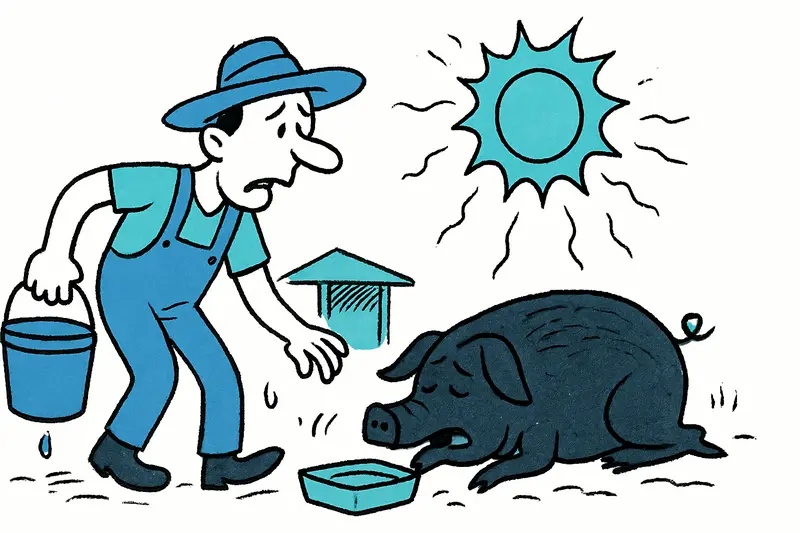
The pig breeders' association within the Pimem organization warns that the persistent extreme temperatures are leading to significantly more animal deaths. According to the association, six percent more deaths were already recorded in June than in the entire year 2025. Breeders report that animals with weakened health in particular do not survive the 40-degree days. Apparently the heat waves are arriving faster and more intensely than before; the animals have no time or opportunity to adapt, as reported in Nearly 40 °C: Mallorca's Daily Life Under Heat Stress — How the Island Can Respond.
What is missing from the public discourse
The discussion has so far focused on water shortages and forests; hardly anyone talks about barn climate, herd mobility or financial protection for small breeders. There is a lack of transparent surveys identifying which stocks are particularly endangered, which housing systems (free-range, semi-open, indoor) suffer the most and how veterinary services should prioritize the situation. Also hardly discussed: who bears the costs for temporary cooling measures or the relocation of breeding animals to cooler areas?
Everyday scene from the island
Early morning at a farmstead between Campos and Santanyí: the thermometer shows 28 degrees before the sun is up. On the farm stands an old concrete shelter, no pine branch providing shade for a long time. A farmer carries buckets of water to the drinkers, dogs bark, an old sow lies in the yard breathing heavily. Eight o'clock — the road to Passeig del Born is already empty, but the heat shimmers over the fields, harvesters keep humming as if summer sets the pace. Such scenes repeat on many small farms — and not every farm has the means for fans, misting systems or relocation; recent coverage of even higher temperature peaks can be seen in Heatwave reaches 42 °C: How Mallorca should cope with the new temperature peak.
Concrete approaches — immediate and mid-term
Immediate measures (near towns and in the countryside): mobile shade tarps, additional drinkers with cooled water, misting systems at critical points, increased veterinary checks, staggered staff shifts during midday heat. Practical: trailers with solar-powered pumps to supply remote farms; short-term subsidies for small holdings to install at least temporary cooling.
Mid-term: barn renovations for better air circulation, roofs made of light-permeable, heat-reducing materials, afforestation with shade-providing trees along pastures and paddocks. A registry of vulnerable herds that classifies farms by exposure and stock size would enable targeted assistance. Insurance and compensation models for climate-related animal losses should be examined — especially for owners of traditional Porc Negre herds who often keep only small numbers.
In the longer term the island needs strategic herd planning: conservation breeding programs for the Porc Negre, research into the heat tolerance of this breed, networking of holders for seasonal relocation to cooler areas, mindful of Why Mallorca is tightening controls on pig transports — and what really matters now, and financial incentives for climate-resilient husbandry systems. A bundle of agricultural policy, research and local action is needed to ensure that cultural heritage like sobrasada is not jeopardized by weather-related losses.
What politics and administration should do
Authorities urgently need clear heat-warning protocols for livestock owners, coordinated emergency plans with veterinary services and a simple application process for emergency aid. Municipalities can provide public water points and mobile cooling systems and promote cooperation with agricultural cooperatives. It is important to structure aid so that it reaches small, traditional farms, not only large industrial operations.
Punchy conclusion
Rising animal losses are not a natural event without responsibility: climate meets patchy preparedness. The Porc Negre is more than a meat supplier — it is part of Mallorcan identity. If we do not act now — practically, locally and politically — a quiet erosion of this tradition threatens. The good news: many measures are technically simple and socially organizable. What is lacking above all is the political will and a rapid, targeted flow of funds to those who stand on the farms now, watering, shading and digging until help arrives.
Frequently asked questions
When is Mallorca the best time to visit for sun and comfortable weather?
What should I pack for a trip to Mallorca to stay comfortable in the sun?
Is swimming in Mallorca always feasible, or are there months when the water is too cold?
Can I explore Mallorca using public transport without renting a car?
Which Mallorca beaches are best for families with kids?
Do people in Mallorca speak English, and what basic phrases help for traveling there?
What natural highlights and easy activities should I consider in Mallorca?
How should I approach Mallorca’s weather when planning a trip?
Similar News
Failed before the first flight: How Fischer Air's plans for Palma were ground down
Announced routes, repeated postponements and now apparent insolvency: Why the Fischer Air project for Mallorca is not me...

Seconds in the Water: 19-year-old Fights Her Way Out of Flooded Car in Palma
A 19-year-old managed to rescue herself from her half-submerged car after sliding under the Verge de Lluc underpass. Res...

Between Dream and Reality: Thorsten Legat and the Challenges of FC Germania Mallorca
The former Bundesliga pro has assembled a colorful squad in a short time. But how realistic is the grand plan for promot...

Arrest warrant at check-in: Why two travelers at Cologne/Bonn Airport suddenly had to pay
At Cologne/Bonn Airport, federal police in mid-September found two German passengers subject to enforcement measures. Bo...

Balearic Islands as a New Route: A Reality Check on Rising Boat Migration
For the first time the Balearic Islands are ahead of the Canary Islands in boat arrivals. What do the numbers really say...
More to explore
Discover more interesting content

Can Cap de Bou

Townhouse Lleo 72
