
Initially Pursued, Then Brutally Beaten: What Does the Attack at Playa de Palma Say About Safety on the Island?
Initially Pursued, Then Brutally Beaten: What Does the Attack at Playa de Palma Say About Safety on the Island?
A taxi driver at Playa de Palma was followed and seriously injured in early July. The homicide unit is investigating. Our analysis asks: How safe are taxi rides here really — and what protection is missing for drivers?
Initially Pursued, Then Brutally Beaten: What Does the Attack at Playa de Palma Say About Safety on the Island?
Key question: How safe are taxi rides at Playa de Palma — and why is reliable protection for drivers lacking?
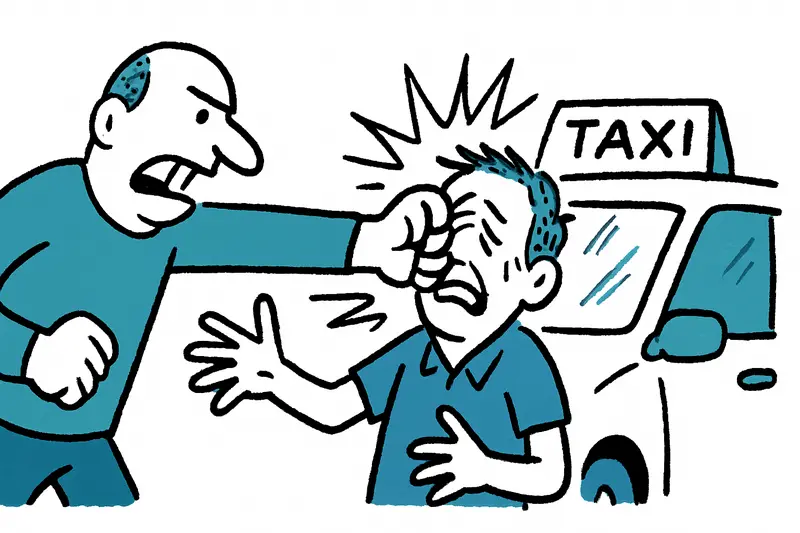
It was a hot evening in early July. The air on the Passeig Marítim hung heavy like spice oil; bass lines and loud laughter from the beach bars could be heard from the promenade. A taxi driver on night shift noticed a car that followed him for several kilometers with its headlights flashing. He stopped in the parking lot of a well-known nightclub to wait for customers. What was meant to be a short break ended in a brutal assault: a man struck through the open window, then the two occupants got out, forced the victim to the ground and continued to kick him.
The victim suffered severe facial injuries, including fractures and a broken nose. The National Police took over the case; the homicide division identified the suspects as father and son, both of whom were arrested shortly afterwards. So far no motive could be established. This act is part of a series of similar attacks on driving staff in Mallorca, including Brawl at Playa de Palma: Why a verbal exchange could have ended fatally.
The brutal outcome of the pursuit raises questions that receive too little attention in public debate. The question again: How can a driver who works alone on the roads of Playa de Palma be protected from targeted attacks? Is the current approach by police and associations sufficient, or are faster and more practical measures needed on site?
Critical analysis: The factual record is sparse, and that makes the situation dangerous. We know that a vehicle pressured the driver, that a pursuit took place and that the assault occurred in a nightclub parking lot. What is missing is a look at routine procedures, alarm chains and technical aids that could prevent such incidents. Taxi companies and drivers are often left to fend for themselves: during the short waiting breaks between rides there is little protection — no personal alarm, emergency buttons are rare, and many vehicles lack a practical connection to a dispatch center that can react in real time.
What is missing from the public discussion: First, an honest assessment of the risks faced by individual drivers away from city centers and tourist hotspots. Second, a discussion of preventive measures that go beyond app notifications. Third, the question of targeted controls around common conflict locations such as club parking lots and taxi stands at Playa de Palma, noting that interventions and controls can themselves create tensions as described in Tumults at Playa de Palma: When Controls Threaten the Beach Scene.
An everyday scene from Palma: It is late evening light; taxi changes take place on Avinguda de Gabriel Roca. A driver exchanges a dry piece of bread for a bottle of water with a colleague, laughs briefly at a joke — and then wedges his car door open a crack to keep an eye on the parking lot. Such moments show how vulnerable drivers are. They work in the flicker of neon lights, with music as a constant backdrop and sometimes with too little support; nearby incidents have even required taxi drivers to intervene directly, as when they stopped a heavily intoxicated driver on Palma's Paseo Marítim.
Concrete solutions: First: mandatory equipping of taxis with an easily reachable panic button that, in addition to dispatch, immediately alerts the National Police or local security forces. Technically feasible, relatively inexpensive and effective. Second: better networking of taxi dispatch centers with police control rooms; automatic location transmission when an alarm is activated — a capability that has already helped resolve incidents such as a nighttime assault at Playa de Palma where phone tracking caught a suspect. Third: more visible police presence at known conflict points such as nightclub parking lots during peak hours — not only after incidents but preventively. Fourth: short, mandatory safety training for drivers covering de-escalation, escape routes and correct documentation of incidents. Fifth: cooperation between club operators and taxi associations so that parking lots are monitored and conflicts detected early.
Legally conceivable is also a faster reporting and documentation requirement: those who are attacked should be able to secure evidence in a standardized way — for example with short video clips from the taxi or witness statements recorded centrally. The National Police are already working on clarifying such cases; a systematic exchange of findings with taxi companies could prevent future attacks.
What the authorities should do: It is their responsibility to promote preventive structures, not only to investigate reactively. That father and son were arrested is a success for the investigation. But it is no substitute for protective measures that make attacks more difficult in the first place.
Punchy conclusion: Our everyday life at Playa de Palma is loud, lively and sometimes unpredictable. But if taxi drivers can be put in mortal danger because of that, then this is not merely an individual problem but a security gap that must be closed. Protection programs, technical emergency solutions and targeted prevention at risk points are not experiments — they are practical responses to a problem that has occurred far too often. The question remains: Who will take responsibility so that the next driver does not again have to rely solely on help from passersby?
Frequently asked questions
How safe are taxi rides in Mallorca, especially around Playa de Palma at night?
What practical safety measures can taxi drivers in Mallorca use to reduce risk when working alone at night?
If a driver suspects they are being followed or attacked near a nightclub or parking lot in Mallorca, what should they do?
How can dispatch centers and the National Police collaborate to protect Mallorca taxi drivers?
What preventive measures could authorities implement around known high-risk points like club parking lots in Mallorca?
Are there any recommended safety trainings for Mallorca taxi drivers?
What role do club operators and taxi associations play in reducing conflicts in Mallorca?
What general safety tips should someone consider when taking a taxi in Mallorca at night?
Similar News
Magaluf: Watchtower Alarm – Lifeguards Pull Unconscious Beachgoer from the Water
After a drama in the late afternoon, two lifeguards at Magaluf beach rescued an unconscious 44-year-old man. He was stab...
Turquoise in the City: How dangerous is the color play of the Sa Riera?
The Sa Riera in Palma suddenly turned turquoise — a pretty motif, but behind the effect lies a discharge of saline waste...

Jeckliner at Sunnesching: Cologne spirit sets sail from Palma
In September 2027 the Mein Schiff 2 briefly becomes a floating carnival stage: four days with Cologne bands, comedy and ...
Finally Home: Mike and Leyla Heiter Buy Villa with Sea View in Mallorca
The reality TV couple Mike and Leyla Heiter have bought a house in Mallorca with a roof terrace and sea view. An Instagr...
Arrest after series in Palma: Who protects apartments from repeat offenders?
The National Police arrested a man in Palma who investigators say may have broken into several apartments. In one incide...
More to explore
Discover more interesting content

Can Cap de Bou

Townhouse Lleo 72
