
Raised from the Sand: A Late Antique Merchant Ship Tells of the Sea off Can Pastilla
Raised from the Sand: A Late Antique Merchant Ship Tells of the Sea off Can Pastilla
A 1,700-year-old Roman merchant ship was raised off Can Pastilla. Finds such as sail fragments and amphorae provide rare insights into 4th-century seafaring. An exhibition comes to Palma in November, and the public can vote online.
Raised from the Sand: A Late Antique Merchant Ship Tells of the Sea off Can Pastilla
Sail fragments, amphorae and a view into the 4th-century Mediterranean – the finds will soon be on display in Palma
The warm air above Playa de Palma smells of fried fish and motor oil; seagulls circle, scooters hum along the Passeig Marítim. Barely 65 meters out, where snorkelers and day boats are usually seen, another chapter of our coast lay hidden for centuries: a Roman merchant ship that archaeologists date to around 1,700 years old.
The find site lies between Can Pastilla: The Roman Wreck and the Question of Responsibility and Funding and s’Arenal, in an area formerly known as “Ses Fontanelles”. The wreck was discovered in 2019 after a strong storm exposed the seabed, and the recovery has been documented in Roman Wreck off Can Pastilla: Piecemeal Recovery Raises Questions for the Island. What at the time seemed like a chance surprise has become one of the island’s most exciting archaeological projects.
Not a blockbuster, but meticulous excavation – the recovery was not a spectacular single-lift event. Between March 10 and June 29, a team of around fifteen specialists worked underwater. Layer by layer, from outside in, they documented the wooden hull and recovered it in sections. The two largest hull pieces were each about twelve meters long. Buoyancy floats lifted the timbers to the surface and they were first taken to the Can Pastilla Yacht Club and then to the Castell de Sant Carles.
There they begin a careful period of rest: the timbers will lie for eighteen months in desalination tanks. Anyone who has ever pulled an old post from the sea knows: salt makes wood crack or crumble if dried improperly. After that, the pieces will continue to the laboratory of the Underwater Archaeological Museum in Cartagena, where modern treatments such as polyethylene glycol impregnation and freeze-drying will handle conservation.
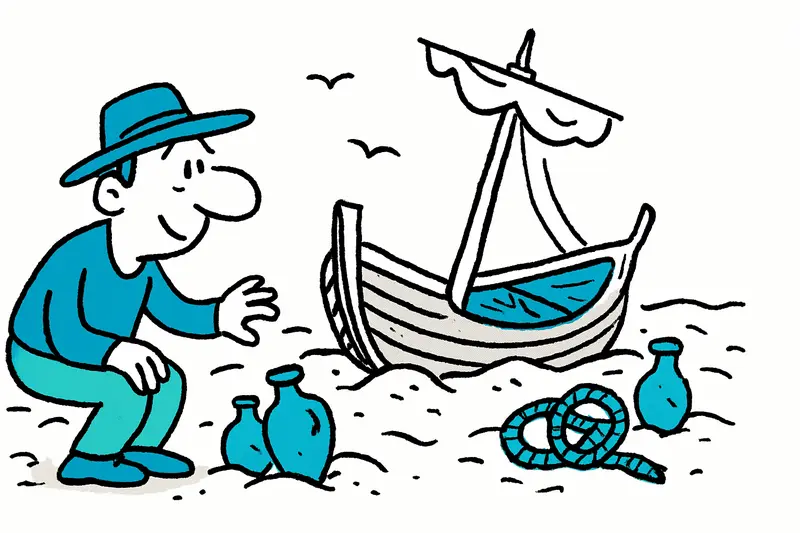
What makes the assemblage so special is its variety: four anchors, some still with original knots; about ninety meters of rope; two woven baskets; a pulley; a sounding lead; almost complete amphorae, finely decorated tableware, pottery from North Africa, animal bones and tools. And surprisingly: parts of the sails. It is rare for linen remains to survive on the seabed for so long – their analysis could shed new light on sailmaking and ship operation in late antique times.
For the island this is a double gain. Scientifically, the finds open detailed insights into trade routes, cargo stowage and daily life aboard. Locally the story brings people together: fishermen now tell anecdotes about the recovery, café owners at the harbor cast looks toward the site, and passersby stop to see the containers with the conserved timbers.
If you want to see the pieces soon: in November the island council will dedicate an exhibition at the La Misericòrdia cultural center to the find, which will illustrate the discovery, underwater excavation, recovery and restoration. Before that, there is a form of recognition: the project is nominated for an award by a Spanish history portal; the public vote runs until October 12 and gives island residents and visitors the chance to take part.
It is a lovely thought: children standing with sand between their toes in front of La Misericòrdia looking at the same things that merchants and sailors knew one and a half millennia ago. The ship is more than a pile of old timbers and recovered pottery. It is a time capsule that allows us to see the Mediterranean of that time a little more closely – and makes the island richer today with a historical treasure.
A small tip for your beach walk: If you pass the Can Pastilla Yacht Club soon, watch for the quiet trucks and raised containers. This is where the great care and preservation work is beginning – and a piece of Mallorca’s maritime history is taking shape again.
Frequently asked questions
When is the best time to visit Mallorca for good weather and lighter crowds?
Is the sea warm enough for swimming in Mallorca throughout the year?
What should I pack for a trip to Mallorca?
Are there family-friendly activities suitable for kids in Mallorca?
How can I avoid crowds on Mallorca’s beaches in peak season?
Should I base my trip in Palma or stay in a quieter town for exploring Mallorca?
What are practical tips for protecting yourself from the sun during a Mallorca summer?
What transportation options help you get around Mallorca?
Similar News

Bloody clash in Canòdrom Park: What is missing in addressing violence on Mallorca's streets?
At midday on October 23, an 18-year-old man was critically injured in Canòdrom Park in Palma. The attack raises question...

Palma raises bus fares: Who pays the bill for public transport?
Single tickets rise from €2 to €3, airport trips have a reference price of €4.50. It remains unclear whether residents w...

Palma's New Indoor Pool: Sea View, Sunbeds and Space for Everyone
At Aigua Dolça, near the Paseo Marítimo, Palma has a new municipal indoor pool. For a small fee people can now train, re...

How Four Burglars Emptied Ten Houses with a Simple Trick — and What It Means for Mallorca
Four men used the impressioning technique, posed as delivery workers and accepted two years in prison. A reality check f...

Bundles of Drugs, Containers and Open Questions: A Reality Check for Mallorca
3.3 tonnes of marijuana, 80 kilos hidden in golf-ball vending machines and a 44-year-old German released on conditions i...
More to explore
Discover more interesting content

Can Cap de Bou

Townhouse Lleo 72
