
Reality Check: Will Mallorca Become the Weather Laboratory of the Mediterranean?
Reality Check: Will Mallorca Become the Weather Laboratory of the Mediterranean?
A new TV documentary has the Mediterranean off Mallorca in its sights. What research shows — and what we on the coast still discuss too little.
Reality Check: Will Mallorca Become the Weather Laboratory of the Mediterranean?
What a TV documentary about marine research and coastal agriculture reveals
In the morning, when fishermen moor their boats at Palma's Passeig Marítim, you can hear the scraping of nets and the murmur of radios. The water now glitters like a bath that's too hot: in recent summers the surface temperatures of the Mediterranean in this region repeatedly climbed to unusually high levels. A new TV documentary follows researchers on the research vessel "Meteor" and brings images of sampling and measuring devices ashore — an occasion to take a closer local look. This trend is echoed in Record Heat at 500 Meters Depth: Mallorca Faces an Invisible Danger.
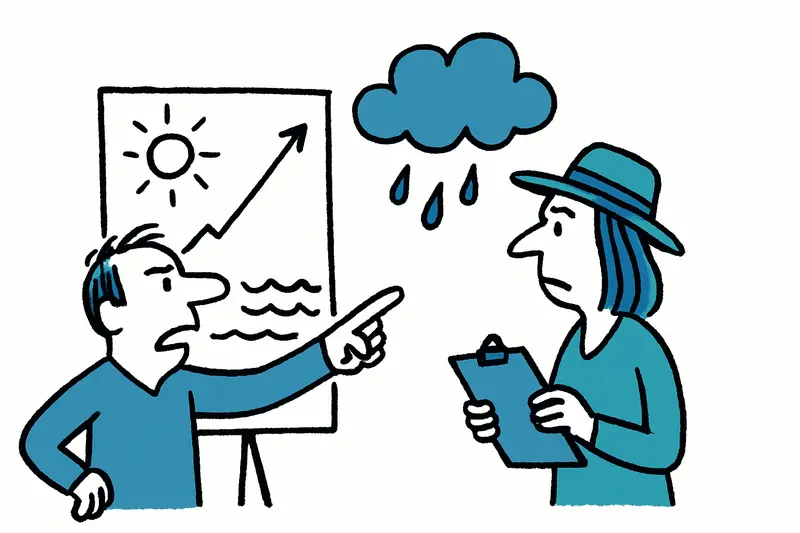
Key question: Is knowledge about rising sea temperatures and changing salinity enough to protect Mallorca, its agriculture and its coastal towns? The answer is more complicated than a weather report.
The program shows researchers examining the top millimeters of the sea surface: temperature, salinity, biological samples. These data are important because they have a direct impact on seagrass meadows, fish stocks and regional weather, as shown in Two Mallorcas in One Day: Why Heavy Rain Affects Us More Than We Think. But research alone does not stop droughts, extinguish flames or repair damaged coastal infrastructure.
Critical analysis: We now have more detailed measurement series than 20 years ago, as reported in Mallorca Becomes a Water-Weather Station: Can Probes Really Tame the Drought?. Yet the bridge to practical action remains fragile. In many places there is a lack of binding plans for how measurement data should be translated into concrete protection measures. On Mallorca this is particularly visible: water distribution, agricultural irrigation and coordination between municipalities often function in a fragmented way. As a result, adjustments by individual farmers or municipalities remain piecemeal.
What is missing from the public discourse is a realistic conversation about financing and priorities. Public debates quickly focus on spectacular images — burning pine forests, flooded streets — and less on systemic questions: How should we create drinking water storage? Which agricultural areas will be maintained in the long term? How does tourism planning fit into an island ecosystem with warmer winters and hotter summers?, as discussed in Why Mallorca's Weather Isn't What It Used To Be: A Reality Check
A scene from everyday life: At the Santa Catalina market a farmer sells dried almonds. Ten years ago the harvest was reliable. Today she says wearily that some colleagues are planting carob trees because they are more heat- and drought-resistant. In the valleys above Sóller vintners and olive growers are already discussing shade nets and adapted irrigation. Such personal decisions are important building blocks — but they are not a substitute for coordinated measures.
Concrete solutions that could work on Mallorca: First, an island-wide monitoring network for coastal and water values so municipalities receive earlier warnings and fishing zones can be adjusted. Second, targeted subsidy programs for farmers who switch to more drought-resistant varieties or water-saving drip irrigation. Third, better integration of coastal protection, urban planning and tourism: promenades, marina facilities and villages need a risk map that considers future water levels and extreme weather. Fourth, local education programs — schools, clubs, municipalities — to change everyday behavior (water use, fire prevention, retention areas).
Another point: research must be locally applicable. The samples taken on the research vessel provide important indicators. For these to become protective measures, local authorities need clear interfaces with research institutes and secured funding paths to implement findings quickly.
Responsibility is also a critical question. Who pays for dyke reinforcement, reforestation or modernization of irrigation? On an island with many municipalities it looks like patchwork. A coordinated funding program from the Balearic government together with EU funds could help — provided priorities are set and bureaucratic hurdles are removed.
Conclusion: The documentary makes clear that changes in the sea are not just abstract numbers. They are directly connected to everyday life here: to the almond harvest, to the lives of fishermen, to the roar of motorcycles in the harbor when a summer storm floods the streets. We can celebrate the research and share the images — but we must also demand the next steps: clear plans, reliable funding pathways and a better connection between data and decisions. Otherwise much knowledge will remain a nice film, but little action on the island.
In the end it is a simple, hard truth: Anyone who wants to live or work on Mallorca's coasts should expect to live with extremes more often. Better to prepare for them than to be surprised each time.
Frequently asked questions
How is Mallorca's climate changing and what does this mean for water and farming?
Can Mallorca's sea temperatures influence local weather and marine life?
What concrete steps could Mallorca take to prepare for future droughts and heat?
How could an island-wide monitoring network help Mallorca manage resources?
What role do farming changes play in Mallorca's future resilience?
How should Mallorca balance coastal protection with tourism and urban planning?
What funding is needed to turn sea research into real protections on Mallorca?
What everyday steps can people in Mallorca take to prepare for more extreme weather?
Similar News

Cardiac arrest in the Tramuntana: Why a rescue often depends on chance
A 47-year-old cyclist suffered a cardiovascular arrest near Lluc. What went well, what is missing in the mountains — and...
Sunset and Sake: How Formentor and Palma Enliven the Late Season
Cabañas, theatrically presented cocktails and a sake spritz on the rooftop: Formentor and Palma blend luxury and everyda...

Between Arrival Hall and Hospital: 109 Capsules, One Case and Many Questions at Palma Airport
A traveler from Belgium was arrested at Palma Airport with 109 cocaine capsules, more than a kilogram. The case shows ho...

Why the Cologne–Palma Flight Stalled in Cologne — a Reality Check
A Eurowings A320 (EW584) came to a halt at the gate in Cologne/Bonn. Passengers had to disembark and wait more than two ...
Cardiovascular Collapse in Peguera: Rescue on the Beach and the Questions That Remain
An 88-year-old Swiss man was recovered unconscious from the sea off La Romana (Peguera) and, after prolonged resuscitati...
More to explore
Discover more interesting content

Boat Tour with BBQ along Es Trenc Beach

Private transfer from Mallorca Airport (PMI) to Pollensa
