
Record heat in the water: What the 33‑degree mark off Dragonera really means
Record heat in the water: What the 33‑degree mark off Dragonera really means
At the measuring point off Dragonera, water temperatures around 33°C were recorded on Wednesday afternoon. How meaningful is this reading, what consequences could follow and what is missing from the public discussion?
Record heat in the water: What the 33‑degree mark off Dragonera really means
A clear question: Is this just a measurement outlier — or the island's wake‑up call?
Late on Wednesday afternoon, the authority that operates the buoys in the Balearic area registered a water temperature of around 33°C at the measuring station off the island of Dragonera; the value was recorded at about 4 p.m. and confirmed by meteorological agencies. At the same time, a regional meteorologist published a slightly different peak value of about 32.7°C. During the following night the reading at the same buoy, which is recorded hourly, fell back to just over 29°C; the series therefore shows fluctuations, but a significantly higher spike than in previous years. The previously known record at this point was just under 31.9°C in August 2024.
In short: the temperature spike is real — but the question remains: how representative is it for the entire coastal water, and what does it say about longer‑term development?
Critical analysis
Measurement buoys provide valuable point data, but they are local; for broader context see Record Heat at 500 Meters Depth. A single peak can be influenced by shallow water, a persistent east wind, a lack of nighttime cooling or simply the time of measurement. Nevertheless, several factors argue against dismissing the situation as a coincidence: the clustering of extreme sea temperatures at buoys in recent years, the ongoing large‑scale weather pattern with lots of sun and weak winds, and repeated reports from bathers who speak of a "warm bath" instead of refreshing sea water.
What is missing from the public discourse so far
1) Context on measurement methodology: How deep does the buoy measure, and how reliable are calibration and comparability between stations? 2) Ecological consequences on a small scale: Local impacts on Posidonia meadows, fish larvae and jellyfish are rarely named concretely. 3) Practical advice for locals and tourism: How should lifeguards, beach operators and doctors respond if the sea no longer provides cooling? 4) Long‑term consequences for the tourism mix and for nightly marine cycles are largely absent.
An everyday scene from the coast
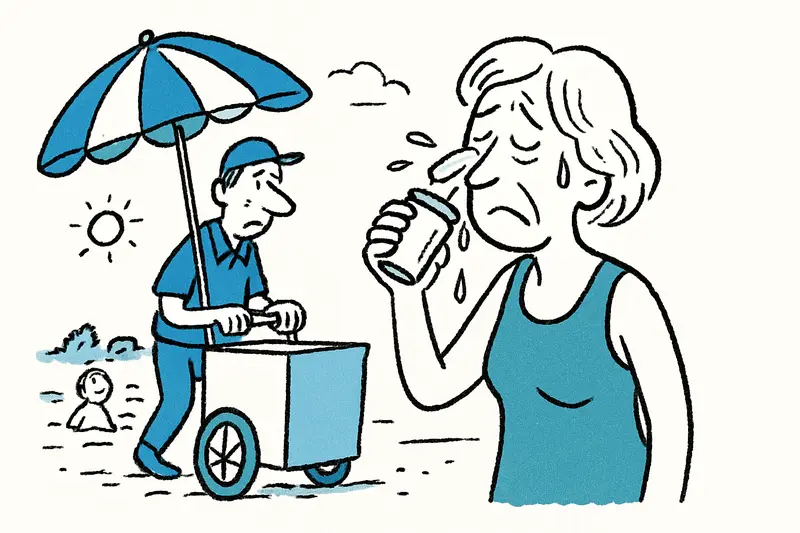
On the promenade in Colònia de Sant Jordi, in the middle of the afternoon, a cold‑drink vendor nervously shifts carts and umbrellas because even older regular customers prefer to sit in the shade. Children only splash at the shore instead of diving; an older woman splashes her face with a cup of sea water, hoping for the cooler breeze of old. Such observations repeat at many beaches: the sea surface warms, people seek ways out — and the usual warning signs feel like they come from another time.
Concrete approaches to solutions
- Expand and make the measurement network more transparent: more buoys at different depths, freely accessible raw data and short explanations for the public on how to interpret them. - Adjust beach management: information desks with daily sea temperature updates, additional shaded areas, drinking water stations and notices for risk groups (cardiovascular patients). - Link science and fisheries: systematic observations of Posidonia, juvenile fish stocks and unusual jellyfish occurrences should be locally documented and linked to temperature data. - Precautionary measures in harbors: warmer harbor waters can promote oxygen depletion; operators and authorities should review monitoring plans for sensitive marinas. - Long term: island policies and tourism contracts must require climate adaptation — for example, investments in coastal ecosystems that can buffer heat; related adaptation measures are outlined in Heatwave reaches 42 °C: How Mallorca should cope with the new temperature peak.
Why this is not just a local issue
Sea temperatures affect nutrient distribution, oxygen content and thus entire food chains. Posidonia meadows, which are important for coastal fishing and sand stability, react sensitively to prolonged elevated temperatures. If bathing water becomes a "warm cup", it also changes tourist expectations: some will still seek sun, others will look for alternatives — with economic consequences for island towns that depend heavily on classic beach tourism.
Concise conclusion
The 33°C mark at the buoy is more than a number for statistics enthusiasts. It is a warning signal: measured at a point, but embedded in a range of signs that the coastal climate is shifting. Instead of falling into blame, Mallorca now needs clearer measurement data, fast information services at beaches and harbors, and a connection between science, tourism and coastal management. When you stroll along the Paseo Marítimo, you don't just hear the motors of delivery scooters and the seagulls — you also hear how the island reacts to temperature shocks. And that is no small matter anymore. Similar short-term swings were discussed in Sea temperatures off Mallorca drop temporarily — temporary reprieve or false alarm?.
Frequently asked questions
When is Mallorca's best time to visit for outdoor activities like hiking and cycling?
Is a rental car necessary to explore Mallorca, or can I rely on public transport?
What should I pack for a Mallorca trip to cover day trips and beach days?
Is Mallorca a good destination for families with kids?
Which towns in Mallorca are must-see for a first visit?
What should solo travelers know about safety and staying connected on Mallorca?
How does the weather affect swimming and beach plans in Mallorca?
Are local markets worth visiting in Mallorca, and when do they operate?
Similar News
Finally Home: Mike and Leyla Heiter Buy Villa with Sea View in Mallorca
The reality TV couple Mike and Leyla Heiter have bought a house in Mallorca with a roof terrace and sea view. An Instagr...

Arrest after series in Palma: Who protects apartments from repeat offenders?
The National Police arrested a man in Palma who investigators say may have broken into several apartments. In one incide...

How a Teenager Without a Driver's License Stole a Rental Car — and What It Means for El Arenal
In El Arenal a minor took advantage of an unattended rental car with its engine running. Flight, climbing over walls and...
Three-ton llaut salvaged in Puerto Portals – volunteers clear microplastics from the harbor
During the weekend operation in Puerto Portals, divers pulled an approximately three-ton llaut from the harbor. Associat...

Naked Pillar in Bunyola: Why a Climbing Prank Is More Than an Accident
During the Sant‑Mateu verbena a 20‑year‑old fell at a protected wayside cross in Bunyola and pulled the stone cross off ...
More to explore
Discover more interesting content

Can Cap de Bou

Townhouse Lleo 72
