
Rockslide in Esporles: Two Houses Cut Off from the Outside World — a Reality Check
Rockslide in Esporles: Two Houses Cut Off from the Outside World — a Reality Check
A rockfall and uprooted pines have blocked a road connection in Esporles. No one was injured. What the event means for the safety of Mallorca's mountain villages, however, remains unclear.
Rockslide in Esporles: Two houses cut off from the outside world
Key question: How well protected are Mallorca's mountain villages really — and what is missing so people aren't left out in the rain?
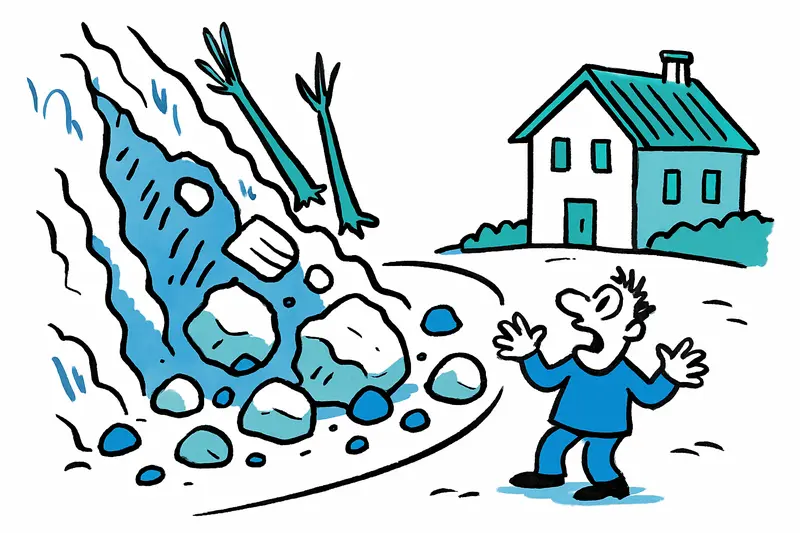
Early in the morning or during the night — times vary by source — large masses of rock detached from a cliff in the Des Verger area near Esporles. The fallen blocks were apparently accompanied by several pine trees that were dragged down and blocked a narrow country road. Two residential houses are currently only partially accessible. According to official authorities there were no injuries; the residents are not currently in danger.
At first glance this sounds like a local incident: road closed, workers with chainsaws, drones over the ravine (see Rockfall at Sa Calobra: What are the lessons from the Ma-2141 closure?).
But when I think of the steep paths around Esporles — the reddish wet dirt tracks, the smell of wet pine wood, the passage in front of the small village café where elderly people fold their newspapers — it becomes clear: such events affect an entire network of villages that is dense and vulnerable.
Critical analysis: the response coordination started as planned: police, the Consell's road administration, the Guardia Civil, forestry services and the fire brigade are involved, and the civil protection directorate has triggered its initial alert level. Drones are monitoring the slope, trees are being removed, the road is closed. That sounds tidy — but the system shows weaknesses.
First: temporal uncertainty. Different statements about the time of the collapse complicate tracing. Time stamping is important for authorities, not only for records but to check warning chains and alarms: would cameras, sensors or earlier inspection data have predicted a collapse or at least located it faster?
Second: accessibility. Two houses are "only partially accessible." What does that mean in practice for elderly residents, for people with medical prescriptions, for deliveries? A short-term closure can become life-threatening if an ambulance or medical transport cannot get through.
Third: prevention. The cause is attributed to the recent, heavy rainfall (see Stormy night in the island's interior: What's missing when rain becomes a problem?). But rain alone is often only the final trigger. How regularly are rock and slope areas inspected? Are there priority lists for securing particularly exposed stretches? Who bears the costs for proactive stabilization measures — the municipality, the island council or the owners?
What is missing in public debate: concrete figures and lines of responsibility (see Collapse at Palma's City Wall: What Needs to Happen Now). It is reported that various services are on site, but there is no clear answer to: who decides on reopening? Who orders long-term securing work? And above all: what timetables and budgets are available for that?
An everyday scene from Esporles: on the village square an old man in a wool hat sits, his hands still smelling of wood. He says that last night, because of the rain, he last saw the way to the pasture; today the road is full of emergency vehicles, the screech of chainsaws mixes with the distant patter of rain. Residents trade their honks for skepticism: 'This is not the first time,' says a woman, 'but this time it was closer to the houses.'
Concrete solutions that would make sense now:
1. Systematic slope inspections: A prioritized monitoring program for particularly exposed routes — with simplified checklists for municipalities to work through regularly.
2. Early-warning technology: Install inexpensive tilt and movement sensors on critical rock faces; they can alert responsible parties via mobile networks before a major collapse occurs.
3. Emergency access routes: For hamlets and isolated homesteads, alternative access plans and quickly passable supply routes should be kept ready — this can be a temporary traffic lane or a secured footpath.
4. Vegetation management and drainage: Check drainage channels to control seepage; forestry maintenance especially for pines, whose roots provide insufficient stability in loose ground.
5. Clear responsibilities and communication: A binding rule on who decides and communicates within which deadlines — so that residents do not hear conflicting timeframes from town hall and regional administration.
These measures cost money. But waiting until the next damaging event is more expensive — and more dangerous. Investments in prevention pay off not only for safety reasons but economically as well: tourist access, supply chains and everyday life depend on intact connections.
Punchy conclusion: The rockslide in Des Verger is not an isolated natural event but a warning signal for the whole island. We must question the routine of operations and invest more in early warning systems and in the swift restoration of safe access. Otherwise, when the next heavy rain front arrives, the question will no longer be whether help comes — but whether it arrives in time.
Frequently asked questions
How common are rockslides in Mallorca after heavy rain?
What should residents do if a road near their home is blocked by a rockslide in Mallorca?
Are mountain villages in Mallorca safe during periods of intense rainfall?
What happens when two houses in Mallorca are only partially accessible after a landslide?
What is Des Verger near Esporles known for after the rockslide?
Who handles rockslide emergencies in Mallorca?
What can be done to reduce rockslide risk on Mallorca’s rural roads?
Why do rockslides in Mallorca matter beyond the immediate area?
Similar News
Magaluf: Watchtower Alarm – Lifeguards Pull Unconscious Beachgoer from the Water
After a drama in the late afternoon, two lifeguards at Magaluf beach rescued an unconscious 44-year-old man. He was stab...

Turquoise in the City: How dangerous is the color play of the Sa Riera?
The Sa Riera in Palma suddenly turned turquoise — a pretty motif, but behind the effect lies a discharge of saline waste...

Jeckliner at Sunnesching: Cologne spirit sets sail from Palma
In September 2027 the Mein Schiff 2 briefly becomes a floating carnival stage: four days with Cologne bands, comedy and ...
Finally Home: Mike and Leyla Heiter Buy Villa with Sea View in Mallorca
The reality TV couple Mike and Leyla Heiter have bought a house in Mallorca with a roof terrace and sea view. An Instagr...
Arrest after series in Palma: Who protects apartments from repeat offenders?
The National Police arrested a man in Palma who investigators say may have broken into several apartments. In one incide...
More to explore
Discover more interesting content

Can Cap de Bou

Townhouse Lleo 72
