
After Roof Collapse in Manacor: Who Is Responsible for Crumbling Safety?
After Roof Collapse in Manacor: Who Is Responsible for Crumbling Safety?
A young man died when a house collapsed in Manacor. The city is shoring up the building, but the inspections that should have been mandatory apparently went unperformed. What lessons must Mallorca learn now?
After Roof Collapse in Manacor: Who Is Responsible for Crumbling Safety?
Key question
Why was the building in Manacor apparently not inspected for so long, despite mandatory inspections being in force since 2016, and how can a recurrence be prevented?
Brief status
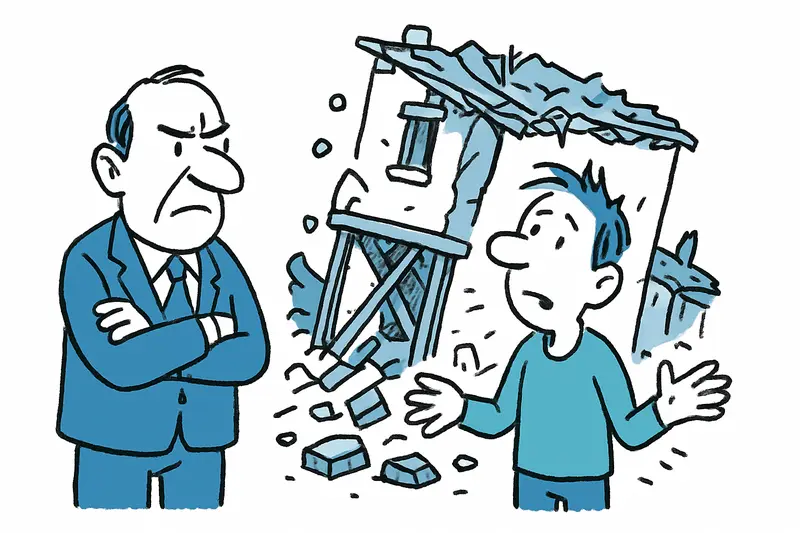
In a roof collapse in Manacor last week, an 18-year-old lost his life. The city administration has announced that the affected building will be fully shored up before technicians enter the interior to investigate the cause. According to the municipality, the building had not received an assessment since the introduction of mandatory inspections in 2016. The affected family was placed in temporary accommodation. Mayor Miquel Oliver stated that the shoring process had already begun but was delayed by rainfall.
Critical analysis
The initial facts reveal a clear gap: inspections are mandatory, but apparently they were not carried out. This is not an abstract administrative issue — it can cost people their lives, as seen in other incidents such as After a Roof Collapse in Artà: Termite Alarm on Carrer de les Roques — Who Takes Responsibility Now. When a municipality does not carry out reliable checks or when inspections are not followed up, a vacuum forms between legal requirements and practical implementation. At the same time, the fact that remedial actions are now being taken with considerable delay raises the question of how quickly emergency mechanisms in the city and province can respond.
What is usually missing in public discourse
It is rarely only about the specific house. Points often missing in the debate include: Who monitors compliance with the inspection obligations? Is there a publicly accessible list of all inspected buildings? How are owners reminded or sanctioned? And finally: do low-income people have the means to carry out necessary repairs, or does the burden fall on the municipality? These structural questions are often overlooked when attention focuses solely on the latest tragedy. Public debate after similar failures — for example the Playa de Palma Trial: Who Bears Responsibility After the Rooftop Terrace Collapse?, reporting on Medusa Beach: Who Bears Responsibility After the Collapse? and subsequent Court Hearing After Terrace Collapse: Who Is Responsible? — shows how legal, administrative and social responsibility questions resurface.
An everyday scene from Manacor
On the street where construction vehicles are now lined up, the smell of wet stone and freshly sawn wood mixes in the air. Market traders move crates, an elderly woman clutches her scarf tighter as the wind whistles through the narrow alleys. Site lamps buzz, workers exchange quick, sober glances — this is the moment when bureaucracy and everyday life collide. People in cafés speak quietly about the accident, not out of curiosity, but because everyone here knows: it could have been my neighbor.
Concrete solutions
1) Transparent inspection data: A public digital register of all mandatory inspections with status indicators would create accountability. 2) Follow-up system: If a building is not inspected, there must be automatic reminders, fines and binding extension deadlines. 3) Mobile emergency teams: Specialized units for rapid shoring and hazard mitigation, equipped for rain and adverse weather conditions. 4) Support programs: Grants or low-interest loans for low-income owners so necessary repairs are not postponed. 5) Local citizen services: A simple reporting hotline and visible local contact points so neighbors can report dangers without bureaucratic hurdles.
Practical first steps for Manacor
In the coming days, the city administration must rely on quick communication alongside shoring: open lists, clear contacts and a timetable for investigations. At the same time, there needs to be an audit of how many buildings on the island have similar gaps in mandatory assessments. A short-term task force of structural engineers, social workers and legal advisors could set priorities: which houses need immediate attention and which can be handled in the near term.
Concise conclusion
The death of a young person is an irreparable tragedy. Technical measures are necessary, but without systemic change the risk remains. Manacor can now take a straightforward step: make safety more visible, clarify responsibilities and organize support for the most vulnerable. That may cost money and nerves — but nothing is more costly than a human life.
Frequently asked questions
Who is responsible when a building in Mallorca collapses because it was not inspected?
Are building inspections mandatory in Mallorca?
What happens after a roof collapse in Mallorca?
Can rain delay emergency shoring work after a collapse in Mallorca?
What support is available for families displaced by a building collapse in Mallorca?
How can unsafe buildings in Manacor or Mallorca be reported?
What can Mallorca do to prevent another building collapse?
Why are old buildings in Manacor and other parts of Mallorca at higher risk?
Similar News
Reality check: Palma's "white" torrent — harmless salt or neglected warning sign?
White crusts on the Torrent de Sa Riera are causing a stir. Emaya describes them as salt deposits. Our reality check: wh...
When Ryanair's fleet grows: What Mallorca's travelers should know
Ryanair will soon receive 737 Max 10 jets. The larger aircraft offer potential savings — but also new risks for flight o...
Rising fuel and housing costs: Why Mallorca's overland buses are suddenly overcrowded
More and more people are leaving Palma — and boarding TIB buses: Between January and August 2026, the network recorded o...
Carriages Without Horses: Palma Plans E-Carriages – a Reality Check
Palma plans to switch to electric carriages in 2027. The prototype was shown near the cathedral. What is the technology ...

Record season, empty coffers: Who really benefits from the tourism boom?
Full hotels and more flights: the numbers sound impressive — yet many locals feel no benefit. A reality check with an ev...
More to explore
Discover more interesting content

Can Cap de Bou

Townhouse Lleo 72
