
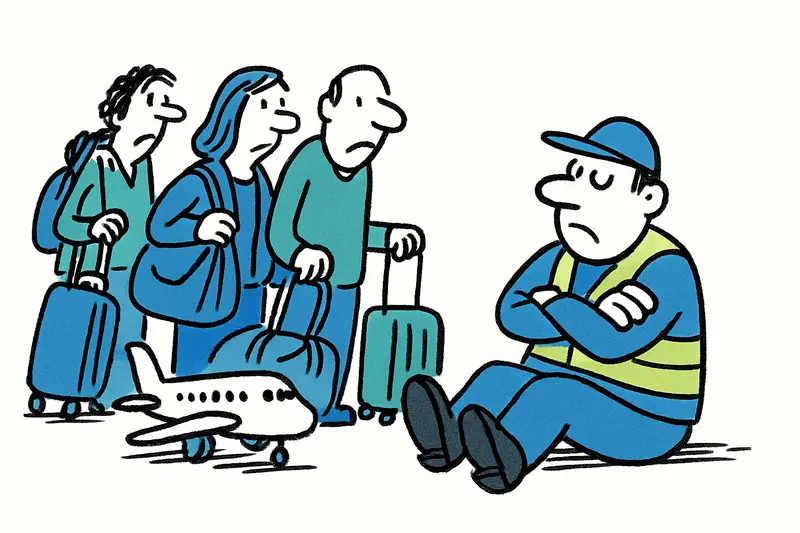
Ryanair Strike: Son Sant Joan Between Chaos and Negotiation Interludes
Work stoppages on the ground are still ongoing: while some teams reached a transitional agreement with Menzies, others continue to strike at Azul Handling — and Son Sant Joan feels the effects. A look at causes, risks and possible solutions for Mallorca.
Ground strike: Why Son Sant Joan is more than an airport problem
You can hear it from afar: announcements over the loudspeakers, the clatter of suitcase wheels on tiles, the occasional sigh of a stressed traveler. On an ordinary morning at Palma airport sunlight mixes with public addresses; today the atmosphere is tenser. Part of the ground staff has agreed on a temporary solution with the handling company Menzies — other teams at Azul Handling remain on strike, as detailed in Strike at Son Sant Joan Airport: Three Peak Periods, Major Chaos – What Travelers and Mallorca Need to Know. The result: waves of delays exactly during peak times, which trip up Palma and many travelers alike.
The facts in brief
Who is striking? Employees responsible for handling Ryanair flights, especially staff from Azul Handling, as covered in Ryanair Ground Staff Strikes: What Mallorca Needs to Know. In some cases union representatives and Menzies reached a temporary agreement, so the situation varies by region.
When are travelers affected? The work stoppages focus on three time windows: 5:00–9:00, 12:00–15:00 and 21:00–24:00. That is annoying for early return flights, travelers with connections and evening-shift commuters alike.
What remains unsaid in the reports?
Public coverage usually shows the visible consequences: long queues, delayed departures, frustrated tourists. What is less often discussed are the structural causes: the strong subcontractor structure in the handling sector, economic pressure on wages and working conditions and the lack of binding contingency plans for the event that part of the workforce stops working.
On Mallorca, where Son Sant Joan is a vital artery for the tourist season, such strikes affect more than holidaymakers. Hotels, bus companies, taxis and employers of commuters feel the effects within hours. Small cafés on the Passeig Marítim that depend on the flow of passengers see bookings drop when guests reschedule flights or leave earlier, as examined in Ryanair Strike in Mallorca: Who Pays the Price — and What Travelers Should Do Now.
Specific risk areas
Information deficits: Travelers report contradictory announcements, long phone hold times and unclear rebooking options. That increases stress not only in the departure hall but also on the roads when more people than planned arrive at the airport earlier.
Connections and logistics: Delays have cascading effects: missed connecting flights, luggage left behind, shuttle services canceled. For business travelers this can quickly become expensive — and for the island economy it creates significant planning problems.
Reputational risk: Mallorca lives off its reputation as a reliable destination. Repeated disruptions during peak times can push guests to consider alternatives like Barcelona or Malaga.
What should be done? Concrete approaches instead of waiting
It's not enough to just hope for negotiations, as outlined in Strike at Ryanair Ground Handler: A Stress Test for Mallorca’s Summer Operations. Some practical steps that could help in the short term:
1. Strengthen local mediation: The Balearic government or airport management could act as mediators to enable quick, binding emergency agreements — for example minimum staffing levels during peak times.
2. Transparent real-time information: A central feed for all handling companies, airlines and airport displays would reduce contradictory announcements. Travelers need clear, mobile access to reliable status updates.
3. Contractual emergency clauses: Future contracts between airlines and handling firms should include binding continuity clauses — for example standby pools or external relief teams that can step in at short notice.
4. Improve working conditions: Many conflicts stem from precarious employment. In the long term fair pay and planning security reduce the willingness to strike.
Scenes in the terminal: Small moments, big impact
At the coffee machine in the terminal I see an older woman steadying her suitcase with one hand while checking her phone with the other. A taxi driver is on the phone in a hurry because a client missed a connection. And yet: there are also staff who provide calm information, improvise and help out. That shows: a few organizational measures could absorb a lot of frustration.
What should travelers do now?
Practically speaking: arrive early, check the flight status online regularly, plan alternatives for important appointments and avoid booking the final connection. Locals should inform employers early if commuting times are likely to be affected by delays.
One final remark: strikes are an expression of conflicts that cannot be solved at a single airport alone. Mallorca faces the challenge of finding short-term fixes while working on long-term structures so that fewer things go wrong during peak times in the future.
Frequently asked questions
How are Ryanair strikes affecting Palma airport in Mallorca?
What times of day are most likely to be affected at Son Sant Joan?
What should I do if my Ryanair flight from Mallorca is delayed or changed?
Is Palma airport still operating normally during the strike?
Will the Ryanair strike in Mallorca affect luggage and connections?
Why does a strike at Palma airport matter so much for Mallorca?
Which areas of Mallorca may feel the knock-on effects of airport delays?
What is the best way to prepare for flying through Palma airport during a strike?
Similar News

Maribel: Five Decades of Service – Housekeeper from Peguera Celebrated with a Special Honor
Over 50 years in the hotel business: María Isabel “Maribel” Molinos was honored in Palma at the Nit del Turisme by Unive...

Orange Alert over Parts of Mallorca: Are We Prepared?
Dark clouds and an announced wet spell have triggered an Orange alert in parts of Mallorca. A reality check: what's miss...

Sundair & Co.: Sale speculation and what it could mean for Mallorca
Rumors about a possible sale of the airlines Sundair and Fly Air 41, which belong to Schauinsland-Reisen — and whether b...
Anne Wünsche in Mallorca: A job offer with a catch — who fits the role of personal assistant?
Influencer Anne Wünsche has left Berlin and is urgently looking for a full-time personal assistant in Mallorca. Why the ...
Daily from New York: Palma Between Boom and Strain
United will increase the Newark–Palma route to daily flights in 2027 using Boeing aircraft (231 seats). What does the in...
More to explore
Discover more interesting content

Can Cap de Bou

Townhouse Lleo 72
