
Ryanair Returns to Growth: More Flights to Mallorca – Opportunity or Risk?
Ryanair Returns to Growth: More Flights to Mallorca – Opportunity or Risk?
Ryanair announces more seats and new connections between Germany and Mallorca for summer 2026. A look at winners and losers — and what really matters on the island.
Ryanair Returns to Growth: More Flights to Mallorca – Opportunity or Risk?
Key Question
What is the benefit for Mallorca when a low-cost carrier restores its capacity to Germany — and how stable is this boost for the island's economy?
The facts are simple: For summer 2026 Ryanair plans to reverse parts of its previously announced capacity cuts, as reported in Ryanair threatens more cuts: What it means for Mallorca. The company intends to reintroduce around 300,000 seats and open eleven new routes within Germany. The airline names airports such as Cologne, Niederrhein, Memmingen and Bremen as concrete winners; Hamburg and Berlin are expected to see significantly reduced service. Newly announced connections include, among others, Friedrichshafen–Palma and two routes to Alicante.
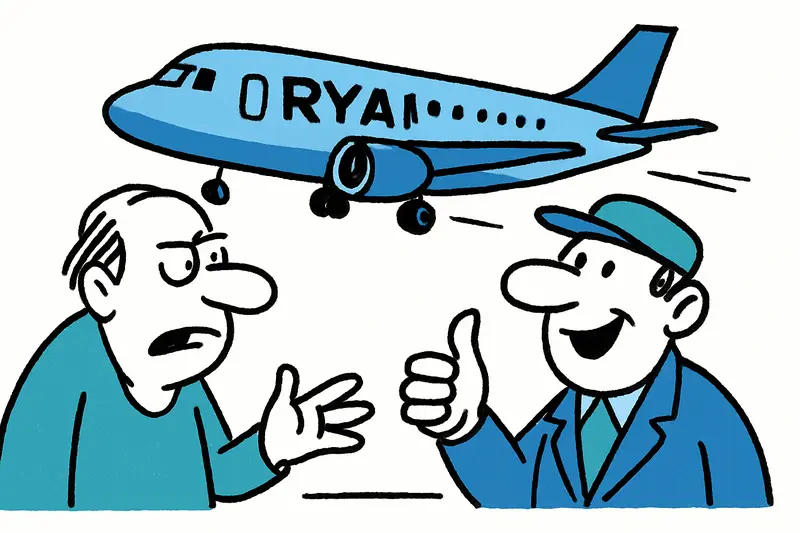
On Mallorca, at the taxi rank in front of Palma airport, the topic is immediately noticeable. Ramon, a driver with decades of experience, likes to say that the island lives from stable connections: «If more planes arrive in summer, it's noticeable — hotels, buses, taxis, small cafés.» This everyday observation hits the core: more seats mean short-term demand for numerous local service providers.
But the downside has become more visible in recent months. Ryanair had already announced route cuts repeatedly, as documented in Ryanair threatens further cuts – How at risk is Mallorca?; the current reversal is linked to political signals, namely a planned reduction of the air traffic tax and a freeze on air navigation charges in Germany. The current reversal, as covered in Ryanair vs. Aena: When an Airline Dispute Lands on Mallorca, is linked to political signals. Such decisions can affect capacities in the short term — creating a dependence between political tax decisions and the predictability of the tourism infrastructure.
Critical analysis: There are three problem areas. First: volatility. Airlines react quickly to cost changes; this means island businesses experience strong fluctuations in arrivals. Second: concentration risk. If a few low-cost carriers set the pace, Mallorca's accessibility becomes dependent on their business models, pricing policies and staffing decisions. Third: distribution effects. While airports like Memmingen or Bremen benefit, metropolises such as Hamburg and Berlin lose capacity — this affects feeder traffic and the market for package versus independent travelers.
What is often missing in public debate: clear information on how the additional seats are distributed over time (daily, weekly, only in high season), how many of them actually reach Mallorca and what the consequences are for traffic, noise and local infrastructure. Rarely discussed are working conditions on the ground, possible price-pressure effects on regional competitors and the question of whether additional flights are managed in a climate-responsible way.
Concrete solutions can be derived from everyday practice: better coordination between airport operators and municipalities to manage peak times; flexible, season-based bus and rail offers from the airport into the regions; transparent slot and capacity planning so hotels and service providers can plan long term. A regional monitoring system would also be useful — a simple dashboard showing how many passengers actually land on Mallorca, which airports they come from and what traffic flows they generate.
Another practical step: diversification of connections. Instead of relying on a handful of low-cost carriers alone, local tourism actors should actively hold talks with other airlines, ferry operators and rail companies. Complementary measures such as improvements in public transport from the airport or targeted noise protection in affected neighborhoods would also help spread the burden.
Everyday scene to close: On a gray morning a waitress in the café at Plaça de Cort counts reservations — many guests arrive by direct flight, others by train or rental car. She hopes for more customers but is nervous about the uncertainties. This image is symbolic: for the people on the island, flights are not abstract numbers but income, planning and sometimes early-morning noise.
Bottom line: More capacity can be good for Mallorca in the short term. In the long term, however, the island must not tie its planning to spontaneous business decisions of a single airline. Politics, airport operators and the local economy must use the short-term gains to create stable, fair and sustainable connections — otherwise all that remains is a loud but short-lived tourist stream.
Frequently asked questions
Will more Ryanair flights to Mallorca make summer travel easier?
Is Mallorca too dependent on low-cost airlines like Ryanair?
Which German airports are expected to benefit from Ryanair's new routes?
What could more flights to Palma mean for taxis, hotels and cafés in Mallorca?
Why can Ryanair change its Mallorca flights so quickly?
Are more flights to Mallorca always good for the island?
What do passengers flying to Mallorca need to know about route changes in 2026?
How could airport changes affect tourism planning in Mallorca?
Similar News

When the Wallet Becomes a Danger: Attack in Peguera and Lessons for Mallorca
In Peguera, two women are said to have stolen the wallet from a 75-year-old German couple. When the victim intervened, t...
Plata stays Plata: Young people take over, Llonguets remain
A small bar on Carrer de l'Argenteria will continue: Tolo Serra hands the place over to young Mallorcans at the end of t...

Unnoticed in the Luggage Compartment: How a Boy Traveled More Than 100 Kilometers in a Team Bus
A minor traveled in the undercarriage of a team bus for more than 100 kilometers until his cries for help were heard. A ...

Cap Vermell Grand: Second Michelin Key – a Gift for the East
The Cap Vermell Grand in Capdepera has been awarded its second Michelin key. For the region this elevates the luxury off...
Eurowings lets four aircraft carry names – a friendly idea that also reaches Mallorca
Eurowings is launching a campaign: four Airbus A320s are to carry the first names of people who help others in everyday ...
More to explore
Discover more interesting content

Can Cap de Bou

Townhouse Lleo 72
