
Seizure in the Sea at El Arenal: How Safe Are Our Beaches?
Seizure in the Sea at El Arenal: How Safe Are Our Beaches?
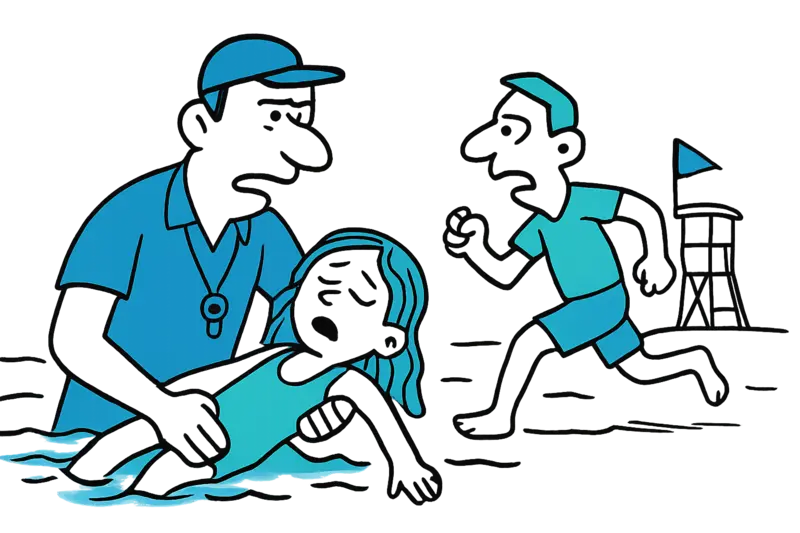
A minor suffered a seizure in the water near El Arenal. Lifeguards cared for her for about 20 minutes before emergency services took over. We ask: Is the preparedness on Mallorca's beaches sufficient?
Seizure in the Sea at El Arenal: How Safe Are Our Beaches?
Lead question: Is the current equipment and organization at heavily frequented beaches like El Arenal (see Critical Bathing Incident at Arenal: Call for Better Protective Measures) sufficient when a minor suddenly experiences a serious medical emergency while swimming?
On Tuesday afternoon, around 2:35 p.m., a young person swimming roughly 25 meters from the shore at El Arenal beach experienced a medical emergency. Lifeguards pulled the girl ashore, treated her there and recorded a severely reduced oxygen saturation. With supplemental oxygen and continuous monitoring, the responders stabilized her breathing until emergency services arrived and took over transport to the hospital. Paramedics later indicated a febrile seizure as the cause; it is not known whether she was a local or a tourist.
The facts are alarming when looked at soberly: a minor, unconsciousness, fluid coming from the mouth, pulse oximeter readings that were at 55 percent and only rose with oxygen supplementation. These are not figures to be taken lightly.
Critical analysis
Twenty minutes of care by the lifeguards before emergency services arrived are on one hand a sign that the beaches have active, trained teams. On the other hand, this time span raises questions: Is the chain of help organized tightly enough that in acute cases during the bathing season professional emergency medicine can get to the beach quickly enough? How are right-of-way rules and access routes for ambulances along the Paseo Marítimo regulated when the promenade is full and parking bans are ignored? There have been fatal outcomes in nearby areas (see Playa de Palma: Death at Balneario 2 – How good is Mallorca's help for people in need?).
Technically positive: the presence of a pulse oximeter and the administration of oxygen show that lifeguard teams are not just handling rescue rings but are medically prequalified. What remains critical is the question of uniform standards: Do all stations on the Playa de Palma have the same equipment? Are lifeguards able to perform more complex resuscitation measures safely until an emergency physician arrives, as in cases like Playa de Muro: Seconds That Saved a Life — and What We Must Learn?
What is missing in public discourse
People often talk about sunbeds, noise and concessions, less about medical infrastructure on beaches. There is a lack of clear debate about minimum standards: fixed supplies of medical oxygen, regular training for first responders on the beach, standardized alarm routes to 112 and documentation of response times. Also rarely discussed is the language barrier: many bathers are visitors who in an emergency may not know how to call for help or describe what is happening.
Another blind spot: educating parents and caretakers about seizures. Febrile seizures occur in children; on a crowded beach uncertainty and panic can cause mistakes – for example trying to force something into the mouth or positioning the head incorrectly.
A typical scene from El Arenal
Picture this: the heat still radiates from the paving stones of the Paseo Marítimo, the small chiringuitos play soft reggae, children shout and a lifeguard tower whistles. Parents reach for towels, a lifeguard runs barefoot across wet sand, the sound of traffic on the ring road mixes with sirens in the distance. Many interventions begin like this – unspectacular, suddenly real, with people who are no longer just worried about loungers and sunbeds.
Concrete solutions
- Uniform minimum equipment for all guarded beach sections: oxygen cylinders, pulse oximeters, automated external defibrillators (AED) (see Cardiac Arrest on Can Picafort Beach: Questions Remain and Ideas for the Future).
- Regular, documented training for rescue personnel, including management of seizures and resuscitation in cases of water aspiration.
- Clear, visible notices at beach entrances in multiple languages: how to act in case of unconsciousness, emergency number 112, location markers for faster identification by emergency services.
- Improved access rules for emergency vehicles along the promenade during peak times; enforce markings and drive-through zones.
- Public outreach: simple first-aid courses in hotels and with rental agencies, flyers for parents with guidance on handling febrile seizures (recovery position, do not put anything in the mouth, call emergency services).
- Digital support: beach apps or QR codes on lifeguard towers that provide location data and first-aid instructions.
Practical tip for beachgoers
If you go to the sea with children or people with existing conditions: stay within sight, note the nearest lifeguard station, briefly explain to companions what to do in an emergency. Stay calm, call 112 and give as exact a location as possible, such as the beach section or tower number.
Conclusion: The intervention at El Arenal shows that rescue teams often save lives – but it also reveals gaps in beach medicine and communication. An honest discussion about what standards we expect from our beaches is missing. It would be a great benefit for the island to start this debate now and implement concrete, practical steps before another emergency forces the answer.
Frequently asked questions
What safety measures should I expect at Mallorca beaches for medical emergencies?
How quickly can emergency services reach a busy Mallorca beach like El Arenal during a medical emergency?
How is access for ambulances along Mallorca's Paseo Marítimo managed during peak beach season?
What should families know about febrile seizures and beach safety on Mallorca?
What basic medical equipment should every guarded Mallorca beach have?
What public-facing steps could Mallorca beaches take to improve emergency response awareness?
Are there signs or guidance at Playa de Palma beaches about what to do in an unconsciousness emergency?
What can hotels and rental agencies do to help with beach safety on Mallorca?
Similar News

When Oil Becomes a Luxury: A Reality Check on Rising Food Prices in Mallorca
On Mallorca staple foods have become drastically more expensive over five years. Who pays the price? A critical look at ...
When a Hammer Comes Out of the Glove Compartment: Violence After a Traffic Dispute in Bons Aires
A midday traffic dispute in Bons Aires escalated: a man pulled a hammer from his car and injured another driver in the l...
Realtor on Set: Marcel Remus in Front of the ZDF Camera in Mallorca
Well-known real estate agent Marcel Remus appears for the first time as an actor in a ZDF feature film; filming is curre...
When the Ovens Go Cold: Why Palma's Small Pizzeria Closes After 35 Years
An affordable pizzeria in Palma has closed after 35 years. Not because of financial problems, but because the strain on ...
After a Dispute in Palma-Bons Aires: Hammer Attack in Road Traffic — A Reality Check
During an argument in Bons Aires, a driver pulled a hammer on October 1 and injured a man in the leg and shoulder. The S...
More to explore
Discover more interesting content

Can Cap de Bou

Townhouse Lleo 72
