
Severe weather on Mallorca: What to do when the island is underwater within a few hours?
Severe weather on Mallorca: What to do when the island is underwater within a few hours?
Heavy rain, thunderstorms and hail swept across Mallorca – streets flooded, hailstones in Felanitx and massive delays at the airport. A critical assessment and practical suggestions for the island.
Severe weather on Mallorca: What to do when the island is underwater within a few hours?
Key question: Why are floods and flight chaos on Mallorca not only a weather problem, but also a planning problem?
On Wednesday around midday the island turned into many small scenes of disorder. In Port Adriano cars crawled through water-covered streets, in Palmanova rainwater ran over the promenade, in Manacor side streets were under water and in Llucmajor access roads to residential areas became raging streams. In Felanitx unusually large hailstones also fell – pictures circulated in local weather communities, as reported in After the Thunderstorm: Flooded Streets, Mudslides and the Big Question About Mallorca's Preparedness. At Palma airport people waited patiently, some resigned, others loudly cursing: delays piled up, some connections were canceled, affecting mainly domestic routes like services to Barcelona or Ibiza.
What many perceived as 'sudden, heavy showers' — this rapid shift is described in Sudden Severe Weather: Mallorca Between Heat Haze and Heavy Rain — had been under an official warning all morning: AEMET had issued an orange alert for the entire island, clearly advising caution because of thunderstorms, heavy rain, hail and strong gusts, as noted in Severe weather on Mallorca: When it really becomes critical — and what's still missing. The warning was in effect until 9 pm – the time frame makes clear that the situation was not just a brief disturbance, but affected many people's daily routines.
Critical analysis: Where are the real problems?
In short: in several places at once. The drainage systems in many municipalities are not designed for short, extreme rainfall; older drainpipes, clogged gutters and undersized culverts cause water to overflow quickly, as highlighted in Severe Weather Warning for Mallorca: Are Our Towns and Beaches Prepared?. At busy intersections there are often no temporary detours or visible information about which roads are closed. At the airport a different problem appears: communication between ground staff, airlines and customers is vulnerable in stressful situations. Passengers report long queues, unclear announcements and limited cancellation or rebooking options when weather and staffing plans collide.
This is not about blaming individual officials or employees; it is a structural problem: infrastructures and procedures are geared toward the 'normal' summer loads, not sufficient for more intense, irregular events.
What is missing from the public debate?
There is a lot of talk about short-term effects – about streets that are currently underwater or delayed flights. Little is discussed about how often such events can recur before investments in drainage, road planning and airport logistics become a priority. There is a lack of clear debate about who should pay for which improvements: municipalities, the island government or the provincial administration? It is also rarely discussed how residents can be better informed and protected in everyday life, for example through island-wide sirens, locally networked warning apps or clearer notices at critical points such as bus stops and beaches.
The perspective of frontline workers is also missing: bus drivers, airport employees, paramedics – they need reliable protocols, protective clothing and fast information channels, not just improvised solutions in an emergency.
An everyday scene
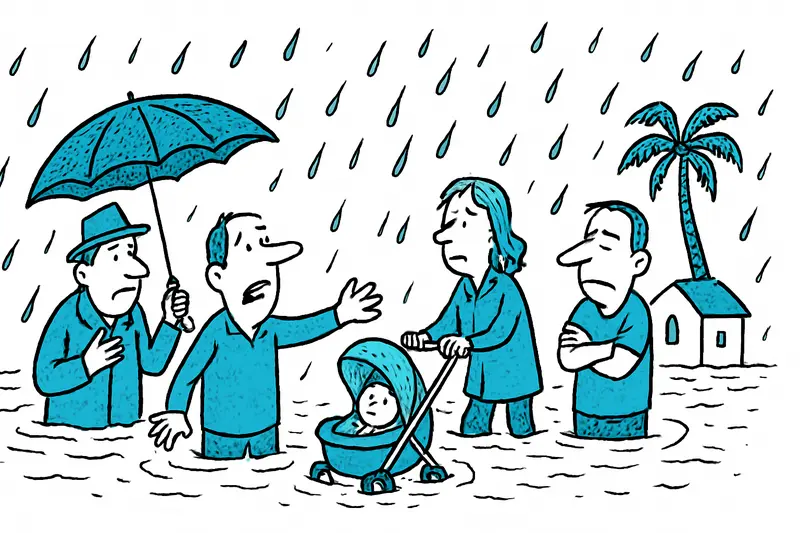
Imagine Plaça Gomila in Palma: gutters overflowing, rain drumming on the tiles, a city bus struggling through water, pedestrians huddling under awnings. The bakery on the corner throws the door open to take in a few soaked customers; someone pushes a pram through puddles larger than the pavement. Such images show: for many this is no longer an exceptional event, but a day when small decisions determine whether you can still get to work or not.
Concrete solutions
- Short term: Municipalities must inspect and clear gutters and street drains; set up temporary closure plans and highly visible signs at known risk spots. Authorities should automate AEMET information to local warning systems and the airport so announcements can be made faster.
- Medium term: Investments in urban drainage, retention basins on inflows and the renaturalization of small streams will reduce peak runoff. Road planning in risk zones should include permeable surfaces and higher curbs.
- Airport & airlines: Reliable standards for passenger information in crises, more staffing reserves at peak times and clearer rebooking rules for weather-related disruptions. A central information hotline and real-time online dashboards would reduce frustration.
- Social: Awareness campaigns on private and community protective measures (sandbags, emergency kits, safe parking) and better coordination between municipalities for short-term staff deployments.
Conclusion
Mallorca is experiencing weather extremes more often, and these events hit the island at critical points: roads, beaches, airports. Many consequences could be mitigated – with cleaner drains, smarter road planning, clearer information channels and targeted investments. In the short term vigilance helps: travelers should check their flight status, residents should avoid vulnerable areas and authorities should take local warnings seriously. In the medium term, however, a joint, transparent program is needed that integrates infrastructure, workflows and communication. Otherwise the next deluge will not just be a natural event, but again a test of whether the island is ready to manage a variable climate and its impacts on everyday life.
Frequently asked questions
What should I do if Mallorca experiences sudden flooding?
How are weather warnings communicated at Palma Airport during heavy rain on Mallorca?
What long-term changes could help Mallorca reduce flood risk?
Which areas on Mallorca are commonly affected by sudden flooding and what should residents do?
What practical steps can people take to prepare for heavy rain on Mallorca?
How could better communication help during weather disruptions on Mallorca?
When is the best time to monitor Mallorca weather alerts, especially for travelers?
How do climate extremes affect everyday life on Mallorca?
Similar News
Control with a Mask in Santanyí: Protest, Culture or Administrative Offense?
In Santanyí the local police escorted a traditionally masked activist away. Was it an identity check, an administrative ...

Up to €9,000 Fine in Inca: Why Wet Wipes Can Blow Up the Sewers — and What We Should Really Do
The municipality of Inca warns of blockages caused by wet wipes — fines of €300 to €9,000 are possible. A reality check:...

World Cup Trophy in Palma: Two Days Up Close
The World Cup trophy is coming to Palma at the end of October: two days on display at City Hall, and on 31 October photo...

End of October: Can you still swim in the sea in Mallorca?
The late-autumn sun still warms the air and the sea has retained its summer heat—many people don't pack away their swimw...
Years of abuse in Costa de la Calma – Neighbor calls Guardia Civil
In a villa in Costa de la Calma a neighbor alerted the Guardia Civil: a 19-year-old woman reported years of violence by ...
More to explore
Discover more interesting content

Can Cap de Bou

Townhouse Lleo 72
