
Smoke in Sa Coma: Who Protects the Victims — and Who Protects the Batteries?
Smoke in Sa Coma: Who Protects the Victims — and Who Protects the Batteries?
In Sa Coma a hybrid car burned in an underground garage and a block of flats was evacuated. The Guardia Civil is investigating whether arson is involved. We ask: What is missing in protecting victims and in addressing e-vehicle risks?
Smoke in Sa Coma: Who Protects the Victims — and Who Protects the Batteries?
Key question: How well is Mallorca really prepared if an underground garage catches fire at night — and what does that mean for people who are already at risk?
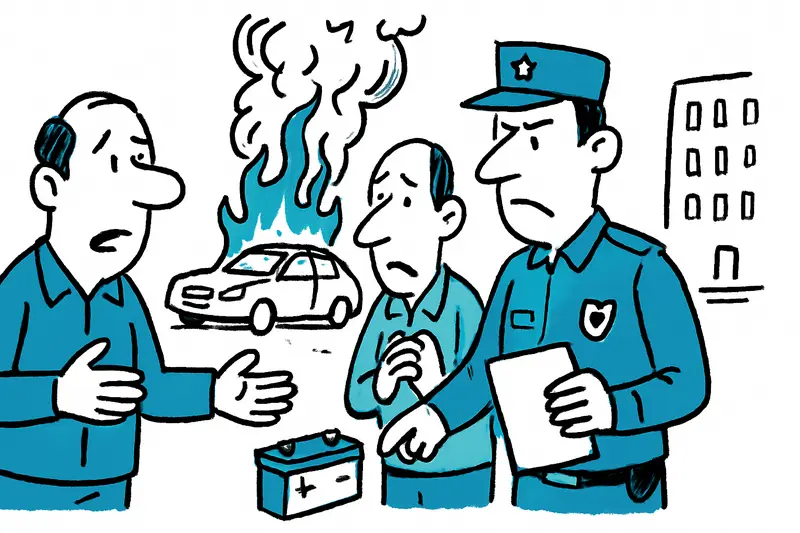
In the early hours of a Saturday, thick smoke spread through a block of flats in Sa Coma. Residents were gathered on the pavement opposite the garage entrance with blankets, sirens wailed, and the roofs remained damp in the first light. The cause was a fire in an underground garage: a so-called hybrid vehicle burned out completely. The Guardia Civil has opened an investigation; forensic technicians are expected to examine the car today. There have been no arrests so far. According to information, the vehicle belongs to a woman who is a victim of domestic violence — whether that is connected to the fire is unclear.
The incident highlights two problems at once: on the one hand, the uncertainty around fire causes in vehicles with high-voltage batteries; on the other, the question of how well protection mechanisms work for people who are already victims of violence. Hybrid and electric vehicles behave differently in a fire than internal combustion engine cars; they can, for example, produce thermal residues and later re-ignition due to damaged cells. This poses technical and logistical challenges for fire departments, especially in tight underground garages with poor ventilation.
Critical analysis: Investigations must not only examine the mechanism of the fire but also consider the social dimension. If a vehicle belongs to an affected person, the safety net — law enforcement, temporary housing, access to secure parking spaces — may have gaps, as shown in Attempted Insurance Fraud in Mallorca: Who Sets Fires — and Why the System Fails. Public debate quickly focuses on cause A or B, as with the Nighttime Fires in S'Albufera: Six Ignition Points — How Do We Protect the Wetland?; rarely does it address the intersection of victim protection, urban risk planning and the technical requirements of new vehicle types.
What is missing from the discourse: mandatory rules for safe parking of hybrids in multi-family buildings; clear information for tenants on how to behave if smoke develops; faster coordination between victim support services and local emergency teams so that vulnerable people are assisted immediately in relevant incidents. Also rarely discussed are the training needs of local fire services for specialized extinguishing and cooling procedures required for battery fires, and regular inspections of ventilation systems in underground garages.
Everyday scene from Mallorca: Anyone who leaves early for work in Portocristo or to the beach at Playa de Sa Coma knows the narrow garage entrance, the children waiting at the bus stop just before school, the downstairs neighbour who comes up the stairs daily with her dog. In such moments it becomes visible how quickly a domestic emergency can push neighbours out into the street in their nightclothes and interrupt daily life. Voices are loud, it smells of wet asphalt and unusually acrid smoke, and the same vulnerabilities are echoed in coverage such as Motor scooter fire in Palma: Alarm on Calle Sindicat – How safe are our narrow shopping streets?.
Concrete solutions: First, short-term: better information chains between police, fire services and social services; emergency plans for underground garages that are regularly rehearsed; designated protected places for victims of domestic violence that also provide secure parking for their vehicles. Second, medium-term: technical standards for garage ventilation, mandatory clearly visible escape routes and stricter rules to reduce combustible loads. Third, for emergency responders: specific training on battery fires and provision of equipment for cooling and isolating high-voltage batteries.
Conclusion: The fire in Sa Coma is more than a technical case for forensic examiners. It exposes where social protection functions and technical safety meet — and where gaps remain. We should take the investigation seriously, but also discuss how neighbours, property managers and authorities can cooperate better in future so that a single car does not become a danger to an entire block of flats and victims are not put at further risk.
Frequently asked questions
What should residents in Mallorca do if they smell smoke from an underground garage at night?
Are hybrid and electric cars more difficult to extinguish in a garage fire?
Is it safe to keep a hybrid car in an underground garage in Mallorca?
What kind of fire safety rules are useful for apartment garages in Mallorca?
What should victims of domestic violence in Mallorca do if their car or parking space is not safe?
Who investigates a car fire in Mallorca, and what happens next?
How can neighbours in Sa Coma or other Mallorca towns react calmly during a garage fire?
Why do underground garage fires affect whole apartment blocks so quickly in Mallorca?
Similar News
By Boat Instead of the Road: Palma's Water Bus — a Reality Check
The 'Bus Nàutic' launches in two stages — but questions remain over interim operations, fares and environmental requirem...
Several Days of Rain Approaching: How Well Is Mallorca Prepared?
Aemet says: rain from Thursday until at least Tuesday, especially heavy on Monday. Temperatures remain mild. A reality c...
Nervous Reaction at a Traffic Stop: Why Campos Is Not Just a Sniffer-Dog Problem
At a traffic stop in Campos a 37-year-old German was arrested with a bag full of drugs. Our reality check explains why s...
Cameras Against Illegal Dumping: Porto Cristo Monitors Problem Areas – a Reality Check
Manacor has installed four surveillance cameras at particularly problematic waste spots in Porto Cristo. A local check a...
Reality check: Palma's "white" torrent — harmless salt or neglected warning sign?
White crusts on the Torrent de Sa Riera are causing a stir. Emaya describes them as salt deposits. Our reality check: wh...
More to explore
Discover more interesting content

Can Cap de Bou

Townhouse Lleo 72
