
Snake invasion in Mallorca: Where the danger to nature lies — and what to do now
Snake invasion in Mallorca: Where the danger to nature lies — and what to do now
Sightings at Playa de Palma, the Malgrats and Palmira show: the introduced horseshoe snake threatens native lizards and small mammals. An inventory and concrete proposals.
Snake invasion in Mallorca: Where the danger to nature lies — and what to do now
Key question: How serious is the threat posed by the introduced horseshoe snake to Mallorca's ecosystem — and why are we reacting so hesitantly?
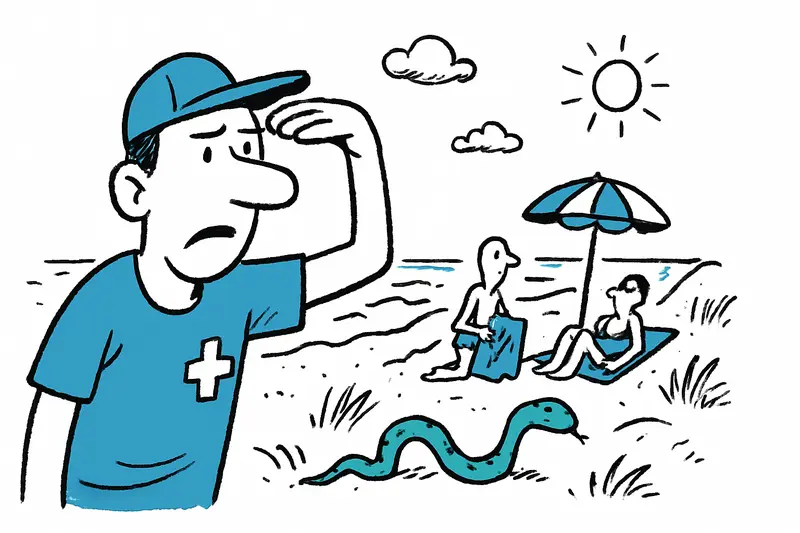
Early in the morning at Playa de Palma: tourists roll out towels, the smell of sunscreen hangs in the air, and the beach chairs cast short shadows. A lifeguard is looking not only at the water but also into the dunes. In recent weeks there have been increasing reports of snake sightings there (see Why Snakes Are Appearing More Often in Mallorca Now — Danger, Causes and What We Should Do). Similar scenes come from the Malgrats islands near Santa Ponça — a video shows a snake brushing past a kayak (see Alarm at the Malgrats: Invasive Snakes Threaten the Sargantana) — and from Palmira beach. This is no longer a coincidence, but a pattern.
The trail goes back: as early as 2003 a first specimen was documented in the Pityuses after young plants with root balls unintentionally transported the animal. On Ibiza the species has spread almost everywhere; experts speak of dramatic changes in habitats. On smaller, strictly protected islets such as Dragonera, El Toro and Sa Porrassa, capture and control measures are underway, but the situation is more fragile than people think.
Critical analysis
The real danger is not to people — the horseshoe snake is considered non-venomous and not aggressive — but to native fauna. Small mammals and especially endemic lizards are coming under pressure; the Pityusic lizard is mentioned explicitly. Several weaknesses are visible here: plantations and horticulture continue to import root balls and plants from the mainland, inspections at ports are patchy, and responsibilities between municipalities, island administrations and conservation organizations are often unclear (see Emergency in Mallorca: Why Olive Trees Are Suddenly Banned — and Whether That's Enough). In the field a lot is improvised: volunteers bait traps, protected area staff exchange photos in chats, but coordinated, long-term programs are missing.
Another blind spot: public discourse focuses on individual sightings and spectacular videos, not on systematic population surveys or prevention. Observations in tourism zones — heavily visited beaches, boat landings, nurseries near ports — are not sufficiently networked and analyzed. In addition: on Menorca, where native snake species exist, the effects are less pronounced. This shows how complex species interactions are and that blanket measures are not enough (see 'A snake eats another' - what cannibalism among invasive snakes reveals about Mallorca's ecosystem).
What is missing in the debate
Transparent figures on capture rates, verified supply chains for imported plants, mandatory controls at all entry points and a unified reporting portal for sightings. The focus must not be solely on short-term culling operations; without scientific long-term studies on population dynamics and prey effects every action remains piecemeal. And: local people need clear guidance — on beaches, in ports, in nurseries — on how to behave and whom to inform.
Concrete solutions
What is pragmatically possible now: first, stricter checks on plant deliveries, especially root balls from the mainland; spot checks, quarantine requirements and certificates could help. Second, a central reporting and coordination portal into which municipalities, island administrations and conservation agencies feed data. Third, targeted traps and removal teams on small islands with high protection status, accompanied by scientific monitoring. Fourth, awareness campaigns at heavily frequented beaches like Playa de Palma and in boat bases around the Malgrats: simple posters, information for rental operators and training for lifeguards. Fifth, funding for research projects on impacts on endemic species and for development of alternative protection measures (e.g. barriers at breeding and resting sites).
One component that is often neglected: prevention in the supply chain. Nurseries and importers must be held accountable with inspection protocols and documented hygiene measures. This goes hand in hand with training for staff in ports and tree nurseries — people there are often the first to notice when something is wrong.
Everyday life on the island
On the way to Santa Ponça a boatman stops, points to a small rocky islet and says: 'They were already there.' The voice sounds tired, not panicked. That is typical for Majorcans: we perceive problems, but we hope someone else will solve them. That must not happen.
Conclusion: The horseshoe snake poses an ecological challenge that requires local knowledge, significantly better import controls and coordinated measures. Those who continue to rely on ad hoc reactions risk permanent damage to endemic species. Now is the time for clear rules, reliable data and actions that make an impact — not just as a headline, but in the municipal park, the nursery and on the small islets we want to protect.
Frequently asked questions
How serious is the threat posed by the introduced horseshoe snake to Mallorca’s ecosystem?
What practical steps are being proposed to tackle the horseshoe snake on Mallorca?
How can locals and tourists help prevent the spread of the horseshoe snake on Mallorca?
Where have snake sightings been reported recently in Mallorca?
How is Mallorca’s situation different from Menorca regarding the horseshoe snake?
Why are long-term actions more important than quick culls?
What public information will Mallorca residents and visitors see about this issue?
What role do plant imports and nurseries play, and what changes are suggested?
Similar News
Nine-year-old rescued after cliff fall at Cala Murada — How safe are Mallorca's coastal paths?
A boy fell roughly five meters down the rocks near Cala Murada. The dusk rescue was elaborate; a helper also had to be r...

How safe are tourists in the luxury marinas? After arrests: a reality check
The Guardia Civil arrested two men in Calvià who are suspected of stealing luxury watches in Port d'Andratx and Puerto P...

Palma Chases Wealthy US Tourists — The Key Question: Who Should the City Actually Serve?
The city is investing more than €200,000 to attract high-paying visitors in several US cities. A good idea — but what is...

Enough swimming: Why Port de Pollenca is louder than the sea
More than 200 people formed a human chain in Port de Pollenca — not only as a protest but as a wake-up call. Guiding que...
Mysterious disappearance in Alcúdia: Where is 24-year-old Lisa B.?
Since August 3 there has been no trace of 24-year-old German Lisa B. The family has traveled to Mallorca and urgently re...
More to explore
Discover more interesting content

Boat Tour with BBQ along Es Trenc Beach

Private transfer from Mallorca Airport (PMI) to Pollensa
