
Son Moll gone: Demolition of the beach bar in Cala Rajada and what's missing now
Son Moll gone: Demolition of the beach bar in Cala Rajada and what's missing now
The well-known beach bar on Son Moll beach in Cala Rajada has been demolished. What the official intervention means for tourism, residents and the control of concessions — a reality check straight from the promenade.
Son Moll gone: Demolition of the beach bar in Cala Rajada and what's missing now
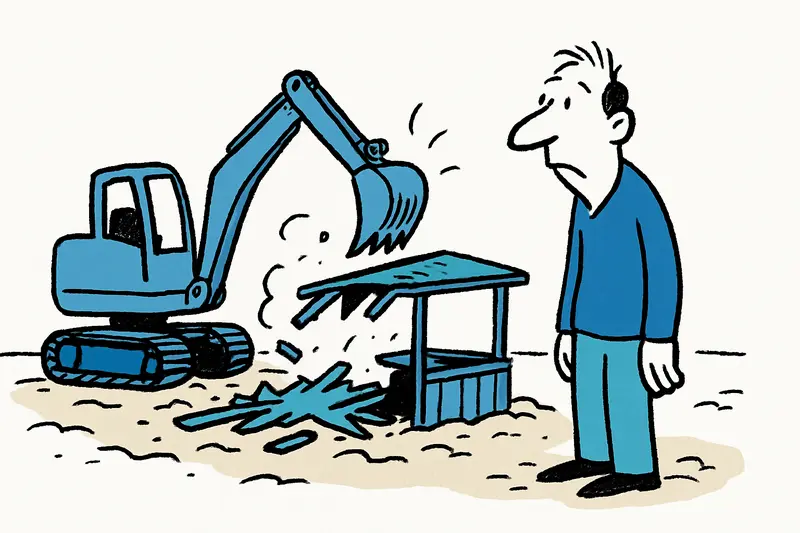
On Monday there was little left to save on the Son Moll promenade: excavators, broken wooden boards and still-steaming sand where years ago the small beach bar stood, popular with many holidaymakers for its simple breakfast offerings. The rusty remains are evidence of an overdue administrative intervention — and at the same time the start of a debate that is only just beginning in Cala Rajada.
Key question
Who ensures that beach uses are regulated transparently, legally and in a way residents can understand — and why did the demolition take so long? Similar administrative debates have arisen elsewhere, for example in Palma where Palma must cut sun loungers: beach areas shrinking – who pays the price?
Critical analysis
The facts are concise: according to authorities, the beach bar at Son Moll had a concession whose term had expired. Re-transfer documents from 2009 are said to have imposed an obligation on the municipality to carry out the dismantling. The Balearic Agency for Ecological Change ordered the removal; in 2024 the environmental group GOB also filed a complaint alleging illegal use. When we visited the site, demolition work was already well advanced. It all fits together — in the end the facility was removed.
But: why was the deadline effectively allowed to run from 2009 until 2026? Between all the case numbers you can sense stagnation. Municipalities handle such cases differently: sometimes staff are lacking, sometimes priorities are elsewhere, often clear schedules are missing. Here, apparently nothing was done for years until the higher authority stepped in, as has happened in other clean-up efforts such as Calvià Cleans Up: Demolition Instead of Holiday Hotels — Green Spaces for Paguera and Magaluf?
What is missing in the public discourse
The perception of many visitors tends to reduce the matter to "good bar gone" or "authority overreacts." Three things are missing from the discussions: first, a transparent chronology of administrative decisions (who decided what, when and why); second, the ecological criteria that made the removal necessary; and third, a perspective for employees or operators who suddenly lose their location. Warning sign: in almost all conversations on the promenade, locals mentioned that they were poorly informed about schedules or possible replacement solutions.
Everyday scene from the promenade
Concrete solutions
To ensure such stagnation does not become the rule, I propose pragmatic steps:
1) Public timelines: Municipalities should publish clear schedules on their websites and on notices at affected beaches: concession status, deadlines, contact persons, next steps.
2) Transition concepts for operators: If removal is necessary, short-term replacement options must be examined — for example modular, easily removable beach stalls with temporary permits that meet ecological requirements.
3) Regular audits: The island government could require periodic reviews of beach uses so expired concessions do not simply remain in place for years.
4) Involvement of residents: For especially touristic stretches, local information events should be mandatory. Residents often notice problems first — and have practical ideas for the promenade.
Why this matters
Beach bars are not only sources of revenue; they shape the local scene, create jobs and influence walking routes. A messily regulated status leads to injustice: some operators work for years without a valid basis, others are forced to pay or even give up prematurely. Clear rules create planning security for everyone — tourists, businesses and residents. Recent incidents also underline the stakes for beach safety and management, see Fatal Rescue Attempt in Son Bauló: What Must Change on Our Beaches
Pointed conclusion
The demolition at Son Moll was legally justified. Still, it leaves a bitter aftertaste: years in which the issue could have been resolved were wasted. Anyone who wants to sit on the promenade in Cala Rajada in the future has a right to know according to which rules the beachscape is formed. More transparency, clear schedules and humane transition solutions would not be a luxury but an administrative duty. Son Moll is now a construction site; the next season should show whether the authorities have learned that order and local character are not opposites.
In the end: the sand remains, the promenade lives on — but please, a little less improvised.
Frequently asked questions
Why was the beach bar at Son Moll in Cala Rajada demolished?
Is it still possible to get breakfast at Son Moll in Cala Rajada?
Why do beach bar demolitions in Mallorca take so long?
What does the demolition at Son Moll mean for locals in Cala Rajada?
Who decides whether a beach bar can stay open in Mallorca?
What should visitors expect at Son Moll beach in Cala Rajada now?
Are temporary beach stalls an option in Mallorca after a demolition?
How can beach use in Mallorca be managed more transparently?
Similar News
Bomb threat before Jet2 flight in Tenerife: A reality check for security protocols
A passenger reported a bomb in luggage shortly before departure in Tenerife. Evacuation, baggage checks, delays — and ma...
Who is stripping Mallorca's coast bare? Why entire slopes are being removed for villas
On Mallorca steep slopes are again being removed to make way for luxury construction sites. Who bears the responsibility...

Robber Falls While Fleeing in Sant Agustí: Who Takes Responsibility?
During a purse-snatching in Sant Agustí, a non-commissioned officer chased the suspect; the man jumped from a bridge and...

Bomb threat on board? Why the Tenerife incident concerns us in Mallorca
A passenger on a Jet2 flight from Tenerife to London triggered an evacuation and intensive security checks. The result: ...

More Electric Cars in the Balearic Islands: Sales Rise Sharply
Between January and August, 14,185 vehicles without petrol or diesel propulsion were sold — an increase of more than 40 ...
More to explore
Discover more interesting content

Can Cap de Bou

Townhouse Lleo 72
