
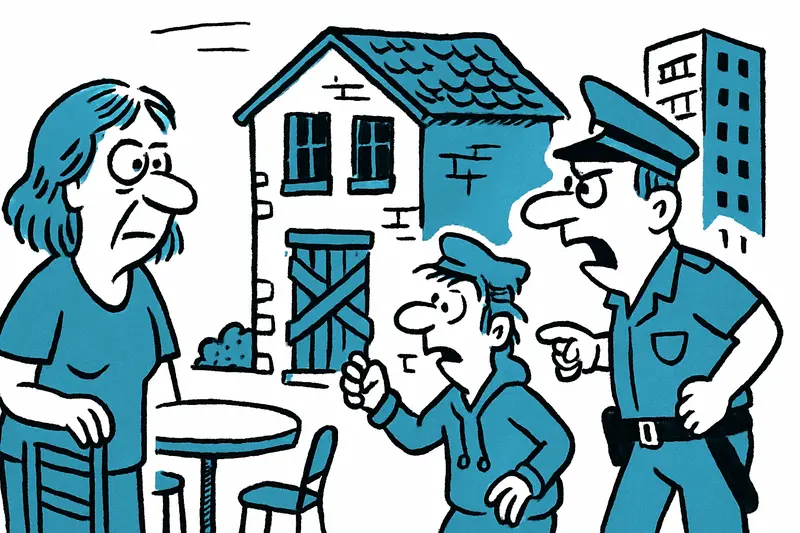
Squatter Alert in Cala Major: Who Protects Neighbors and Guests?
Squatter Alert in Cala Major: Who Protects Neighbors and Guests?
In Cala Major, a long-used vacant building on Avenida Joan Miró is causing unrest: a group of around a dozen people has settled there, commercial spaces remain open, and neighbors fear copycats. Our reality check: what's missing from the discourse, how can the neighborhood respond — and what role does the administration play?
Squatter Alert in Cala Major: Who Protects Neighbors and Guests?
Key question: How can Palma prevent vacant houses from becoming permanent hotspots without overwhelming the rule of law and the neighborhood?
In the early morning, when the cleaning crews ride down Avenida Joan Miró and the first deck-chair vendors set up their tables, a quiet problem lies between a luxury hotel and a bakery: a worn building where people have been living on and off for about three years. Residents count roughly a dozen people, and the ground floor apparently still houses businesses. The police are monitoring the situation; there have been thwarted break-in attempts, and nearby construction sites have increased their security. The mood in Cala Major is tense.
The scene is ambivalent. On one side is the sense of security of residents, hotel guests and shopkeepers. On the other are people who have occupied spaces and, in some cases, have been present in the neighborhood's walls for some time. According to police, the situation is being watched, yet anyone walking attentively down Calle Miquel Rosselló i Alemany hears the usual everyday noises: scooters, a fisherman calling at the harbor, children heading to the beach already with their schoolbags before ten. These normal sounds do not make the problem smaller — they make it more visible.
Critical analysis: the situation reveals at least three structural gaps. First: vacancy meets a lack of prevention — a problem mirrored by squatters in Santa Margalida's half-finished housing blocks. Second: law and operational practice diverge. Police surveillance is limited; intervention is only possible when a criminal offense occurs or a court orders an eviction. Third: everyday social responsibility by the city and owners is missing. There are hardly any fast, coordinated offers between social services, owners, neighborhood representatives and the police.
What is often missing in public debate is the distinction between acute crime fighting and long-term prevention. Conversations usually revolve around immediate evictions or visible security measures at construction sites: doors, locks, alarm systems. That is important, but incomplete. Also too little discussed are how owners can be held accountable when properties sit empty for years and what social services would need to look like to prevent squatted houses from becoming permanent emergency shelters.
Everyday scene: In front of the small café on the corner of the avenue stands Marta, a vendor who has worked here for 20 years. She talks about how the neighborhood has changed: families used to come with their shopping; now concern mixes with tourism. Guests from the luxury hotel walk by, photograph the promenade, and are surprised at the police presence. Marta has once chased a group away at night; during the day she tries to calm shopkeepers when rumors spread. Such daily interventions do not replace public policy, but they show how much responsibility falls on residents. Tensions over beachfront management have flared in reports about premium sunbeds in Cala Major.
Concrete solutions:
1) Rapid registration of vacant properties: The city administration could create a binding, publicly accessible register in which owners must list vacant properties. This increases transparency and makes targeted prevention easier.
2) Targeted cooperation between social services and police: Mobile teams that coordinate social workers with police officers can assess cases more quickly: are these people in need or organized occupations with criminal intent? Early engagement reduces escalation.
3) Sanctions and incentives for owners: Financial charges for long-term vacancy combined with grant programs that promote renovation or interim use (e.g., temporary social housing or cultural projects).
4) Strengthen neighborhood networks: Local reporting points, organized neighborhood watch structures and clear communication channels to the police prevent problems from growing in secret.
5) Construction site and hotel coordination: Builders and hotel operators should be required to be certified and to share security concepts. Safe construction sites are not only property protection; they are neighborhood protection. Recent coverage of a risk of collapse in Cala Major that led to temporary closures underlines the need for better site safety.
These steps are not panaceas, but they are practical tools that administration, owners and citizens can use together. One important note: quick evictions alone do not solve the underlying problems; without follow-up care, new vacancies will appear.
Concise conclusion: Cala Major is not an isolated case; it reflects how neighborhoods handle vacancy, tourism pressure and social vulnerability. The simple slogan “evict” falls short. Those who want lasting security must simultaneously manage spaces, enforce ownership responsibility and build social bridges. Otherwise all that remains are secured doors and the unpaid shifts of neighbors — Marta will still be out early in the morning putting the bakery's chairs out and hoping that politicians and owners soon take concrete steps.
Frequently asked questions
What is the weather usually like in Mallorca in winter?
Can you swim in Mallorca in winter?
Is Mallorca worth visiting in winter?
What should I pack for Mallorca in winter?
What is Palma de Mallorca like in winter?
What is Sóller like to visit in winter?
What is Pollença like in winter?
What can you do in Mallorca in winter besides going to the beach?
Similar News
Mini-tsunamis in Mallorca: Harmless natural phenomenon — or an underestimated danger?
Two harbor towns in Mallorca recorded unusual water level fluctuations. An analysis: How rissagas form, who is at risk —...
Stinging jellyfish in Cala Banyalbufar: Why everyone suddenly fled the water
In Cala Banyalbufar, Pelagia noctiluca washed up in droves. A personal account of why this is no coincidence, what is of...

New low-pressure trough brings rain — and the heat remains: What's missing in Mallorca?
A short, intense window of showers hit Mallorca, yet the air remained muggy and warm. Key question: Why does rain hardly...

Klaus-Michael Kühne has died: The entrepreneur who gave Mallorca a second home
He first arrived on the island at 60; later the holiday house became Castell Son Claret – a hotel, a music venue and an ...

Buying Instead of Moving Away? Why Every Fourth Property Owned by Balearic Residents Isn't Located Here
Almost a quarter of the apartments purchased by Balearic residents are located on the Spanish mainland. A concise analys...
More to explore
Discover more interesting content

Boat Tour with BBQ along Es Trenc Beach

Private transfer from Mallorca Airport (PMI) to Pollensa
