
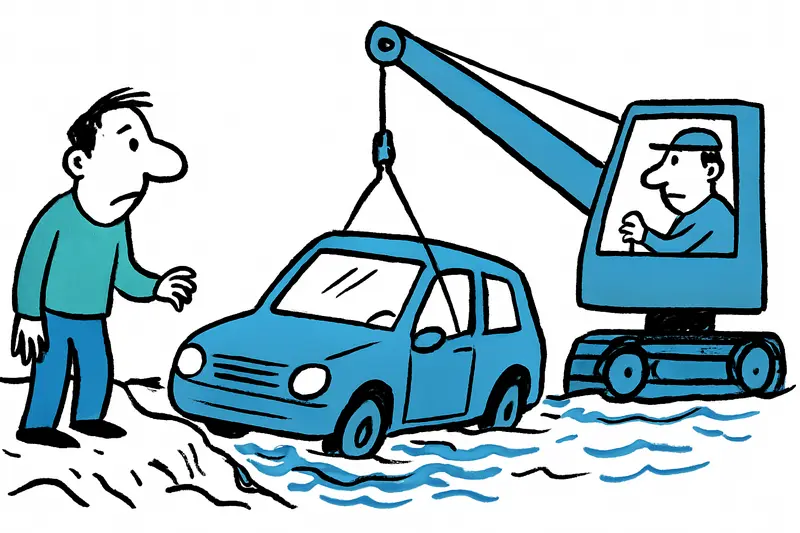
Stolen, thrown into the sea, recovered: Who pays the price for a sunken rental car?
Stolen, thrown into the sea, recovered: Who pays the price for a sunken rental car?
A rental car stolen in El Arenal was thrown into the sea off Son Verí Nou and was only recovered days later with difficulty. Who bears responsibility — and what is missing in the response?
Stolen, thrown into the sea, recovered: Who pays the price for a sunken rental car?
A blue rental car, theft in El Arenal and a bumpy recovery on the rocky coast of Son Verí Nou
The images stayed with people: a blue car, half in the water, half scraped against the rocks — residents of the coast near Son Verí Nou came across the vehicle during a walk and called the emergency number 112. Llucmajor local police, firefighters and the Guardia Civil responded; rescue teams found no one inside. Days later a crane hauled the vehicle out of the surf with difficulty. That is the timeline if you trace the path from theft to recovery.
Key question: Why does a stolen rental car end up in the sea, and what gaps does this case reveal in prevention, environmental protection and the handling of stolen vehicles?
The facts are sparse: the car was apparently stolen in El Arenal, appeared a few hours later off Calle Murta in Son Verí Nou and remained under water for several days before being recovered on Monday by a salvage tug. The recovery was not without problems: the vehicle repeatedly struck the rocks while being lifted, increasing effort and risk.
So far, so sensational. But behind these facts lie several complex problems that are often underdiscussed in public debate. First: the vulnerability of rental cars in tourist areas. Vehicles parked in S'Arenal are often close to hotels, rental stations and roads with high turnover of arrivals and departures. Poorly secured key handovers, chaotic parking areas and rushed procedures are everyday occurrences in the season. This vulnerability is illustrated by a recent robbery and escape in Playa de Palma. Coastal roads' vulnerability has also been highlighted by an arrest in Capdepera after shots at a checkpoint.
Second: the environmental issue. A car that lay in the sea for several days releases oil, brake fluid, coolant and plastic debris into a rocky bay that serves as habitat for snorkelers and small marine life. In Son Verí Nou, where waves crash against limestone cliffs and fishing boats glide in the early morning light, such pollution is particularly sensitive. This risk echoes the garbage avalanche after a flash flood in S'Arenal, which showed how quickly plastic and waste can affect coastal areas.
Third: the organizational response. The alert chain worked — 112, police, fire brigade, Guardia Civil — but the recovery showed how difficult maritime lifting operations on rocky coasts can be. Who decides on the next steps? How is responsibility divided between the municipality, the coast guard and insurers? Often the answers to these questions remain vague. Similar recovery difficulties and costs were highlighted in a costly rescue at Son Serra de Marina, where vehicles and salvage efforts created risky operations.
What is missing from the discourse is a sober connection between prevention and responsibility: it is not only the alleged thief who is to blame or the only target of criticism. Providers, authorities and holiday destinations must also review practices that facilitate theft or unnecessarily hamper damage limitation. Here are some concrete suggestions that do not require much imagination:
- Rental companies should document key handovers more systematically: clear handover protocols, photos of the parking location and digital signatures help. In case of suspected misuse, a rapid immobilization mechanism for the vehicle must be possible (location data, if available).
- In seasonal areas like El Arenal, parking zones must be better marked and illuminated. Video surveillance at central parking spots reduces opportunities without monitoring every corner.
- For coastal stretches with rocky shores there should be clear action plans for recoveries: standardized contracts with salvage companies, rapid environmental checks after recovery (oil absorbents, samples) and financial recourse options against those responsible and their insurers.
- Authorities and insurers: better information flows. If a vehicle is reported stolen, the search must reach maritime agencies, not only the land police. In other words: automatic exchange between theft-report databases and coastal services.
One small scene that stayed with me: on a hot morning I saw locals at the bus stop along the MA-19, commuters in flip-flops and work trousers, a fisherman bending over his nets, seagulls screaming, and in the background the dull sound of the surf at Son Verí Nou. People weren’t talking about sensational headlines; they said you shouldn’t leave your car unlocked and that such incidents undermine confidence in the holiday season. That is the everyday reality that matters.
In summary: the incident is shocking, yes — but it also points to several avoidable weaknesses. A stolen car that ends up in the sea is the outcome of a chain of organizational errors, environmental risks and gaps in cooperation between private providers and public authorities. Anyone who dismisses it as a curious news item overlooks the follow-up costs: for residents, for nature and for tourists who depend on safe mobility.
Conclusion: more structure in rental handovers, clear recovery protocols for rocky coasts and a fast data flow between police, insurers and the coast guard would make such operations rarer — and less expensive and damaging. Son Verí Nou is not an exceptional one-off; it is a place that deserves close attention.
Frequently asked questions
Who pays when a stolen rental car ends up in the sea near Mallorca?
What preventive steps can rental companies in Mallorca take to reduce theft and unauthorized use?
How can parking areas in Mallorca's tourist towns be improved to deter theft?
What should a rapid response plan include for recoveries of vehicles on rocky Mallorca coasts?
How can authorities improve information sharing when a vehicle is reported stolen in Mallorca?
What are the environmental risks when a car sits in the sea around Mallorca?
What practical tips can travelers use to protect rental cars in Mallorca?
Why does Son Verí Nou’s coastline case matter for Mallorca’s coastal safety and recovery practices?
Similar News

Haute Nuit in Puerto Portals: Fashion, Art and Indulgence by the Water
On October 2 the Lobster Club in Puerto Portals will be transformed into a stage for curated fashion, art and culinary e...
Magaluf: Watchtower Alarm – Lifeguards Pull Unconscious Beachgoer from the Water
After a drama in the late afternoon, two lifeguards at Magaluf beach rescued an unconscious 44-year-old man. He was stab...
Turquoise in the City: How dangerous is the color play of the Sa Riera?
The Sa Riera in Palma suddenly turned turquoise — a pretty motif, but behind the effect lies a discharge of saline waste...

Jeckliner at Sunnesching: Cologne spirit sets sail from Palma
In September 2027 the Mein Schiff 2 briefly becomes a floating carnival stage: four days with Cologne bands, comedy and ...
Finally Home: Mike and Leyla Heiter Buy Villa with Sea View in Mallorca
The reality TV couple Mike and Leyla Heiter have bought a house in Mallorca with a roof terrace and sea view. An Instagr...
More to explore
Discover more interesting content

Can Cap de Bou

Townhouse Lleo 72
