
Storm in Cala Rajada: How Meter-High Waves Flooded the "Tiki Beach" During Winter Closure
Storm in Cala Rajada: How Meter-High Waves Flooded the "Tiki Beach" During Winter Closure
A powerful storm sent waves over the boulevard in Cala Rajada. The Tiki Beach, closed for the winter and run by Peggy Jerofke, was flooded, panes were pushed in and inventory soaked. What is needed now: practical protective measures and clear lines of responsibility.
Storm in Cala Rajada: How meter-high waves flooded the "Tiki Beach" during its winter closure
Lead question: How safe are coastal businesses when storm surges enter premises even during the winter downtime?
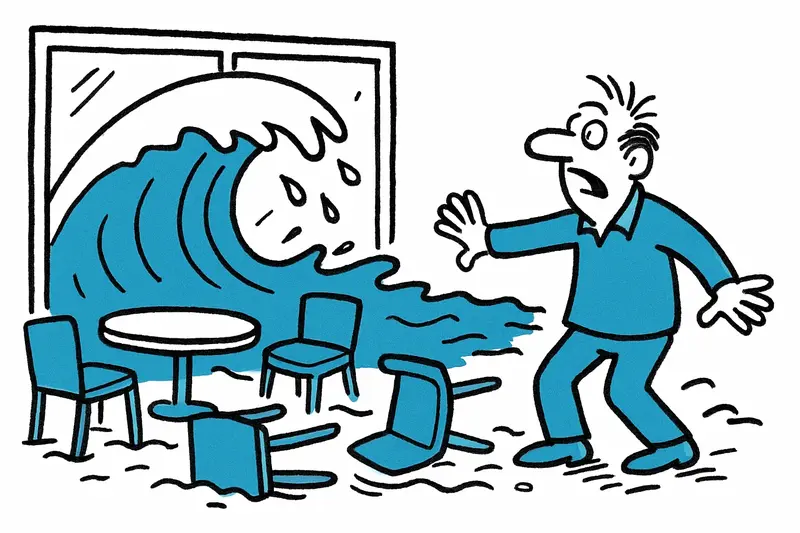
The wind still whistles through the pines along the promenade, salt hangs in the air, and on this January day people can be seen stumbling through sand piles in rubber boots — this is how Cala Rajada feels after the storm system. One of the affected establishments is the "Tiki Beach" on the seaward side of the boulevard. The restaurant was closed; nevertheless waves apparently managed to force open two panes of a long window front and flood the entire interior with seawater, sand and mud.
The scene as staff found it: open windows, a wooden floor, soaked chairs and new seating, salt crusts on tables and armchairs. The team discovered something was wrong while doing winter work at a nearby construction site on the way and then reported the damage. Estimates of wave height vary; reports spoke of up to eight to ten meters — the only certainty is that the swell was extraordinary.
In short: a venue in winter hibernation that nevertheless suffered significant damage within minutes. Furniture, wooden floors and soft armchairs are waterlogged; initial cleaning and drying measures are already underway, a specialist company is treating the wood with care products, and the operators expect the insurer to assess the damage. They plan to reopen in time for the season start on April 1.
Critical analysis: At first glance the problem seems local — a storm, a flooded venue. Looking closer, a tangle of questions emerges; the Morning storm over Palma and Calvià: What the short storm shock revealed showed similar gaps: Are existing protective walls still sufficient, are winter duty rosters and monitoring routines adequate, and how robust are insurance terms against extreme coastal events? The operators had already responded to past damage years ago by raising the protective wall after the Autumn storm in Mallorca: Three-meter waves and what we should learn from it. But when waves again reach unusual heights, that is apparently no longer enough.
What is often missing from the public discourse is the perspective of small businesses and their employees in winter. It is not only about repairable furniture, but about business continuity, supply contracts, seasonal workers whose income is disrupted, and the question of who is liable for consequential costs and long-term building damage. Also underexposed is how municipal warnings are translated into concrete instructions for hospitality businesses — for example temporary closures of the promenade, additional sandbags or mobile barriers, as highlighted in After the Thunderstorm: Flooded Streets, Mudslides and the Big Question About Mallorca's Preparedness.
Everyday scene in Mallorca: you walk along the promenade in the morning, hear the gurgle in the drains, see anglers curiously looking at the damage, and guests wondering about cordoned-off areas. Cafés open later, cleanup crews push tables out, and in the background a local bus driver speaks calmly into his radio — life goes on here, even when the sea is moody on some days.
Concrete quick-win solutions that could help on site: operators should systematically document vulnerable spots and keep simple protection kits ready (mobile shutters, sandbag trolleys, lifting and locking window closures). Municipalities must plan regular inspections of promenade walls and drainage systems and connect AEMET warnings to local alarm chains. Insurers and restaurateurs should jointly develop emergency plans that also cover winter-season scenarios — including fast payout options for necessary immediate measures.
In the longer term technical upgrades are needed: waterproof base zones, raised thresholds, better-sealed window fronts and contracts that specifically address storm damage. The question of municipal investment in coastal protection and prioritizing risk zones along boulevards is also part of the debate.
Punchy conclusion: The image of soaked armchairs in the "Tiki Beach" is more than a local damage report. It is an indicator that the old mix of raising a wall and waiting is no longer sufficient. If we want cafés and beach bars to survive by the sea in the future, we must get practical: simple protection measures, clear alarm routes and usable insurance rules — otherwise the next storm will again become an existential threat for small businesses.
Frequently asked questions
Can winter storms flood beach bars in Mallorca even when they are closed?
What kind of damage can storm waves cause to a restaurant in Cala Rajada?
Is it safe to walk along the promenade in Mallorca after a storm?
What should Mallorca restaurant owners do before winter storms?
How quickly can a closed beach bar in Mallorca recover after flood damage?
Why are coastal businesses in Mallorca still vulnerable after wall improvements?
What should employees do if a coastal venue in Mallorca is flooded overnight?
When do beach restaurants in Mallorca usually reopen after winter closure?
Similar News
Why the End of "Los Últimos Mohicanos" Is More Than the Closing of a Bar
With squealing tires and one last glass, an icon on the Palma–Manacor expressway closes. Why the demise of this German b...

Protest camp on Plaza España: Who asks for solutions to the right to housing?
Around 30 activists set up a tent camp on Palma's Plaza España to push for stronger tenant rights. Our analysis asks: Ar...

In the Name of a Gang: Alleged Extortion in El Molinar and What It Reveals About the Protection of Sex Workers
A man is accused of posing as a member of the Hells Angels and extorting two women at accommodation in El Molinar. The s...

When Chile Meets the Mediterranean: A New Flavor at Can Bordoy
At Can Bordoy in Palma's old town, Chilean chef Jhonatan Maldonado combines Patagonian seafood with Mediterranean island...
End of an Era on the Ma-15: Why the Biker Hangout at Son Gual Is More Than Just a Restaurant
"Los Últimos Mohicanos" closes unexpectedly. A meeting place for motorcyclists on the Palma–Algaida border is disappeari...
More to explore
Discover more interesting content

Can Cap de Bou

Townhouse Lleo 72
