
Storm in Palma: Paseo Sagrera and Major Parks Closed — a Reality Check
Storm in Palma: Paseo Sagrera and Major Parks Closed — a Reality Check
Because of strong gusts, Palma has prudently closed Paseo Sagrera and the parks Bellver, Can Terrers and Ribera. Airport operations are disrupted and gusts up to 150 km/h were recorded in the mountains. What the measures achieve — and what's still missing.
Storm in Palma: Paseo Sagrera and major parks closed — what matters now
Key question: Is the precaution sufficient, or is the city still not well prepared for such gusts?
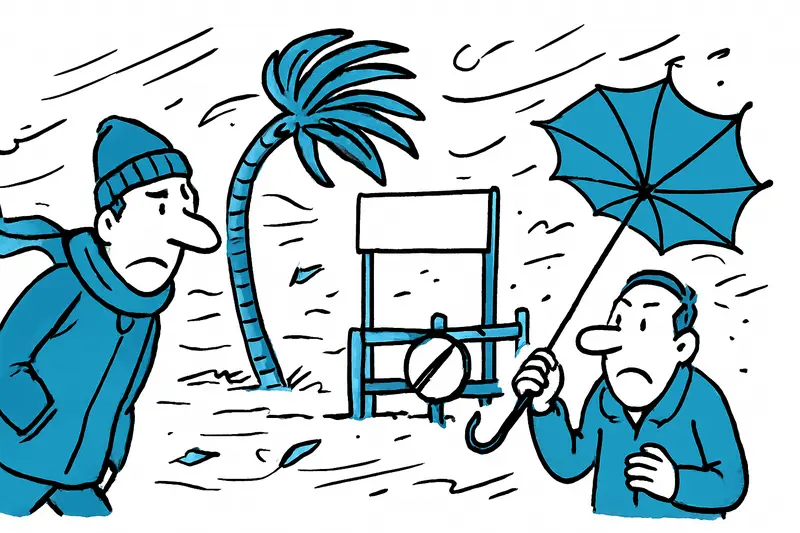
In the morning the city of Palma closed Paseo Sagrera and the large green areas Bellver, Can Terrers and Ribera as a precaution, as reported in Parks in Palma Closed: Was the Closure Timely and Sufficient?. The reason is strong wind gusts that have triggered a yellow warning on the island, with orange warnings in large parts; this development is also discussed in Orange storm cripples Palma: parks closed, markets cancelled – Is the city well prepared?. The airport is already experiencing delays; in the Serra d’Alfàbia measurements of up to 150 km/h were registered. Those are the facts — but what do they mean for residents, employees and tourists?
Short and clear: closures are appropriate when there's a risk of falling branches, collapsing construction fences or blown-away parasols. On Mallorca, where squares are lined with palm trees and many cafés operate outdoors, a strong gust is enough to turn routine into danger. In Palma, passersby at Plaça Cort and Passeig del Born observed awnings clattering and staff using buckets of water to stabilize outdoor seating — small scenes that show how quickly normality can become hazardous.
Critical analysis: the acute closures are reactive and sensible. Yet questions remain: How clearly does the city communicate the reasons for closures and the conditions for reopening? Are there provisions for cordoned-off paths, such as safe detours for pedestrians, people with reduced mobility or for emergency services? And how does the administration coordinate with the airport and road operators when gusts affect landings, takeoff sequences and diversions?
It is also important to differentiate across the island. An orange warning for the coasts, the north and the centre does not mean every municipality is equally affected. The tip of Sa Dragonera or the cliffs in the north often feel stronger gusts than the courtyard of a residential neighbourhood. Tourists in particular — who may not check weather updates daily — need clear notices at harbour entrances, bus stops and in hotels, preferably multilingual and highly visible; powerful local storms have in some cases led to flooded streets, as covered in Thunderstorms over Mallorca: Streets Flooded, Parks Closed — Are We Prepared?.
What is often missing in public discourse is the perspective of those who work outdoors. Gardeners, dog walkers, construction workers on scaffolds, bicycle couriers — their risks are real and regularly underestimated. There are no short-term contact points where workers can get help, protective gear or at least a dry space to wait until the wind dies down. Equally absent are quick checks of hanging advertising banners and scaffolding that could otherwise become dangerous.
Everyday scene from Palma: around 10 a.m. taxis roar along Vía Alemania, drivers squinting and keeping windows closed. An elderly woman with shopping bags deliberately moves to the building side of Carrer de Sant Miquel where the wind eases a little. In Parc de Bellver a few joggers barely lift off the ground — they keep running, but the trees are emptier than usual and playgrounds are deserted. Such images tell us: the closures change routines, but they are palpably necessary.
Concrete measures that would help immediately:
1) Clear, timely communication: The city, the airport and AEMET should provide a coordinated situation report in simple, multilingual messages: why areas are closed, alternatives, and expected duration. Notices for hoteliers, ports, bus lines and taxi centres.
2) Protection for outdoor workplaces: Temporary closure rules for outdoor dining, checklists for scaffolding and advertising banners, rapid inspection teams from the city to secure acute hazard spots.
3) Infrastructure measures: Highly visible barriers and detour signs, barrier-free alternative routes, short-term safety measures in parks (e.g. secured pathways) and checks on popular promenades.
4) Airport and traffic coordination: Coordination with AENA/Son Sant Joan and bus operators on landing priorities and bus schedules, clear information for travellers about possible delays and contact points at the airport.
5) Long-term: Tree inspections and targeted maintenance (especially of palms), adaptation of building regulations for busy promenades and an alert plan for wind events that gives service providers and small businesses clear instructions.
Conclusion: The closures were logical, but they are only part of what protection means. Palma stands today between caution and everyday life; the measures prevent immediate dangers, but they reveal deficits in the flow of information and protection for outdoor workers. Those who live or work on Mallorca know the Tramuntana and its moods — the problem is not that the wind blows, but whether the city and society steer it into safe channels in time. Measurements of up to 150 km/h were registered, echoing reports of sudden events such as Sudden Storm in Palma: A Weather Shock and the Question of Protecting Mallorca.
One final practical tip for the coming hours: people should move to sheltered places, secure loose objects, be flexible with travel plans at the airport and pay attention to local announcements. For those responsible the lesson is: closures alone are not enough — visible, multilingual notices and quickly reachable support services are what make safety reliable.
Frequently asked questions
Why were Paseo Sagrera and several parks in Palma closed during the storm?
Is it safe to go outside in Palma during strong wind warnings?
What should tourists in Mallorca do when storm warnings affect Palma?
Can flights at Palma Airport be delayed during strong wind in Mallorca?
What kind of weather warnings are usually issued in Mallorca during a storm?
Why are parks and promenades in Palma especially vulnerable in windy weather?
What should people working outdoors in Mallorca do during strong wind?
What is the best practical advice for residents in Palma during sudden storm gusts?
Similar News

More water than last year: Mallorca's reservoirs breathe easier
September rain refilled the Tramuntana's reserves: overall fill around 35 percent, Cúber at 40.42 percent, Gorg Blau at ...
Three Luxury Hotels in Banyalbufar: Lots of Money, Many Questions
A Danish investor plans three exclusive accommodations in Banyalbufar — including the historic Son Valentí. The announce...
2.1 tonnes of cocaine on sailing yacht off Spain's coast – a reality check for the coastguard
A 14-metre yacht was seized with 2.1 tonnes of cocaine. Who monitors the ports, how does the international hunt succeed ...

Heat Bonus in Mallorca: 100 Euros Extra for Outdoor Staff at MarSenses
MarSenses pays employees who worked outdoors in August an extra €100 as recognition. Lighter uniforms, reduced hours for...

Renovating in Mallorca: What You Really Can Do Without Neighbour Consent
Many think they can do whatever they want in their apartment. That's partly true — but only as long as structural elemen...
More to explore
Discover more interesting content

Can Cap de Bou

Townhouse Lleo 72
