
Breach in the Sand: Why the Playa de Palma Promenade Is Now Silting Up
Breach in the Sand: Why the Playa de Palma Promenade Is Now Silting Up
Strong winter storms are blowing fine sand onto the promenade: without the old protective wall, the Ballermann area is silting up. Who is responsible — and what helps now?
Breach in the Sand: Why the Playa de Palma Promenade Is Now Silting Up
Key question
Key question: Who is responsible when storms and missing infrastructure turn the beach promenade into a sea of sand — and how can the problem be controlled in the short term without torpedoing the ongoing redesign?
What happened
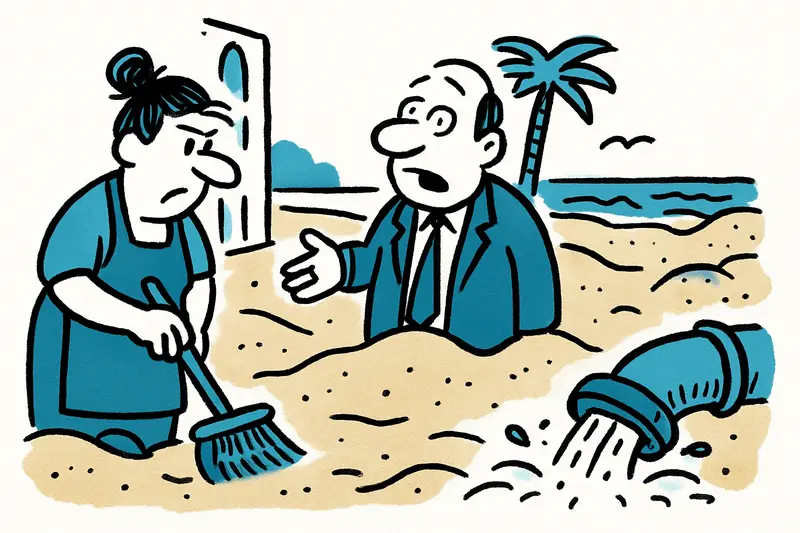
In recent days strong westerly winds have blown large amounts of sand from Playa de Palma onto the promenade and adjacent streets. Where a low protective wall once stood there is now open terrain; wind and waves face almost no obstacles. The result: sidewalks, green spaces and even driveways are covered by a fine layer of sand. Residents shovel in front of their doors, shop owners sweep daily, and the cleaning crews are visibly working nonstop.
Critical analysis
This is not just a meteorological curiosity. The removal of the old wall as part of the redesign opened the shortest route for sand onto the promenade. That makes administrations vulnerable: natural dynamics are no longer channeled by simple but functional measures. At the same time a conflict arises between two goals: unobstructed views of the beach and protection of infrastructure. At the moment the problem of exposure predominates.
What is missing from the public debate
There is a lot of talk about lost aesthetics and tourist images, but three things are under-discussed: first, an honest cost–benefit calculation (who funds ongoing clean-ups and possible rebuilds?), second, a technical assessment of beach loss and erosion — how much sand is permanently lost? — and third, a plan B for the shoulder season while the construction work continues. Responsibilities are diffuse: city, island council, tourism bodies — all have shares, but who acts immediately — and who pays for the beach?
Everyday scene from the Playa
Late in the morning sand crunches under boots along the promenade. The sound of the sea mixes with the clatter of torn shutters and distant bass from venues like Megapark or Bierkönig. Visitors often ask how safe Ballermann really is. A saleswoman at the entrance of a souvenir shop sweeps a thin wall of sand from the doorway with a hand broom. Passersby cough from the fine dust; birds hop searching between the sand piles. This raises questions of who protects the most vulnerable at Playa de Palma. The picture looks surreal: party mile and beach have merged.
Concrete short-term approaches
- Place mobile sand barriers and windbreak mats at critical sections; this can be organized within days and costs far less than a completely new structure.
- Establish prioritized cleaning routes: main access axes, shop fronts and house driveways first. Regulate clear responsibility (city vs. municipalities) through temporary agreements to avoid incidents when controls threaten the beach scene.
- Create temporary planting strips with native grasses and dune shrubs to trap sand; this measure is immediately applicable, usually approved by authorities and strengthens coastal dynamics in the long term.
- Document sand management: set up measurement points to quantify beach loss and displacements; data help justify the right technical measures.
Medium-term approaches
Instead of reflexively rebuilding a wall in exactly the same place, alternatives should be examined: low, permeable berms combined with natural vegetation, or staggered protection lines that break the wind during storms without completely blocking the view. Any solution must consider both protective effects and consequences for coastal erosion and tourism.
Who must act now?
In the short term, the city of Palma should step in to coordinate — providing material for mobile barriers and clear cleaning plans. Regional authorities and tourism associations should consider financial support; local businesses must be integrated into a coordinated cleaning and information plan. Important point: measures must be communicated transparently so residents don’t feel abandoned.
Pointed conclusion
The sand avalanche is not a natural disaster without responsible parties. It is the consequence of a decision that was not thought through in all its consequences. What is needed now is pragmatism: short-term barriers and clean processes, and medium-term smart hybrid solutions that combine protection and usability. Those who fail to do so will not only see the promenade temporarily but permanently sink under sand.
Frequently asked questions
Why is the Playa de Palma promenade getting covered in sand?
Who is responsible for cleaning the sand at Playa de Palma?
What can be done short term to stop sand from blowing onto the promenade in Mallorca?
Is the Playa de Palma promenade still easy to walk on when it is windy?
Does removing a beach wall in Mallorca always improve the seafront?
What is the best way to protect Playa de Palma without ruining the sea views?
What should visitors and shop owners expect at Playa de Palma during the shoulder season?
Why is sand loss at Playa de Palma a bigger issue than just a messy promenade?
Similar News

Magaluf: Watchtower Alarm – Lifeguards Pull Unconscious Beachgoer from the Water
After a drama in the late afternoon, two lifeguards at Magaluf beach rescued an unconscious 44-year-old man. He was stab...

Turquoise in the City: How dangerous is the color play of the Sa Riera?
The Sa Riera in Palma suddenly turned turquoise — a pretty motif, but behind the effect lies a discharge of saline waste...

Jeckliner at Sunnesching: Cologne spirit sets sail from Palma
In September 2027 the Mein Schiff 2 briefly becomes a floating carnival stage: four days with Cologne bands, comedy and ...
Finally Home: Mike and Leyla Heiter Buy Villa with Sea View in Mallorca
The reality TV couple Mike and Leyla Heiter have bought a house in Mallorca with a roof terrace and sea view. An Instagr...

Arrest after series in Palma: Who protects apartments from repeat offenders?
The National Police arrested a man in Palma who investigators say may have broken into several apartments. In one incide...
More to explore
Discover more interesting content

Can Cap de Bou

Townhouse Lleo 72
