
When Daycare Centers Stand Still on June 2: What Does a 40 Percent Strike Mean?
When Daycare Centers Stand Still on June 2: What Does a 40 Percent Strike Mean?
Educators have called a strike for June 2: around 40 percent of daycare centers in the Balearic Islands are expected to be affected. Who is caught in the dilemma — parents, staff, politicians — and what solutions are available?
When Daycare Centers Stand Still on June 2: What Does a 40 Percent Strike Mean?
Key question: How can Palma cushion the sudden loss of childcare — without sidelining staff again?
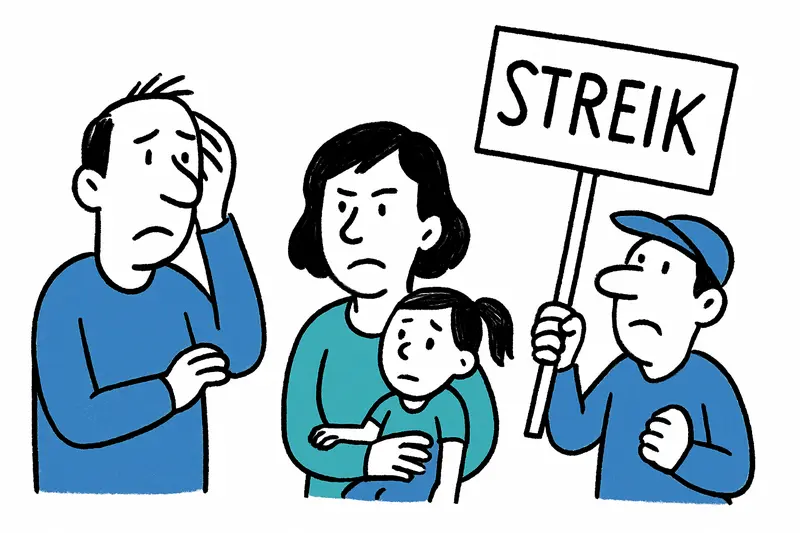
On the morning of June 2 the streets of Palma may show familiar scenes alongside unexpected gaps: strollers left in front of closed doors; parents making frantic calls just before work; a vendor at Mercat de l'Olivar attracting attention because fewer customers have arrived. The union announcement hits an island where daily life, tourism and family life are closely intertwined. Around 40 percent of daycare centers are said to be closed that day — a figure that feels like a cold shower when you consider your own childcare situation. For further context on strike dynamics in the islands see Strike Warning in the Public Service: Could the Balearic September Come to a Standstill?.
The demands are clearly stated: better working conditions, higher pay, smaller groups. In Palma staff are calling for a rally in front of the parliament at 10:00 and an evening demonstration from Plaza España to the city hall. We will know the images: banners, voices, the ticking of the clock on Passeig del Born in the background. The central question remains: Are spontaneous protests and one-off strike days enough to solve structural problems?
Critical analysis: A one-day strike is often only the visible end of a longer development. Staff turnover, precarious pay and high stress in small spaces create a constant burden. If 40 percent of facilities are out of operation, it is not only a logistical problem for parents. It is also a warning sign for the functionality of a system that relies on qualified professionals. Without reliable care, children suffer — through unrest and disrupted routines — and parents come under pressure, which in turn affects employers and the local economy. Similar structural disputes have also arisen in other services on the island, highlighting wider governance challenges; see reporting on the lifeguard stoppages for a related example Open-ended Lifeguard Strike: Island Caught Between Safety and Labor Dispute.
What is missing in the public debate: Two things are rarely made concrete. First: Who sets the priorities — the regional government, the municipalities or private providers? On the Balearic Islands responsibility is mixed, which obscures accountability. Second: Transparent figures are lacking on how much more money would be needed to sustainably change wages, training and group sizes. Debates often remain moralistic: “The work must be valued more” — correct, but what budgetary basis underpins a political decision?
Everyday scene from Mallorca: Imagine the Plaça de Santa Catalina just before 7:30. Market traders set up their stalls, a delivery van beeps, a father carrying a toddler runs up the steps toward the school while a caregiver with tired eyes slings her bag over her shoulder. This is not a tabloid cliché — it is reality that can quickly fall out of rhythm on a strike day. Local politicians feel the anger at the grassroots: cafés with fewer guests, craft businesses having to grant leave to employees, and taxi drivers with fewer morning fares.
Concrete solutions — immediate, medium-term, long-term:
Immediate measures: Cities should quickly designate emergency centers (for example municipal spaces in neighborhoods like Son Armadams or La Soledad) and, in cooperation with schools, sports clubs and volunteers, organize childcare for key workers. Employers could support temporary flexible hours, working from home or mutual swap lists for childcare days. Also practical: a digital platform listing available spots at cooperating facilities and private short-term childcare offers for the day.
Medium-term: Binding talks moderated by an independent mediation body — with open cost figures and a concrete roadmap for salary adjustments over three years. Municipal support programs could include staff bonuses or subsidies for professional development (e.g. training). Also important: clear rules on group size to be written into tenders and subsidy contracts.
Long-term: Investment in training places for educators, tax incentives to encourage private providers to pay fair wages, and a regional childcare fund financed proportionally by the regional government, municipalities and tourism levies. In the long run only an honest cost-benefit calculation will help: good childcare keeps parents in the workforce, reduces stress and brings economic stability.
A pointed conclusion: The strike on June 2 will make visible how vulnerable island society is when childcare services fail. That is uncomfortable, but also an opportunity: politicians, providers and businesses must now clearly state who pays and who will make changes — not only rhetorically, but with numbers, timelines and responsibilities. The mood on the street — the spoken worries over a coffee at the Plaça del Mercat — demands nothing less than a real offer that respects staff and gives parents planning security. Otherwise the scene will repeat itself in autumn, with new banners and even greater exhaustion; for reporting on how coastal services have been affected by labour disputes see Alarm on the Coast: Why the Lifeguard Strike in Mallorca Is More Than a Labor Dispute.
Frequently asked questions
What does a daycare strike in Mallorca mean for parents on June 2?
Why are daycare workers in Mallorca going on strike?
How many daycare centers are expected to close during the strike in Mallorca?
What should parents in Palma do if their daycare is closed on strike day?
Will there be protests in Palma during the daycare strike?
How does a daycare strike affect everyday life in Mallorca beyond parents?
What kind of long-term solutions are being discussed for childcare in Mallorca?
Is the daycare strike in Mallorca only a one-day event?
Similar News
Stolen Motorcycle in Palma: Fatal Crash in Coll d'en Rabassa Shortly After Theft
A motorcycle parked on Plaza Miquel Dolç in Son Gotleu was reportedly stolen in the early hours. Hours later two men cra...
When More Guests Mean Less: Mallorca's Restaurants at the Limit
Despite record visitor numbers, the revenues of many restaurants are shrinking. Why more visitors don't automatically me...

Ballermann 2026: Heat, crowded promenade and rising prices – how much longer?
Bright sunshine, over 35 degrees in the shade and busy venues at Playa de Palma: Tourists enjoy the parties, restaurateu...
Stolen motorcycle, high-speed escape, deadly crash: An accident in Palma that raises questions
A motorcycle stolen in Son Gotleu ended up hours later on the Cardenal-Rossell in Coll d'en Rabassa in a deadly collisio...

Found dead in Son Gotleu: Dog walk ends fatally — what is missing in the investigation?
A 68-year-old man was found dead on Sunday morning on Tomás Rullàn street in Son Gotleu. According to his partner, he ha...
More to explore
Discover more interesting content

Boat Tour with BBQ along Es Trenc Beach

Private transfer from Mallorca Airport (PMI) to Pollensa
