
Strike of General Practitioners and Pediatricians in Mallorca: On-Call Duties, Everyday Concerns, and What Is Missing Now
Strike of General Practitioners and Pediatricians in Mallorca: On-Call Duties, Everyday Concerns, and What Is Missing Now
Since yesterday, general practitioners and pediatricians at Mallorca's public health centers have been on strike. Emergency services are fully staffed, but the protest raises questions about care for chronically ill patients and the realities of daily work.
Strike of General Practitioners and Pediatricians in Mallorca: On-Call Duties, Everyday Concerns, and What Is Missing Now
Key question
Key question: How large is the gap between the official assurance of emergency coverage and the actual care provided to parents, chronically ill patients and routine appointments — and what needs to change so that both functions work sustainably?
Critical analysis
Since yesterday, general practitioners and pediatricians at Mallorca's public health centers have been conducting a full-day strike. According to the available facts, emergency services remain 100 percent staffed and striking physicians are obligated to provide minimum services. So far, there have been hardly any appointment postponements. Yet the situation is more complicated than the dry numbers suggest.
Emergency coverage means acute cases are treated. Routine care — regular check-ups, follow-up after hospital stays, adjustments of chronic medication or developmental examinations for small children — is often delayed. Such delays can be mitigated in the short term through flexible organization, but not indefinitely. If doctors remain in prolonged conflict, the risk grows that backlogs will accumulate and consultations will overflow in the weeks that follow.
What is missing from public debate
Public discussions focus a lot on "emergency services" and "minimum services." What rarely appears are concrete figures on the number of postponed preventive appointments, statements about waiting times for chronically ill patients, or an honest assessment of how resilient the current system actually is — in terms of staffing, administration and time. Also scarcely visible is the perspective of medical assistants and administrative staff who must adjust duty rosters at short notice.
Everyday scene from the island
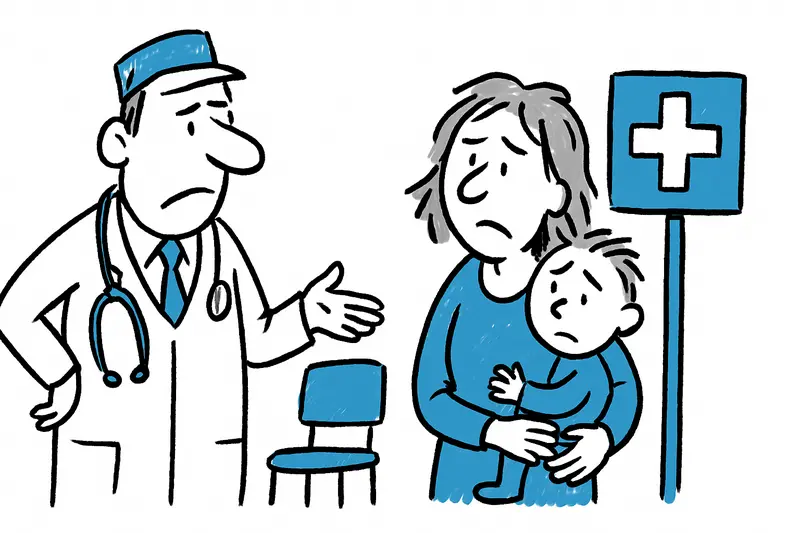
On a morning outside a health center in Palma, near the market, a few parents with small children stand in the wind coming from Passeig del Born. Soft Spanish pop music plays in the waiting room; a mother nervously flips through her child's paperwork. The receptionist is on the phone, reorganizing appointments; buses honk outside, gulls cry. Staff across the island report similar scenes — delayed routine check-ups, uncertainty about whether a lively toddler will still get a slot at the afternoon clinic.
Concrete solution approaches
The demands of the doctors — better working conditions, clear rules on working hours and greater recognition of their responsibilities — are understandable. To prevent the conflict from repeating itself, clear, actionable steps are needed:
1. Short term: Transparent reporting from health centers on the type and number of postponed appointments; targeted hotlines for parents and chronically ill patients; mobile clinics in affected communities if backlogs form.
2. Medium term: Binding duty rosters with regulated on-call arrangements, coupled with additional administrative support so physicians do not have to handle every organizational task themselves. Expansion of telemedicine consultations for chronic conditions to relieve physical capacities.
3. Long term: Working-time models that consider shift and family compatibility; a fair remuneration structure for GPs in public centers; binding staffing and recruitment strategies for rural areas of Mallorca.
Why this is especially important in Mallorca
On an island, bottlenecks add up quickly: fewer substitute pools, longer travel distances in mountain villages, seasonal fluctuations due to tourist peaks. A sustainable solution for primary care is therefore not only a labor dispute issue but an infrastructural question of public service provision.
Concise conclusion
The full staffing of emergency services is reassuring in the short term. The real problem runs deeper: a system that secures acute care but falters on routine and prevention. With their strike, the doctors have made visible that the balance between working conditions and patient care is no longer right. Now administration, politics and insurers are required to present concrete agreements — quickly, transparently and with attention to the everyday life of the island's residents.
Frequently asked questions
Will emergency care in Mallorca still be available during the doctors' strike?
Are routine appointments and check-ups in Mallorca being postponed because of the strike?
What should parents in Mallorca do if their child's appointment is affected by the strike?
Why is the doctors' strike in Mallorca affecting everyday care, not just emergencies?
What problems does the strike highlight for healthcare in Mallorca?
Why is a doctors' strike especially difficult on an island like Mallorca?
What changes are being suggested to improve primary care in Mallorca?
Which Mallorca health centres are most likely to feel the impact of the strike?
Similar News
Released with Conditions: The Plus Ultra Suspicion and a Mallorcan Finca as Residence
A Dutch entrepreneur, sought in connection with the Plus Ultra case, was extradited to Spain after his arrest in Germany...

Haute Nuit in Puerto Portals: Fashion, Art and Indulgence by the Water
On October 2 the Lobster Club in Puerto Portals will be transformed into a stage for curated fashion, art and culinary e...

Magaluf: Watchtower Alarm – Lifeguards Pull Unconscious Beachgoer from the Water
After a drama in the late afternoon, two lifeguards at Magaluf beach rescued an unconscious 44-year-old man. He was stab...

Turquoise in the City: How dangerous is the color play of the Sa Riera?
The Sa Riera in Palma suddenly turned turquoise — a pretty motif, but behind the effect lies a discharge of saline waste...

Jeckliner at Sunnesching: Cologne spirit sets sail from Palma
In September 2027 the Mein Schiff 2 briefly becomes a floating carnival stage: four days with Cologne bands, comedy and ...
More to explore
Discover more interesting content

Can Cap de Bou

Townhouse Lleo 72
