
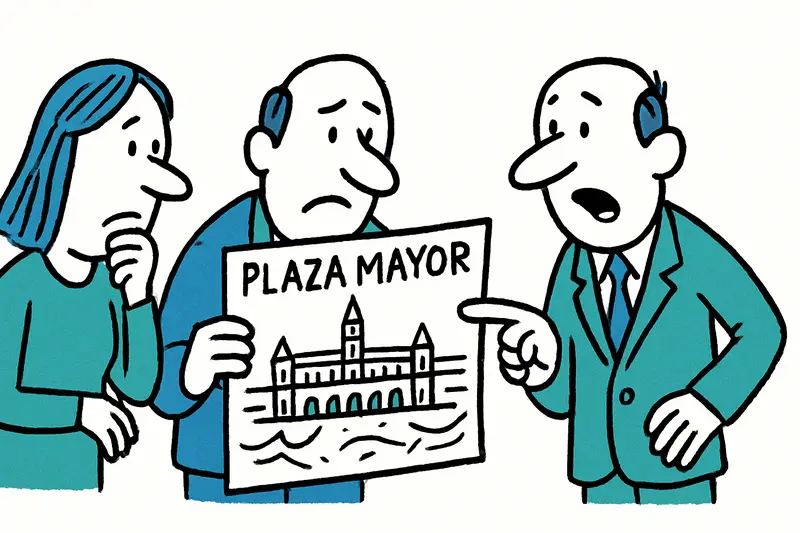
Study on the Plaza Mayor: Who is responsible for Palma's heart?
Study on the Plaza Mayor: Who is responsible for Palma's heart?
The city is commissioning an examination for around €18,000 to check the stability of the Plaza Mayor's underground car park and the retail spaces beneath it. Why the report must be more than a formal step, and which gaps remain in the public discussion.
Study on the Plaza Mayor: Who is responsible for Palma's heart?
A report for €18,000 should bring clarity – but is that enough?
The city of Palma has commissioned an external inspection: for around €18,000 the stability of the underground car park beneath the Plaça Major — the sad heart of an overlooked city centre and the retail spaces below it will be examined. The investigation is intended to be part of the "Agora" redevelopment project, which aims to better connect the plaza with the old town. At first glance this sounds like a necessary step. On closer inspection many questions remain open.
Key question
Who decides which risks must be addressed before heavy machinery is used, and how are the consequences for shopkeepers, residents and the historic surroundings secured?
Critical analysis
€18,000 is not a huge sum for an assessment in a municipal context. That makes the price appealing, but it must not obscure that a report is only as good as its scope. It's not just about cracks in the concrete. Beneath the plaza are utility shafts, rows of small shops, an old floor structure and a car park that has been loaded for decades. Will structural, geotechnical and hydraulic risks be examined equally? How detailed is the inspection under the retail units, where hidden pipes and private installations change the picture?
And then the practice: heavy machines are planned for the redevelopment. Every hour a digger operates above an undersized slab is a risk. A superficial inspection report is not enough here. Clear specifications are needed: load limits, exclusion zones, continuous monitoring during works and emergency plans in case settlements appear suddenly in an area.
What is missing in the public debate
So far there is little information about the schedule, transparency and responsibility. Who will receive the inspection report, and will it be published? What criteria will the city apply to decide whether remedial work is required before construction begins? And what about the traders beneath the Plaza Mayor, who often rely on daily takings? There are no binding statements on compensation rules, alternative spaces and communication channels for residents. Similar concerns about traders and communication have been reported in the context of other Palma projects like the Renovation of the Plaza del Mercat: Between Refurbishment and Fear for Survival.
Everyday scene from Palma
If you walk across the Plaça Major at noon you see Balearic-typical scenes: pigeons, market vendors, tourists with iced coffee, elderly ladies taking a break on a bench, and the sharp horn of a delivery van in Carrer de Sant Miquel. It is precisely here that excavators may rumble in the future. No one wants to sacrifice the charm of the square, but the daily life of shopkeepers must not become measured in hours of jackhammers. Extended disruption was documented in Plaça Mercat: 20 Months of Construction — Renovation Under Review.
Concrete recommendations
1) Expand the scope of the report: in addition to structural checks, include geology, drainage and a risk assessment for adjacent buildings. 2) Mandatory publication: make results public and explain what measures will follow. 3) Phased plan and protected zones: carry out work in stages, set clear load restrictions and areas without heavy equipment. 4) Monitoring during construction: real-time measurements of settlements and cracks as well as an emergency protocol. 5) Protection for businesses: short-term compensation and replacement solutions for affected shopkeepers. This is also a core issue in Plaça del Mercat: More Space — but at What Cost for Residents and Market Traders?. 6) Public participation: information events so that residents and traders understand and can help shape the plans.
Concise conclusion
A lean inspection order can make sense if it is the start of a serious, transparent planning process. But if the report is treated as a mere fig leaf before the concrete mixers roll in, the Plaza Mayor risks losing its face and everyday life. The city should not view the result as a formal hurdle but as a blueprint for trust: whoever does not examine carefully here is building on the heart of the city with eyes closed.
Frequently asked questions
Why is Palma checking the stability of the Plaça Major underground car park?
How much does the Plaça Major inspection in Palma cost?
What risks need to be checked before work starts at Plaça Major in Mallorca?
Can heavy machinery be used safely at Plaça Major in Palma?
Will the Plaça Major inspection report in Palma be made public?
What happens to the shops under Plaça Major if redevelopment starts?
Why is Plaça Major so important in Palma’s city centre?
What should Palma do before starting redevelopment at Plaça Major?
Similar News
Released with Conditions: The Plus Ultra Suspicion and a Mallorcan Finca as Residence
A Dutch entrepreneur, sought in connection with the Plus Ultra case, was extradited to Spain after his arrest in Germany...

Haute Nuit in Puerto Portals: Fashion, Art and Indulgence by the Water
On October 2 the Lobster Club in Puerto Portals will be transformed into a stage for curated fashion, art and culinary e...

Magaluf: Watchtower Alarm – Lifeguards Pull Unconscious Beachgoer from the Water
After a drama in the late afternoon, two lifeguards at Magaluf beach rescued an unconscious 44-year-old man. He was stab...
Turquoise in the City: How dangerous is the color play of the Sa Riera?
The Sa Riera in Palma suddenly turned turquoise — a pretty motif, but behind the effect lies a discharge of saline waste...

Jeckliner at Sunnesching: Cologne spirit sets sail from Palma
In September 2027 the Mein Schiff 2 briefly becomes a floating carnival stage: four days with Cologne bands, comedy and ...
More to explore
Discover more interesting content

Can Cap de Bou

Townhouse Lleo 72
