
Extending Summer in Mallorca: Why the New Heat Shock Is More Than Just Unpleasant
Extending Summer in Mallorca: Why the New Heat Shock Is More Than Just Unpleasant
AEMET reports a persistent heatwave: In Palma temperatures will rise to 34–36 °C through the weekend, nights remain unusually warm. What this means for everyday life, fire risk and work on the island — and which measures help now.
Extending Summer in Mallorca: Why the New Heat Shock Is More Than Just Unpleasant
Key question: Are our daily routines and preparations sufficient to safely get through a heatwave like this?
The weather map looks like mid-July: warm, dry air and wisps of Saharan dust hang over the island. AEMET forecasts temperatures in Palma up to 34 °C on Thursday, with nights remaining unusually warm at around 23 °C. The service gives similar values for the weekend — for example, Friday around 33 °C, Saturday again 34 °C, and Sunday could reach 36 °C according to the current outlook, echoing reports such as When Palma Is Sweating by Mid-Morning: Heat Alert, Risks and What's Missing Now. Early next week, 32–35 °C are still expected. The combination of heat, dry air and possible Calima increases the risk of forest fires; Mallorca on Alert: Highest Wildfire Warning Level and Scorching Heat – What to Do Now nevertheless, isolated thunderstorms can still develop over the island's interior.
Brief critical assessment: Heat is not only a comfort issue. Nighttime overheating saps energy and sleep; craft businesses and construction workers often still work during the hottest hours; older people and those with chronic illnesses suffer more from sustained heat than from isolated hot days. Tourism, agriculture and firefighting face different but interconnected strains — the question is how well the island coordinates its response as discussed in When Mallorca Cooks: How Prepared Is the Island for the Next Heatwave?.
What is often downplayed in public warnings: the importance of the nights. When the temperature in cities like Palma stays above 20 °C for hours, buildings do not cool down. That means prolonged strain for people without air conditioning and for employees in poorly ventilated workplaces. Little attention is also paid to water consequences: despite the seasonal drop in tourist peaks, demand remains high — and the soil is often deeply dried out after this dry summer.
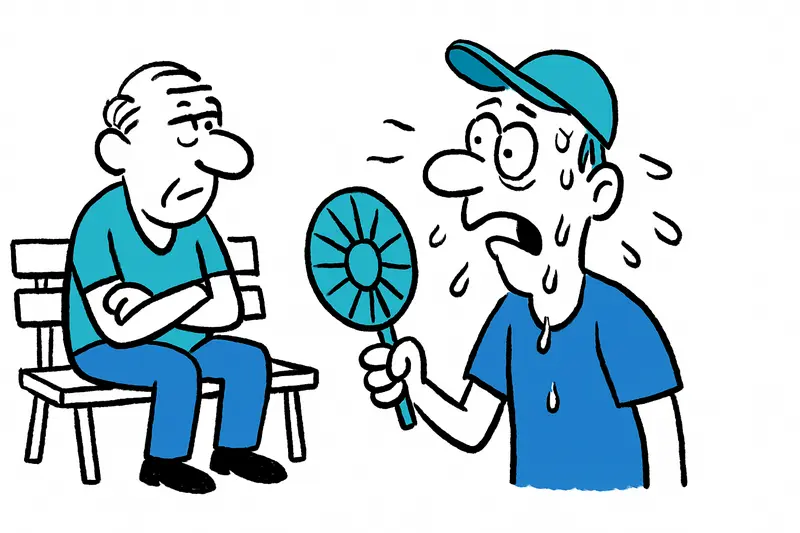
A scene from everyday life: On the Paseo Marítimo early evening — the street cafés are full, fans are blowing air, children eat ice cream, taxis honk. The streets smell faintly of grilled fish, some delivery riders rest in the shade of an awning. A pensioner on a bench complains that his bedroom hardly cools down. These small observations show how differently the heat is experienced: pleasure for tourists, burden for residents without retreat options.
Concrete, pragmatic suggestions for the coming days:
For private individuals: Keep water within reach, avoid direct sun at midday, close shutters during the day, create cross-ventilation at night if possible, use fans or air conditioners strategically (not continuously). Especially important: call neighbors and older people and help them cool down if needed.
For employers and site managers: Shift working hours to the cooler mornings and evenings, schedule additional breaks, adapt personal protective equipment (light, breathable clothing, head coverings), review medication and first-aid rules.
For municipalities and authorities: Open cooling oases at specific locations (libraries, social centers), strengthen preventive notices on fire bans and fire prevention Heat alert on Mallorca: How well is the island prepared for infernal heat days?, review water management and prioritize in case of shortages. Fire brigades should test readiness and identify areas with dry grass where rapid intervention would be necessary.
For tourism: Make guest information visible (hotels, lifeguards, renters), prepare beach services for heat incidents, weigh up event plans — especially evening events that can be stressful for staff and guests during sustained warmth.
What we do not need now: panic or superficial headlines. What we urgently need: realistic everyday rules and coordinated preparation that do not only target the hottest afternoon but also consider nighttime heat and cumulative strain. Small measures add up: a neighborhood check, a cooling room in the municipality, a construction schedule with earlier start times can save lives and nerves.
Concise conclusion: This
Frequently asked questions
What is the best time of year to visit Mallorca for pleasant weather and fewer crowds?
Can you swim in Mallorca year-round, and what water conditions should I expect?
What should I pack for a Mallorca trip?
How do I get around Mallorca – is renting a car worth it?
What are the must-visit beaches and natural spots in Mallorca?
Is Palma a good base for discovering Mallorca, or should I stay elsewhere?
Are there easy day trips from Mallorca for a change of scenery?
What should first-time visitors know about local etiquette and safety in Mallorca?
Similar News
Police resuscitate cyclist on the Soller–Deia route
On the winding stretch between Soller and Deia a 63-year-old cyclist suffered a cardiac arrest. Two police officers imme...
Why the Nadals Briefly Moved Away This Year — and What That Has to Do with Our Island
Rafa Nadal and his family spent parts of the summer on Hvar. The episode raises questions: How do we protect privacy and...
Cap or clarify? The debate over the maximum number of foreign license plates in Mallorca
The island council intends to set a cap on private and rental cars with foreign license plates before the end of the yea...
Ten days alone: Dog found its dead owner in Palma — and no one noticed earlier
On Calle Joan Crespí neighbors discovered a 55-year-old man who had apparently been dead in his apartment for about ten ...
Es Fogueró: Glamour, Graffiti and the City's Neglect
The dilapidated Es Fogueró arena in Port d'Alcúdia is today simultaneously an open-air gallery, emergency shelter and da...
More to explore
Discover more interesting content

Boat Tour with BBQ along Es Trenc Beach
Private transfer from Mallorca Airport (PMI) to Pollensa
