
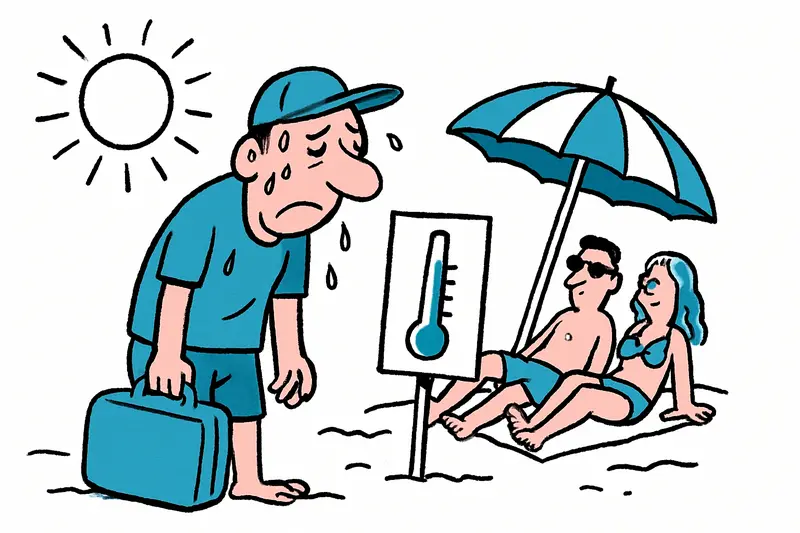
Why Summer Heat Keeps Tourists Away from Mallorca — A Reality Check
Why Summer Heat Keeps Tourists Away from Mallorca — A Reality Check
Tour operators report: heat in July/August is changing booking behavior. Our guiding question: Is Mallorca really prepared for the new summer? A critical look at infrastructure, guest information and possible solutions — with an everyday scene from Playa de Palma.
Why Summer Heat Keeps Tourists Away from Mallorca — A Reality Check
Guiding question: Is Mallorca really prepared for the next heatwave, or are the island's economy, politics and hosts just chasing hotter numbers?
Summary
Tour operators from Germany and the UK report that bookings for July and August are declining and guests increasingly choose cooler destinations. Complaints are not only about prices but about intense heat, tropical nights and poor sleep. For many families and older travelers, the argument “sunny and warm” is no longer enough when temperatures hardly cool down at night.
Critical analysis
These reports are a wake-up call, not an alarm without basis: Mallorca has experienced heat records more frequently in recent years, including heatwaves that reached 42 °C. Hotels and holiday apartments were traditionally built for a Mediterranean climate — lots of glass, little insulation against heat. Air conditioning compensates during the day but leads to higher electricity costs and is no panacea in narrow streets with limited infrastructure. In addition, tropical nights lead to sleepless stays, which directly affect the holiday experience and follow-up spending in restaurants or on excursions.
The economic logic is simple: when guests become less active, local vendors earn less revenue. Beach bars, small restaurants in Portixol or stands on the Platja de Palma notice this quickly because bookings for dinners and excursions are canceled at short notice.
What's missing in the public debate
Public discussion often centers on numbers — fewer guests, higher prices — but rarely on everyday infrastructure: shade in beach areas, public drinking water points, night-cooling strategies in cities like Palma, reliable power supply for increased air-conditioning in hotels. Also underexposed: how traveling families and older people must adapt their itineraries to the heat — earlier sightseeing, longer siestas, later dinners. These everyday issues determine satisfaction and return visits.
Everyday scene from Mallorca
Imagine Avinguda de Gabriel Roca on a July evening: taxis still steaming, e-scooters beeping, a waiter waving a napkin, a father with two small children seeking shade under a palm near the Passeig Marítim. Even at midnight there are still tourists sweating in thin T-shirts because the heat won't let up. On the beach it's no longer worth reading — the books stick to your back. This is not a postcard image; it has become the daily life under heat stress.
Concrete solution approaches
A few pragmatic steps would be possible immediately and cost-effectively:
- Expand public drinking water points on beaches and in busy neighborhoods; simple fountains lower the barrier for day-trippers without extra costs for restaurants.
- Systematically review shade providers: plant more trees along bike paths and in tourist districts, install sun sails on promenade-like sections such as the Paseo Marítimo.
- Promote simple night-cooling options: equip parks and beach areas with ventilation and misting nozzles, create cool rest rooms in municipalities as a contact point for heat-sensitive guests.
- More flexible event times: offer museums, markets and excursions more often in the early morning or late evening so visitors are not out in the midday heat.
- Transparency for accommodations: hotels and hosts should clearly state cooling systems, energy efficiency and available quiet hours in listings so guests can book deliberately.
- Promote the shoulder seasons: focus tourism promotion more on spring and autumn, provide financial incentives for providers to open capacities outside the hottest months.
Why these solutions are realistic
Many proposals do not require huge investments. Water fountains and sun sails are inexpensive; planting takes time but pays off in the long run. Adaptation also means changing the offer: if hotels provide earlier breakfast times and beach venues create air-conditioned evening areas, the island remains attractive without changing the climate.
Conclusion — pointed
Heat is no longer purely a meteorological problem; it is an economic and social gauge. Those who want to visit Mallorca in summer look not only for sun but for tolerable temperatures and reliable comfort offerings. Politics, the hotel industry and municipalities must provide practical everyday measures — from fountains to cooler event times. Otherwise the island will lose not just a hot day, but paying guests and good conversations in the streets of Palma.
Frequently asked questions
Is Mallorca still a good place to visit in summer heat?
Why do people avoid Mallorca in July and August?
What is Mallorca like during a heatwave?
How should I pack for a hot Mallorca holiday?
How does extreme heat affect holidays in Palma?
Are beach days in Portixol and on Platja de Palma affected by the heat?
What can Mallorca do to make summer travel more comfortable?
Is it better to travel to Mallorca in spring or autumn?
Similar News

Haute Nuit in Puerto Portals: Fashion, Art and Indulgence by the Water
On October 2 the Lobster Club in Puerto Portals will be transformed into a stage for curated fashion, art and culinary e...
Magaluf: Watchtower Alarm – Lifeguards Pull Unconscious Beachgoer from the Water
After a drama in the late afternoon, two lifeguards at Magaluf beach rescued an unconscious 44-year-old man. He was stab...

Turquoise in the City: How dangerous is the color play of the Sa Riera?
The Sa Riera in Palma suddenly turned turquoise — a pretty motif, but behind the effect lies a discharge of saline waste...

Jeckliner at Sunnesching: Cologne spirit sets sail from Palma
In September 2027 the Mein Schiff 2 briefly becomes a floating carnival stage: four days with Cologne bands, comedy and ...
Finally Home: Mike and Leyla Heiter Buy Villa with Sea View in Mallorca
The reality TV couple Mike and Leyla Heiter have bought a house in Mallorca with a roof terrace and sea view. An Instagr...
More to explore
Discover more interesting content

Can Cap de Bou

Townhouse Lleo 72
