
Valldemossa: After a four-meter fall – Who protects the workers on our roofs?
Valldemossa: After a four-meter fall – Who protects the workers on our roofs?
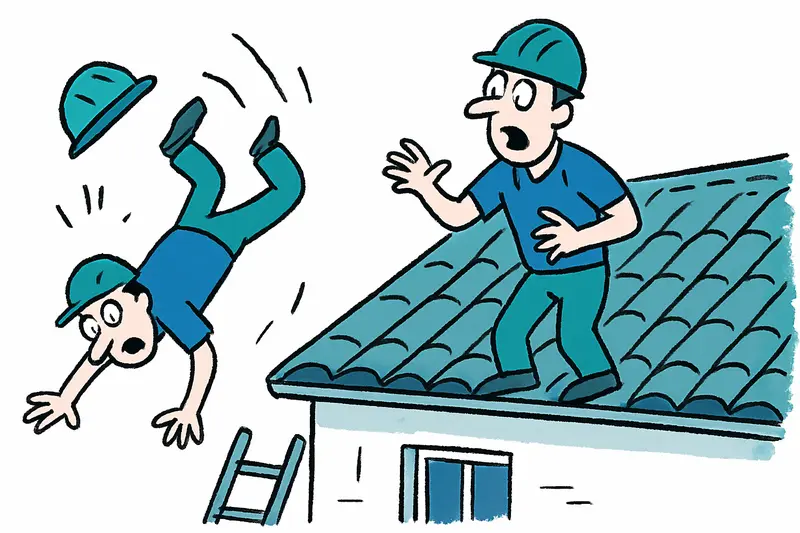
During repair work on the roof of a sports facility in Valldemossa, a 41-year-old worker fell four metres through broken tiles. He was resuscitated but later died in hospital. Why do such accidents still occur?
Valldemossa: After a four-meter fall – Who protects the workers on our roofs?
Leading question: Why does a routine repair on a small hall roof end in a fatal fall, and what is missing from the debate about occupational safety in Mallorca?
On Tuesday afternoon on the narrow Josep Coll Bardolet street in Valldemossa – between cactus-covered walls and the occasional tolling of the parish church bells – a loud crack cut through the heat. Two roof tiles gave way, and a 41-year-old worker fell through a gap in the roof of the sports facility's storage room about four metres down. Paramedics from the Servei d’Atenció Mèdica Urgent (Samu-061) found him unconscious with cardiopulmonary arrest, were able to resuscitate him and transported him to Son Espases hospital. Days later he died in intensive care.
These sober facts are clear: the man was part of the maintenance crew, and he and a colleague were installing wire mesh and laying concrete and roof tiles when two tiles broke. Protective equipment was present at the scene — but the injured man was not wearing it. The Guardia Civil (Calvià criminal police) is investigating the circumstances of the accident.
Critical analysis: The picture that remains is contradictory. On one hand there are technical causes – broken tiles, an unsecured fall-through point. On the other hand there are organisational failures: Why was the man on the roof without personal protective equipment? Who checked the load-bearing condition of the substrate? What condition were scaffolding, ladders or the substructure in? These questions belong together, not addressed in isolation; similar cases such as Fall in Can Pastilla: More Than an Accident? make that clear.
What is often missing from the public debate: first, the working reality of seasonal employees and migrants who perform basic tasks on the island. They are frequently employed under more precarious contracts, work under time pressure and on hot roofs when the tourist season is being prepared. Second: the role of clients and chains of subcontractors. A simple repair job can involve several companies – who ultimately bears responsibility for safety checks? This is the issue raised by Concrete stacks in Santa Margalida: When the safety chain fails.
Third: the continuity of emergency and police presence in rural municipalities. At the accident site a colleague first called the local police; it is telling that at certain times officers were not available. Previous incidents, for example Fatal accident in Santa Margalida: concrete slabs bury worker – calls for improved workplace safety, have prompted similar concerns.
An everyday scene from Mallorca that makes the issue tangible: It is July, the air shimmers over the promenade, tourists drink iced coffee, and somewhere in the village a drill hums. On roofs from Palma to Valldemossa, people in short shirts and with cement-stained hands work on repairs. You hear the clatter of tiles, the rustle of plastic sheets – and rarely a clear command: Stop, check the supporting layers! That is the quiet problem: routine becomes dangerous when safety rituals are not taken seriously.
Concrete measures that could take effect immediately:
1) Mandatory documentation before work begins: A short checklist (substrate, tile condition, fall protection) to be signed by the person in charge. No roof work without anchor points or a harness where there is a fall-through risk.
2) Visible personal protective equipment and inspections: Helmets, harnesses, and non-slip shoes must be worn; clients and foremen should check and record compliance.
3) Clear responsibilities among subcontractors: Every job needs a named, written safety responsible person who is also contactable by the municipality.
4) Training and first responders on site: Regular, short safety trainings and at least one trained rescue person per site – simple measures that can save lives.
5) Better coordination of rescue and police forces: In smaller towns response times and availability must be transparent; infrastructure managers should know what short-term support is available locally.
These proposals are not cure-alls, but pragmatic steps a municipality, a sports club or a mid-sized craft business can implement immediately. Many safety standards are known; what is often lacking is implementation and oversight.
Punchy conclusion: One man, a four-metre fall, a preventable gap in organisation. Today we do not just lose a worker’s hand; we expose blind spots in our local safety culture. It is not enough to lament that tiles break. We must ask: who had the responsibility, and who exercised it? If we want to stand in solidarity with those who work on our roofs, that means: serious inspections, clear responsibilities and attention to the everyday small print of safety.
It is hot in Mallorca in July. The work continues. It would be a small but honest step if after this accident not only candles and words remained, but concrete rules that reduce the risk for the next workers.
Frequently asked questions
What is Mallorca's weather like across the year?
What should I pack for a trip to Mallorca?
When is the best time to visit Mallorca for beach days?
Is it safe to swim at Mallorca beaches?
How can I get around Mallorca without a car?
What activities are good for families visiting Mallorca?
Are there local customs I should know when visiting Mallorca?
What should I know about choosing a beach in Mallorca?
Similar News
Mistaken identity with fatal consequences: Brutal assault in S'Aranjassa — what's missing in the follow-up?
At S'Aranjassa a visitor to a finca was tied up, beaten and thrown out of a van. Three men have been arrested, including...
High heel slips, car accelerates: accident on Camí de Son Hugo
A woman lost a high-heeled shoe on the forecourt of the sports facility at Camí de Son Hugo. The car accelerated, mounte...
Phone Scam: How Two Hotel Employees at Playa de Palma Lost Thousands of Euros
One morning in September, two reception employees at Playa de Palma were pressured by alleged alarm-company staff — in t...

When the Wallet Becomes a Danger: Attack in Peguera and Lessons for Mallorca
In Peguera, two women are said to have stolen the wallet from a 75-year-old German couple. When the victim intervened, t...
Plata stays Plata: Young people take over, Llonguets remain
A small bar on Carrer de l'Argenteria will continue: Tolo Serra hands the place over to young Mallorcans at the end of t...
More to explore
Discover more interesting content

Can Cap de Bou

Townhouse Lleo 72
