
Waterslide, Hotel Pool, Death: Who Is Liable — and Who Prevents the Next Tragedy?
Waterslide, Hotel Pool, Death: Who Is Liable — and Who Prevents the Next Tragedy?
A 60-year-old man suffered a fatal accident in the pool of Cala Tarida (Ibiza) after a ride on a hotel waterslide. What safety gaps exist in such installations — and what can the island do?
Waterslide, Hotel Pool, Death: Who Is Liable — and Who Prevents the Next Tragedy?
Key question: How safe are hotel waterslides really when a guest dies at the end of a ride?
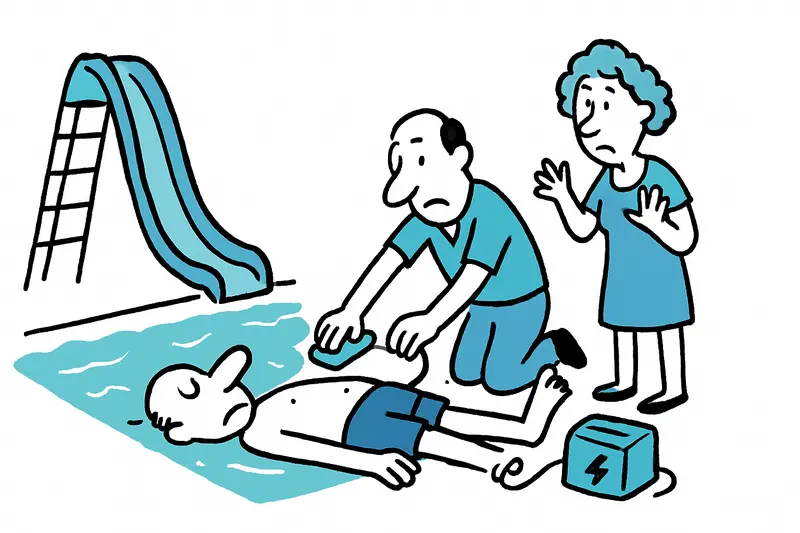
On Saturday morning witnesses reported that a 60-year-old man had an accident after a descent on a waterslide into the pool of the Cala Tarida Beach hotel on Ibiza and died shortly afterwards. The emergency control center alerted SAMU 061; rescue teams arrived with an advanced life support ambulance, a vehicle for basic care, and another response vehicle, and police were also on site. People at the poolside began cardiopulmonary resuscitation and used a defibrillator. The emergency personnel continued the measures but were unable to save the man.
That is the brief factual situation. It raises an uncomfortable question: What safety standards apply in places where something that is meant to be fun can become life-threatening?
Critical analysis: Between fun and risk
Waterslides are a standard offering at many resort hotels. For most guests they are harmless entertainment; for operators a selling point. The equipment may be intact, the slide surface smooth — but safety is more than the condition of materials. It is about instruction, age and health checks, clear rules of conduct, and whether there is sufficient on-site staff with rapidly acting competence.
In this case first responders acted quickly and followed the instructions of the emergency control center. That shows laypeople can save lives. But why were the first to notice and intervene not exclusively trained lifeguards or security personnel? And: How is the documentation of such incidents handled — does it remain internal, or are patterns passed on to inspectors and regulatory authorities, as with Death in Colònia de Sant Jordi: Could better precautions have made a difference??
What is missing in public discourse
In bathing accidents the emotional side often moves to the forefront — grief, questions of blame, media headlines. We comparatively rarely talk about prevention at the operational level: binding standards for private hotel pools with slides, mandatory first-aid training for staff, visible AED devices and regular emergency drills. The responsibility of tour operators and insurers also plays too small a role; several recent cases, like Cala Blava: A Day at the Beach Ends in Death — Who Must Act?, illustrate this. Guests should know which safety standards they can rely on — and where they cannot.
Another blind spot is the age issue: many facilities have rules, but little effective control over whether older guests or people with heart conditions should be using the slides at all, as noted in Can Picafort: Death on the Beach – Was There Enough Protection Against Water Hazards?.
Everyday scene here: A summer morning on the island
Imagine Palma on an early summer morning: scooters buzzing on the Avinguda Antoni Maura, vendor voices at the Mercat del Olivar mixing with seagulls over the Passeig Marítim. Later in the day the beaches fill up; lifeguards whistle, sun loungers creak. When children cheer at hotel pools on Ibiza's west coast the holiday feeling is perfect. Yet in those moments a short slip can trigger a chain of events that no one planned.
Concrete solutions
- Visible equipment requirement: every hotel pool with a slide should have at least one accessible, maintained AED device; its location must be clearly visible to guests.
- Staffing: when slides are in operation a trained lifeguard or first responder must be present during opening hours; reinforcement during peak times.
- Rules instead of advertising: clear notices on age, weight and health restrictions, supplemented by micro-screenings when in doubt (brief questioning by staff).
- Practice emergency management: hotels should conduct regular, documented emergency drills and report the results to the competent inspection authority.
- Reporting obligation: serious incidents should be reported to a central body so that authorities can detect trends and act deliberately.
- Transparency for guests: tour operators and booking platforms could require and publish safety checklists, similar to hygiene or energy certificates.
Why this is practical to implement
Many of these measures cost little or are already common practice in public pools. They require the will to regulate and enforce, not always new technology. For the island community this brings a double benefit: fewer tragedies and a clearer sense of safety for families and older guests visiting Mallorca and Ibiza, and cases such as Dead Tourist at Playa de Palma: An Accident Raises Many Questions show the stakes.
Concise conclusion: A defibrillator at the poolside and decisive first responders are life-saving — but they must not be the only safety net. Those who sell holidays bear responsibility for safety. Authorities should pay closer attention, hotel operators should make improvements, and we as guests can demand that fun is not bought at the price of unnecessary risk.
Frequently asked questions
How safe are hotel waterslides in general, and what should I look for?
What safety measures should a hotel pool with a slide have?
How are slide-related accidents typically documented and investigated?
Before booking, what should I check about pool safety?
What safety standards are commonly seen in Mallorca hotels with slides?
What questions should I ask Mallorca hotel staff about pool safety?
How can tour operators help ensure pool slide safety for Mallorca visitors?
What should I pack for pool days in Mallorca, and does weather affect safety?
Similar News
When the Wallet Becomes a Danger: Attack in Peguera and Lessons for Mallorca
In Peguera, two women are said to have stolen the wallet from a 75-year-old German couple. When the victim intervened, t...
Plata stays Plata: Young people take over, Llonguets remain
A small bar on Carrer de l'Argenteria will continue: Tolo Serra hands the place over to young Mallorcans at the end of t...
Unnoticed in the Luggage Compartment: How a Boy Traveled More Than 100 Kilometers in a Team Bus
A minor traveled in the undercarriage of a team bus for more than 100 kilometers until his cries for help were heard. A ...

Cap Vermell Grand: Second Michelin Key – a Gift for the East
The Cap Vermell Grand in Capdepera has been awarded its second Michelin key. For the region this elevates the luxury off...
Eurowings lets four aircraft carry names – a friendly idea that also reaches Mallorca
Eurowings is launching a campaign: four Airbus A320s are to carry the first names of people who help others in everyday ...
More to explore
Discover more interesting content

Can Cap de Bou

Townhouse Lleo 72
