
Horseshoe Snake off Camp de Mar: Swimming Invader Causes a Stir
Horseshoe Snake off Camp de Mar: Swimming Invader Causes a Stir
A horseshoe snake was filmed swimming off Camp de Mar. It is not venomous but is considered an invasive species. Who will pay to protect native species?
Horseshoe Snake off Camp de Mar: Swimming Invader Causes a Stir
A beachgoer filmed the animal calmly swimming in the sea — beach visitors should stay calm and report sightings
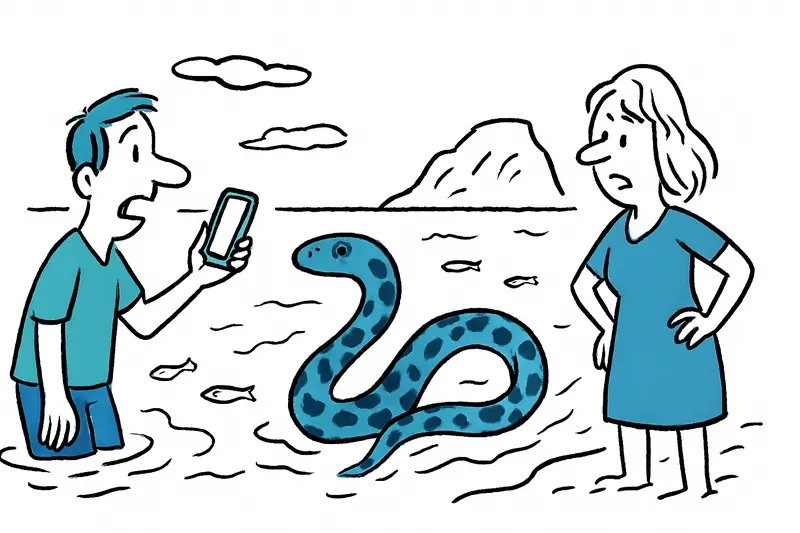
The scene plays out on a hot July day: along the Paseo in Camp de Mar the café air conditioners hum, children run across the sand with wet hair, seagulls cry above the bay. About 25 meters from the rocks a snake swam through the surf, surrounded by fish that repeatedly attacked it. A beachgoer recorded the unusual encounter on their phone. It was a horseshoe snake — a species that is considered introduced on Mallorca (Why Snakes Are Appearing More Often in Mallorca Now — Danger, Causes and What We Should Do).
Key question: Who takes control over introduced species at popular beaches — the municipalities, the Balearic authorities, or the people who release the animals?
Important first: Horseshoe snakes are not venomous. They can grow up to about 1.85 meters long, show a characteristic horseshoe-shaped marking behind the head and have very variable coloration with hexagonal, dark-edged spots. Nevertheless they are ecologically problematic: high reproduction rates and large body size make them competitors of native reptiles and predators of smaller birds, mammals and amphibians.
The footage from Camp de Mar is not the first report this summer — similar sightings have occurred at other beaches on the island, most recently at Playa de Palma, and authorities have raised concerns similar to those reported in Alarm at the Malgrats: Invasive Snakes Threaten the Sargantana.
That a snake swims in the sea is unusual but possible: this species is a good climber and swimmer. In the video you can see fish attacking the snake, apparently trying to eat it — a spectacle that can frighten bathers but does not make the animal immediately more dangerous.
Critical analysis: The events reveal two problem areas. First, there is currently no comprehensive, visible monitoring in bathing areas. Information about species appearing here is often scattered and does not always reach beach visitors. Second, the emergence of such populations is a social problem: common introduction pathways are intentional releases, illegal pet keeping or uncontrolled husbandry conditions. As long as these causes are not specifically addressed, sightings remain a symptom rather than an exception.
What is missing in the public discourse: concrete guidance for bathers (who to inform, how to behave), transparent figures on the spread of the horseshoe snake in the Balearics and clear responsibilities between the municipality, island government and the Conselleria de Medi Ambient. The often discussed trade in exotic animals is also rarely linked to local controls and penalties that would act as a deterrent (see reporting such debates in Emergency in Mallorca: Why Olive Trees Are Suddenly Banned — and Whether That's Enough).
Everyday scene from Mallorca: In the afternoon before the beach at Camp de Mar retirees sit under parasols, a bakery van parks on the access road, and at the kiosk a mother asks her son not to go too close to the water because 'something unusual' has been sighted in the sea. Such little stories show how quickly unrest spreads among locals and visitors — and how important reliable information is.
Concrete solutions that would be sensible immediately:
1) Systematically record sightings: A central reporting channel (via the municipality, Policía Local or the Balearic environmental authority) and a simple online reporting platform so every photo can be used.
2) Use trained teams: trained wildlife response teams that safely capture, document and take animals to suitable facilities — no amateur catching on the beach.
3) On-site prevention: information boards at popular beaches and in beach offices that show typical invasive species, provide behavior tips and call for reporting.
4) Trade controls: stricter controls in pet shops and on online platforms, accompanied by public relations work against releasing animals.
5) Research and monitoring: funding for studies that map dispersal corridors and analyze natural predators and possible intervention points (related observations include documented cases of interactions between invasive snakes in Mallorca, see 'A snake eats another' - what cannibalism among invasive snakes reveals about Mallorca's ecosystem).
These measures require money and coordination — that is a political question. Local administrations like Andratx and the Balearic environmental authority can react faster if reporting data is available and public.
A practical tip for a day at the beach: keep calm, keep distance, do not try to catch or provoke the snake yourself. Take a photo, note the location (beach/area, time) and report the sighting to the Policía Local, the Guardia Civil or via official environmental channels. Don't panic, but take it seriously.
Conclusion: The horseshoe snake off Camp de Mar is a visible sign of a larger problem. It's not only about individual encounters at the beach but about dealing with introduced species on an island with sensitive ecosystems. Concrete reporting channels, targeted trade controls and rapid response teams would be a realistic way to reduce future surprises for bathers and risks for native fauna.
Frequently asked questions
How should I respond if I spot a horseshoe snake on a Mallorca beach like Camp de Mar?
Are horseshoe snakes dangerous to bathers on Mallorca?
What are the main challenges in dealing with invasive horseshoe snakes on Mallorca's beaches?
What practical steps can visitors take to help prevent the spread of introduced species on Mallorca?
How can I report horseshoe-snake sightings in Mallorca, and who handles the reports?
What should families at Mallorca beaches do if they see something unusual in the sea?
Why are horseshoe snakes appearing on Mallorca, and what does it mean for conservation?
Have there been other sightings of the horseshoe snake on Mallorca besides Camp de Mar?
Similar News

After the large demonstration: Human chain in Palma — can perseverance move politics?
On Saturday activists in Palma plan to form a human chain from Plaça d'Espanya to La Lonja. Chairs, pens and conversatio...
Dead Dolphin in Peguera — a Lesson for Beach Protection
A young dolphin was first seen alive at Palmira Beach in Peguera and was found dead at the boat dock the next day. The s...

Born conflict: Who owns Palma's most elegant promenade?
The city ordered bars on Passeig del Born to dismantle their terraces ahead of a planned sit-in. Residents, restaurateur...
Unidentified body near Tolleric: How can a person be overlooked in the middle of the island?
An older man was found dead in a patch of woodland near the cliffs of Tolleric. He had no identification, showed signs o...
Water shortage in Mallorca: Reserves shrinking, answers lacking
Despite rainfall, reservoir volumes remain low: Gorg Blau falls, Cúber rises slightly — together only 39.9 percent. Key ...
More to explore
Discover more interesting content

Boat Tour with BBQ along Es Trenc Beach

Private transfer from Mallorca Airport (PMI) to Pollensa
