
Heat alarm on Mallorca: 40 °C in Llucmajor — how long can we endure it?
Heat alarm on Mallorca: 40 °C in Llucmajor — how long can we endure it?
The heatwave continues to press on: locally 40 °C were measured on Thursday, several places approached 39 °C. Orange alert applies almost everywhere. How is the island protecting people, jobs and infrastructure?
Heat alarm on Mallorca: 40 °C in Llucmajor — how long can we endure it?
The heat has a firm grip on the island. On Thursday temperatures around 39 degrees were registered at various locations, and locally the thermometer climbed to 40 °C in Llucmajor, 40 Degrees This Weekend: Mallorca Faces a Heat Test – What Matters Now. Sineu and Porreres were around 39.2 °C, Binissalem at 39.1 °C; on the coast 38.1 °C was recorded in Colònia de Sant Pere and Artà. For Friday, an orange warning applied to almost the entire island — with the exception of the northeast. Over the weekend values are expected to ease somewhat to around 36–37 °C, and the alert level will likely be reduced to yellow.
Key question
How well is Mallorca really prepared for such heat spikes — and who is left behind when the sun burns mercilessly? (Heat alert on Mallorca: How well is the island prepared for infernal heat days?)
Critical analysis
Heat is more than a summer discomfort. At 40 degrees the risk of heatstroke, circulatory problems and difficult working conditions outdoors increases. Tourism businesses, construction workers, delivery services and transport staff work outside every day. Many places still have too few public drinking fountains or cooled rest areas. Air conditioning in buses and public buildings is needed more often, while the strain on the power grid grows. The sea offers relief: at Playa de Palma, Playa de Muro and Cala Major the water temperature is currently around 29 °C, and at Cala Agulla about 27 °C. Swimming helps, but does not replace preparedness. Coverage such as Nearly 40 °C: Mallorca's Daily Life Under Heat Stress — How the Island Can Respond discusses everyday coping and local measures.
Health warnings have been issued, and that is appropriate. Still, discussion often lacks how supply systems, working hours and tourism management can be adapted in the short term without unnecessarily harming the island's economy.
What is missing in public discourse
Authorities and companies too rarely speak openly about concrete protective measures for outdoor workers: flexible working hours, mandatory breaks in cool rooms, paid heat days for particularly exposed jobs. Hardly anyone talks about the consequences for older people in city centres with little greenery. Drinking water dispensers at busy spots, urgent timetable changes for buses during the hottest hours or temporary cooling centres in parks hardly feature on the agenda.
Everyday scene — newly observed
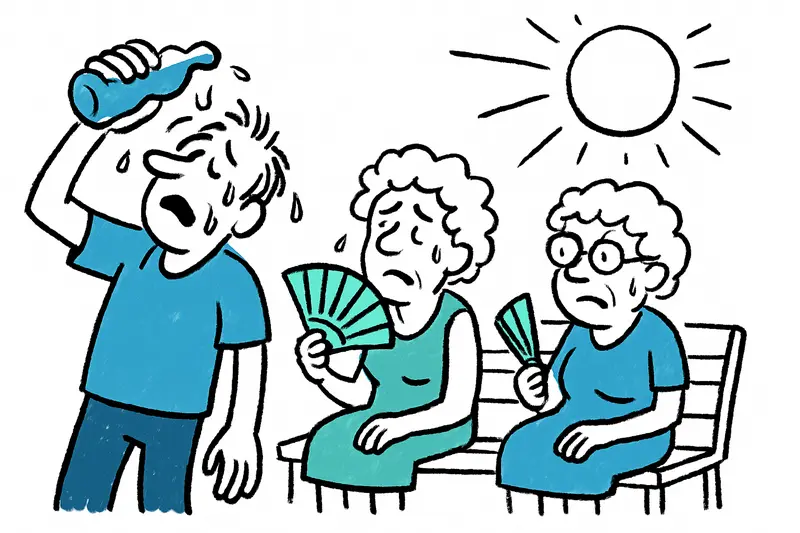
On Passeig Mallorca in front of our editorial office the benches lie in glaring light, the plane trees cast thin shadows. A delivery van is parked; the driver, hair wet, tips water from a bottle; two older residents sit with fans and speak quietly. At the beach you can hear children's laughter and the muffled hum of boat motors; the evening hours are clearly more popular than midday, when the heat paralyses everything.
Concrete solutions
Short term: Municipalities should install mobile drinking water dispensers at tourist hotspots and markets. Public buses and trains must be reliably air-conditioned; if necessary, timetables should be adjusted so that most transport occurs outside the hottest hours. Hotels and restaurants can offer flexible check-in times and cooler entrance areas. Outdoor employers need binding heat protection plans: shaded break areas, shorter shifts, quick access to water and cooling.
Medium to long term: More trees in cities, shade structures on beaches and squares, water-saving, heat-tolerant urban greening and authority plans for acute heat waves. Passive cooling principles should be more strongly incorporated in new buildings; insulation, light-coloured facades and shaded façade elements also work in our climate. Longer analyses are available in When Mallorca Cooks: How Prepared Is the Island for the Next Heatwave?.
Conclusion
The current measurements are clear and inconvenient: Mallorca needs not only weather warnings but concrete rules and infrastructure that truly protect people. Individual advice like “drink plenty of water” is correct but incomplete. It is time to treat heat as an ongoing challenge — for health, for occupational safety and for the quality of life on the island.
Frequently asked questions
What is the best time to visit Mallorca for outdoor activities?
Can I swim in Mallorca year-round?
What is the best way to get around Mallorca without a car?
What should I consider when planning a day on the Mallorca coast?
Are there family-friendly activities on Mallorca suitable for a relaxed day?
What should I wear or pack for a trip to Mallorca?
How does Mallorca's weather change by season and how should that affect plans?
Are there safe swimming spots and what should I know about coastal safety in Mallorca?
Similar News

Born conflict: Who owns Palma's most elegant promenade?
The city ordered bars on Passeig del Born to dismantle their terraces ahead of a planned sit-in. Residents, restaurateur...
Unidentified body near Tolleric: How can a person be overlooked in the middle of the island?
An older man was found dead in a patch of woodland near the cliffs of Tolleric. He had no identification, showed signs o...
Water shortage in Mallorca: Reserves shrinking, answers lacking
Despite rainfall, reservoir volumes remain low: Gorg Blau falls, Cúber rises slightly — together only 39.9 percent. Key ...
Arrest in Frankfurt after Mallorca Flight: What the Case Reveals About Gaps in the System
A 67-year-old Dutchman was arrested during a check in Frankfurt. Behind the scenes is an international warrant from Spai...
Chairs gone, debate remains: Who can really use Palma's Born in the evening?
The city had terraces on Passeig del Born dismantled shortly before a planned public action. A conflict between restaura...
More to explore
Discover more interesting content

Boat Tour with BBQ along Es Trenc Beach
Private transfer from Mallorca Airport (PMI) to Pollensa
