
Vandal at Ballermann: Who protects taxi drivers and guests on Schinkenstrasse?
Vandal at Ballermann: Who protects taxi drivers and guests on Schinkenstrasse?
An evening on Schinkenstrasse escalated: a 24-year-old German tourist smashed the side window of a taxi and was arrested. Why such incidents keep recurring — and what must finally change.
Vandal at Ballermann: Who protects taxi drivers and guests on Schinkenstrasse?
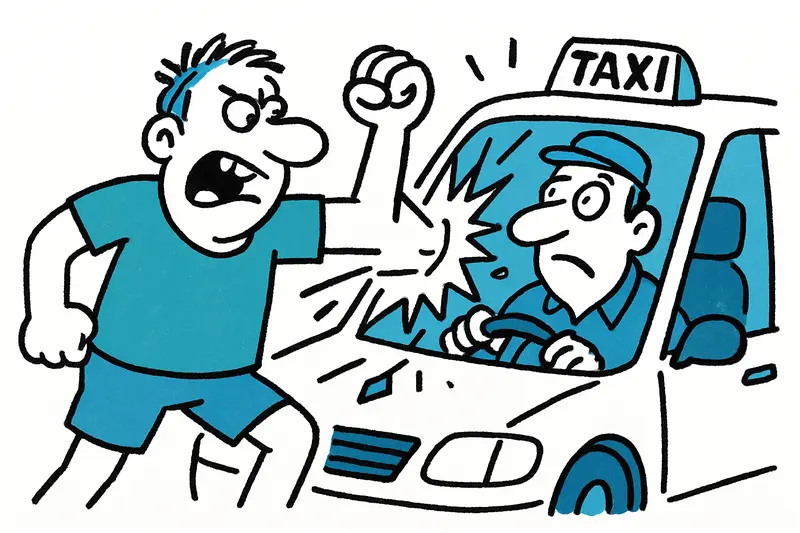
An incident that, unfortunately, is heard all too often during long summers at Playa de Palma took place on the Schinkenstrasse in early June: at around 11:20 p.m. a 24-year-old German tourist is said to have smashed the side window of a waiting taxi with his elbow. The local police responded and the man was arrested; he had cuts on the right side of his body and was treated medically before being taken into custody. The taxi driver filed a complaint and the case was passed to the national police.
Key question
How can Playa de Palma be organised in the future so that taxi drivers, residents and guests are protected from senseless violence — without completely destroying the lively atmosphere of the night?
Critical analysis
The act itself is clear: a destroyed sliding door, a shattered rear window, an injured perpetrator and a shocked driver. But the incident is only the visible tip of a problem. On summer evenings Schinkenstrasse is a river of people, loud music and moving taxis; corners with limited visibility and narrow lanes create situations where small conflicts can quickly escalate. Added to this is the effect of alcohol — many involved are impaired and inhibitions are lowered.
Police presence is important and the quick response of the patrol was correct. But repression after the fact alone is not enough. Preventive measures are often lacking, as are clear concepts for alcohol consumption, protected waiting areas for drivers and technical solutions that help reduce property damage. Earlier arrests in Playa de Palma illustrate related policing challenges, see Arrests at Playa de Palma: How safe are phones on the Schinkenstraße?.
What is missing in the public discourse
There is a lot of discussion about volume and noise, but little about the safety of people who work at night — taxi drivers, bus drivers, shift staff in bars, as in Night in Palma: Waking up on the street – what does this mean for taxi safety?. It is rarely discussed how urban infrastructure (delivery time windows, pedestrian zones, lighting) concretely affects violent situations. Also hardly addressed are simple technical measures such as splinter-resistant coatings on taxi windows or more visible and frequently used taxi ranks.
Street-level scene
On a Saturday night you sit just before midnight on the curb of Schinkenstrasse: fairy lights blink, a bar mixes schlager with techno, a bus horns in the distance, and taxis line up at the roadside, drivers smoke, talk quietly and watch the swaying crowd. Every now and then empty cans fly between people's feet. In this atmosphere a careless elbow — or a provoking look — is enough and the situation can tip into the absurd. That is exactly what happened in early June.
Concrete approaches
1) Infrastructure: Clearly mark taxi and bus lanes, create fixed waiting areas with better lighting and monitoring. This reduces friction between partying groups and working drivers.
2) Technical measures: Manufacturers and operators should consider splinter-resistant window coatings or protective grilles for sliding doors. This is not a cure-all, but it reduces damage and the risk of injury.
3) On-site prevention: Consider clear limits on late-night alcohol sales at bars, deploy coordinated security patrols during peak visitor times; offer de-escalation training for night staff.
4) Visible presence and cooperation: Closer coordination between local police, national police, taxi associations and hoteliers — clear reporting channels, rapid information sharing about incidents and shared situation awareness for peak times.
5) Sanctions and education: Pursue fines and criminal proceedings consistently; at the same time run multilingual information campaigns for tourists that make behavioral rules and possible consequences clear.
Why this matters for Mallorca
The island depends on its nightlife — that cannot simply be erased legally or politically. But the balance between fun and safety is fragile. If drivers are afraid, taxis operate less efficiently. If guests witness violence, the island's image suffers. Residents also face other crimes, for example Break-in at the Ballermann: Why Flamenc Street no longer feels as safe at night, and for residents every incident reduces quality of life a bit more.
Conclusion
The elbow that smashed a window is a symptom: the mix of overcrowding, alcohol consumption and missing protected spaces. In the short term, the quick arrest by the police was the right response. In the medium term, however, routine and spatial changes are needed: better waiting zones, technical protective measures, coordinated operations and education. Then Schinkenstrasse can remain loud and lively — but not dangerous.
Frequently asked questions
What weather can you expect in Mallorca in late June?
Is the sea warm enough to swim in Mallorca in June?
What should you pack for Mallorca in late June?
Is late June a good time to visit Mallorca?
What is Playa de Muro like in late June?
Is Palma a good base for a late June trip to Mallorca?
What is Port de Sóller like in late June?
Are evenings in Mallorca comfortable in late June?
Similar News
2.1 tonnes of cocaine on sailing yacht off Spain's coast – a reality check for the coastguard
A 14-metre yacht was seized with 2.1 tonnes of cocaine. Who monitors the ports, how does the international hunt succeed ...

Heat Bonus in Mallorca: 100 Euros Extra for Outdoor Staff at MarSenses
MarSenses pays employees who worked outdoors in August an extra €100 as recognition. Lighter uniforms, reduced hours for...
Renovating in Mallorca: What You Really Can Do Without Neighbour Consent
Many think they can do whatever they want in their apartment. That's partly true — but only as long as structural elemen...
Cafetería San Siro: A Meeting Place on Schinken Street Since 1966
In the middle of Schinken Street, Cafetería San Siro has been offering Mallorcan hospitality for more than six decades —...
From Ballermann to Prison: What the Verdict Against the Femina Operator Means for Palma
The Munich Regional Court convicted a German operator for subsidy fraud. What does the verdict mean for the Femina Club,...
More to explore
Discover more interesting content

Can Cap de Bou

Townhouse Lleo 72
