
Virtual Sea Coves: How VR Calms Children in Son Llàtzer's Pediatric Emergency
In the corridor of Son Llàtzer's pediatric emergency, VR headsets distract young patients: short games and tranquil landscapes reduce stress during blood draws and infusions. A simple but effective, perspective-changing experiment.
When a Game Works Better Than a Drop of Anesthesia
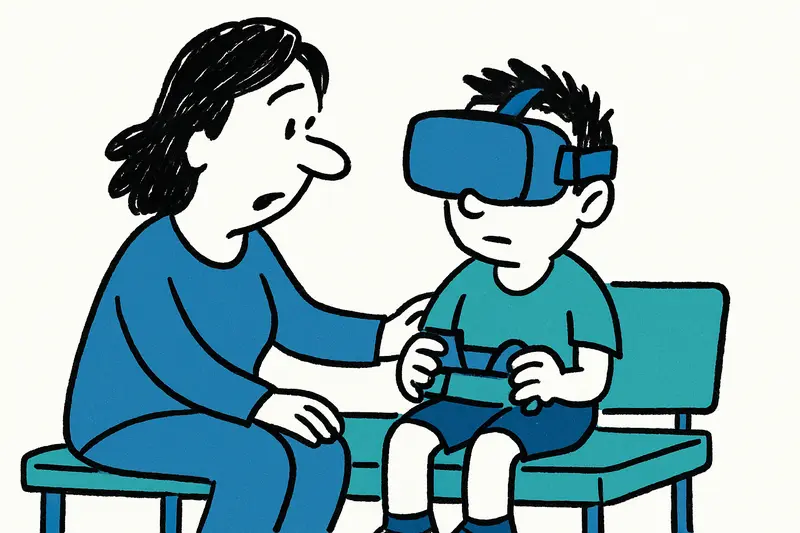
Late morning on Ward 3 of the pediatric emergency at Son Llàtzer Hospital (report on VR headsets calming children in Son Llàtzer's pediatric emergency): the bright neon light mixes with the scent of disinfectant and freshly brewed coffee from the cafeteria. On one of the turquoise benches sits a mother, her seven-year-old son beside her. Instead of fidgeting or crying, he watches calmly — through a virtual reality headset at a quiet sea cove. A nurse had just put the device on him. A small miracle in everyday clinical life, which here has become almost commonplace.
What Happens Behind the Headset?
The VR devices show short, interactive sequences: simple games, colorful meadows or calm beach scenes with subtle sounds of waves. The scenes are deliberately kept simple, no action, no hectic effects. While a blood draw or an infusion is being placed, the virtual world provides distraction. The medical team observes that many children become visibly calmer, breathe more slowly and cry less. Some later report that they hardly felt the prick.
A Look Behind the Scenes: The project has been running for a few weeks, funded by a public health program. Nurses received brief training: hygiene, content selection, and how to introduce the devices to children. On Ward 3 there are now always two charging cables and a small box with spare cushions — details that make daily life easier. "We already call them the magic windows," says a pediatric nurse with a half-amused smile, while the distant beeping of a monitor can be heard in the background.
More Than Mere Distraction
The effect is not only sentimental. Doctors report that procedures run more smoothly because children cooperate better. Less stress also means that stronger sedatives or additional support measures are needed less often. For nursing staff this means: faster interventions, fewer restless children and more relaxed parents — a small but tangible gain for daily hospital life.
Parents are often surprised. One mother said her child stayed briefly in the virtual sea cove after the treatment — very calm, almost peaceful. Such moments create a small space for recovery in an environment that is otherwise marked by worry and hustle. And in the waiting area, you can now more often hear quiet laughter, a small sign that the technology is more than just a toy.
Hygiene, Safety and Limits
Of course there are clear rules: no use with contagious illnesses, thorough cleaning between uses and careful selection of content — nothing overwhelming, nothing exciting. Some children are not interested or react fearfully to the technology; for them, personal conversation and the familiar hand of the nurse remain the best help. The VR headsets are therefore not a panacea, but an additional tool in the toolbox of pediatric care.
Looking Ahead: Opportunities for Palma and All of Mallorca
The hospital is examining whether the offer can be expanded — beyond the emergency department, for example for pain therapy in chronically ill children or in the dental clinic. A related example can be seen in other local trials, such as a report on VR use during chemotherapies at Hospital d'Inca.
On Mallorca, where the sea is often part of everyday life, the virtual sea cove has a special effect. It is a small, local experiment with big impact: fewer tears, quicker procedures and more relaxed parents in the end. And if on the next visit to Son Llàtzer a quiet child€™s laugh drifts down the corridor, that may be the clearest sign that technology and humanity work well together here.
Frequently asked questions
How does VR help children feel calmer at Son Llàtzer in Mallorca?
Is virtual reality in a hospital safe for children?
What kind of VR scenes do children see in Mallorca hospitals?
Does VR really reduce the need for sedatives in children?
What should parents know before a child uses VR in a Mallorca hospital?
Why is VR particularly effective in Mallorca's pediatric emergency?
Could VR be used beyond the pediatric emergency at Son Llàtzer?
How much training do nurses need to use VR with children?
Similar News
Released with Conditions: The Plus Ultra Suspicion and a Mallorcan Finca as Residence
A Dutch entrepreneur, sought in connection with the Plus Ultra case, was extradited to Spain after his arrest in Germany...

Haute Nuit in Puerto Portals: Fashion, Art and Indulgence by the Water
On October 2 the Lobster Club in Puerto Portals will be transformed into a stage for curated fashion, art and culinary e...
Magaluf: Watchtower Alarm – Lifeguards Pull Unconscious Beachgoer from the Water
After a drama in the late afternoon, two lifeguards at Magaluf beach rescued an unconscious 44-year-old man. He was stab...
Turquoise in the City: How dangerous is the color play of the Sa Riera?
The Sa Riera in Palma suddenly turned turquoise — a pretty motif, but behind the effect lies a discharge of saline waste...

Jeckliner at Sunnesching: Cologne spirit sets sail from Palma
In September 2027 the Mein Schiff 2 briefly becomes a floating carnival stage: four days with Cologne bands, comedy and ...
More to explore
Discover more interesting content

Can Cap de Bou

Townhouse Lleo 72
