
Corpse off Cabrera: Why the Algeria–Balearics Route Is Becoming More Visible on Mallorca
Corpse off Cabrera: Why the Algeria–Balearics Route Is Becoming More Visible on Mallorca
A severely decomposed body was recovered off Cabrera. The find shows that crossings from Algeria are gaining importance — and our responses are patchy.
Corpse off Cabrera: Why the Algeria–Balearics Route Is Becoming More Visible on Mallorca
Key question: How will our island react when dead bodies on the beaches stop being just statistics and become part of everyday life?
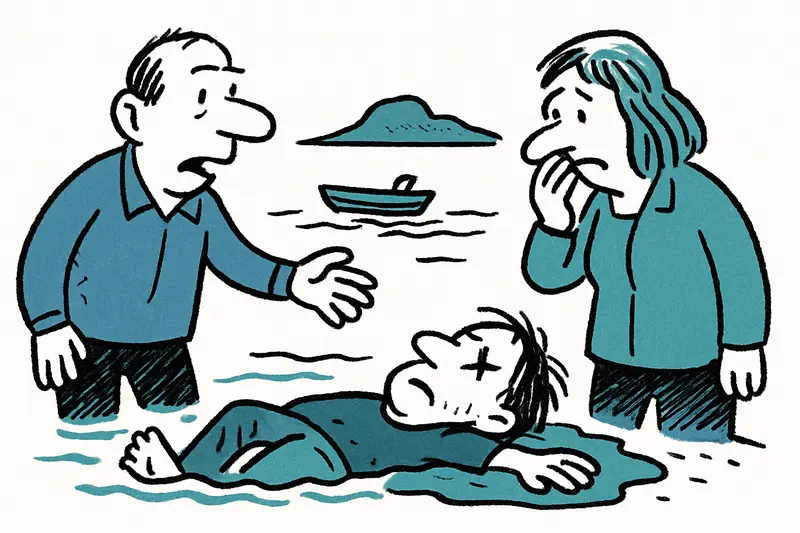
On Monday afternoon a severely decomposed body was recovered from the sea off the small, uninhabited island of Cabrera. Rescue services were alerted and the Guardia Civil transferred the body to Mallorca, a circumstance echoed in reporting of another decomposed recovery Body Recovered off East Coast: A Sign of Larger Problems at Sea?. Because the condition of the corpse makes identification impossible, much remains in the dark; however, there are indications that this may be a person who died during a crossing from North Africa.
This is not an isolated case; earlier coverage such as Two Dead on Balearic Coasts: When the Sea Withholds Answers documented similar incidents. Data from the Mediterranean Migration Observatory show that last year over 7,300 people reached the Balearics in more than 400 boats — an increase compared with the previous year. By the end of March 2026 arrivals on the islands had risen sharply again. At the same time, authorities report dozens of officially registered deaths on this route; aid organisations estimate the real number to be higher.
Critical analysis: the find off Cabrera is symptomatic. The route from Algeria to the Balearics is no longer just a peripheral connection; it is gaining importance while other routes decline. That increases the frequency, multiplies the chances of accidents at sea, and creates situations in which island and rescue services must quickly make decisions that are both humanitarian and legally tricky.
What is missing from public debate: there is a lot of talk about numbers and politics, but too little about practical procedures on the coast. There is no reliable, publicly accessible registry for the dead and missing that would enable research and family searches; clear, uniform procedures for recovery, autopsy and identification that are realistic for severely decomposed bodies are lacking. In addition, there is hardly any discussion about how beaches, ports and small communities should be supported in terms of resources when more operations are required.
A slice of everyday life on Mallorca: early in the morning in Portopetro, before the bakery opens, fishermen on the quay quietly talk about a black inflatable boat they saw days earlier. Gulls scream, the horn of a supply vessel cuts across the bay. A café table group — retirees and a teacher — exchange concerns; they talk numbers but also picture people in their minds. Scenes like this repeat in Formentor, along Palma's Passeig Marítim or in the small harbours in the south, as when Two bodies on the coast: Investigations in Ciutadella and off Alcúdia – Many questions remain described separate recoveries: news becomes local when neighbours talk about sightings, sirens and rescue ships.
Concrete solutions that could work on the ground: 1) an island-wide registry for the dead and missing, maintained by health and forensic offices and open to family searches; 2) mobile forensic teams and rapid identification capacity (dental and DNA matching) instead of lengthy procedures; 3) expansion of local crisis and psychosocial teams for communities that must accompany recoveries and landings; 4) clear contingency plans between search-and-rescue, Guardia Civil and port authorities for fast, transparent procedures; 5) stronger prevention work in origin and transit areas in cooperation with international partners to reduce risky crossings. These proposals require money and political coordination — both often missing due to a lack of urgency.
Legal perspective: in Spain, people involved in tasks on board have been prosecuted for years; since 2020 more than 1,300 proceedings for aiding irregular migration have been registered. That raises difficult questions: who was perpetrator, who was victim? In many cases people are on a treadmill of need and do not decide out of criminal intent but out of existential necessity.
What should be done now: island communities must not only react, they must anticipate. That means strengthening medical, forensic and psychosocial services in the Balearics; creating interdisciplinary crisis plans; and bindingly regulating authorities' responsibilities towards the dead and their families. At the same time there needs to be an honest debate about the causes of migration and about legal routes that could spare people dangerous crossings.
Pointed conclusion: a body in the sea is the worst possible argument for change — but it is a very clear sign. Mallorca cannot look away. If we hear the sound of the waves, we should also listen to the conversations that begin on the quays: for better registries, faster examinations and more humane procedures. Otherwise the sea will remain witness to one-off news items instead of prompting lasting reforms.
Frequently asked questions
Why are more bodies being found off Mallorca and Cabrera?
What should I know if I see a suspicious boat or body in the sea near Mallorca?
Why is it so hard to identify bodies recovered from the sea around Mallorca?
What happens after a body is recovered off Cabrera or Mallorca?
Is the Algeria–Balearics migration route becoming more important for Mallorca?
How do repeated sea recoveries affect local communities in Mallorca?
What needs to improve in Mallorca for handling deaths at sea more humanely?
Are there places in Mallorca where sea rescue cases are especially visible?
Similar News

More Electric Cars in the Balearic Islands: Sales Rise Sharply
Between January and August, 14,185 vehicles without petrol or diesel propulsion were sold — an increase of more than 40 ...
Autumn in Mallorca: What Truly Remains of Summer
The days grow shorter, the evenings cool — and yet more of summer lingers than you might think: sounds, recipes, people,...
Rescue operation at Tolleric: Why nighttime cliff parties become dangerous
A British holidaymaker fell about ten meters at the cliffs of Tolleric during the night, later climbed back up and was r...
Car accident on the MA-1: Mother and daughter on a bicycle struck by a fellow countryman – Who protects cyclists here?
On the MA-1 between Portopí and the Cala Major exit, a mother and her daughter on a bicycle were struck by a car. A para...
Smoke over the UIB: Who is responsible for the fire on the roof?
On Saturday afternoon a fire broke out on the roof of the Arxiduc Lluís Salvador building at the University of the Balea...
More to explore
Discover more interesting content

Can Cap de Bou

Townhouse Lleo 72
